
How to Use Lemon Vibrators for Better Intimacy When Stress Affects Desire
Let's be real. Stress doesn't just kill the mood. It literally kills arousal at the nervous system level.
When you're chronically stressed, your sympathetic nervous system (the fight-or-flight branch) stays activated. Your cortisol stays elevated. Your body is in protection mode, not pleasure mode. That's not a personal failure. That's neurobiology. And it's reversible.
Here's what I've learned working with couples for decades: the people who rebuild desire after stress isn't hits rock bottom usually aren't the ones waiting for stress to disappear first. They're the ones who use targeted touch, typically with something like a lemon clitoral vibrator, to physically teach their nervous system that it's safe to feel pleasure again.
How stress literally blocks arousal
When you're stressed, three things happen in your body.
First, blood flow redirects. Your body prioritizes your brain and muscles (to fight or run). Blood leaves your genitals. Less blood flow means slower arousal, harder orgasms, less sensation overall. Second, your pelvic floor tightens. Stress triggers the pelvic floor to clench protectively. A clenched pelvic floor can't relax enough for pleasure. You might feel sensation, but it's blocked or painful. Third, your brain can't focus on pleasure cues. Your prefrontal cortex (the thinking part) is offline. Your amygdala (the alarm part) is running the show.
You're not broken. You're stressed.
The good news: lemon vibrators work specifically well here because they don't require you to generate arousal from scratch. They provide external sensation that can bypass your stuck nervous system and gradually teach it that pleasure is possible again.
Why lemon vibrators work better when stress is the problem
A lemon sucker like the Lem uses air-pulse technology, not traditional vibration. That distinction matters when stress has locked down your body.
Traditional vibrators require you to get to a baseline level of arousal before they feel good. They're intensity-based. When stress has suppressed sensation, intensity alone can feel uncomfortable or frustrating. Air-pulse technology works differently. It creates a sucking and releasing rhythm that stimulates nerve endings without requiring you to already be turned on. You can start from zero arousal and build from there.
The second reason is rhythm. Stress keeps your nervous system in an irregular, vigilant state. The steady, predictable pattern of a lemon clitoral vibrator like Hello Nancy's Lem actually helps regulate your nervous system back toward calm. Your body starts to anticipate the rhythm. Your breathing syncs to it. Your nervous system begins to recognize this as safe.
Third, lemon vibrators are gentler on sensitized tissue. When you're chronically stressed, your vulva can become hypersensitive or numb simultaneously (that contradiction is real and common). Air-pulse technology provides broad stimulation that doesn't create the sharp intensity that stressed bodies often reject.
The reset protocol: three weeks to rebuild baseline desire
If stress has completely flattened your desire, here's what I recommend to clients.
Week one is about reintroduction, not orgasm. Set aside 10 minutes three times that week when you're alone. Turn off your phone. Use your lemon vibrator on the lowest setting for just 3-4 minutes. Don't have a goal. Don't expect arousal. You're just letting your nervous system remember what pleasure touch feels like. Afterward, pause and notice: did your body feel anything? Did you feel calm? Did your breathing change? That's enough.
Week two, you're extending time slightly. Go for 5-7 minutes, three times. You can increase the intensity if it feels good. Your job is still observation, not outcome. What does your body want? Does it want to move? Does it want to pause? Your arousal might be starting to build. It also might not. Both are fine. You're rebuilding a nervous system, not proving anything.
Week three, you can set a looser intention toward pleasure. You have permission to pursue orgasm if it happens naturally, but your real goal is to notice that desire is starting to return. That your body is starting to crave the sensation. That you're thinking about it between sessions. That's the sign that your nervous system is recalibrating.
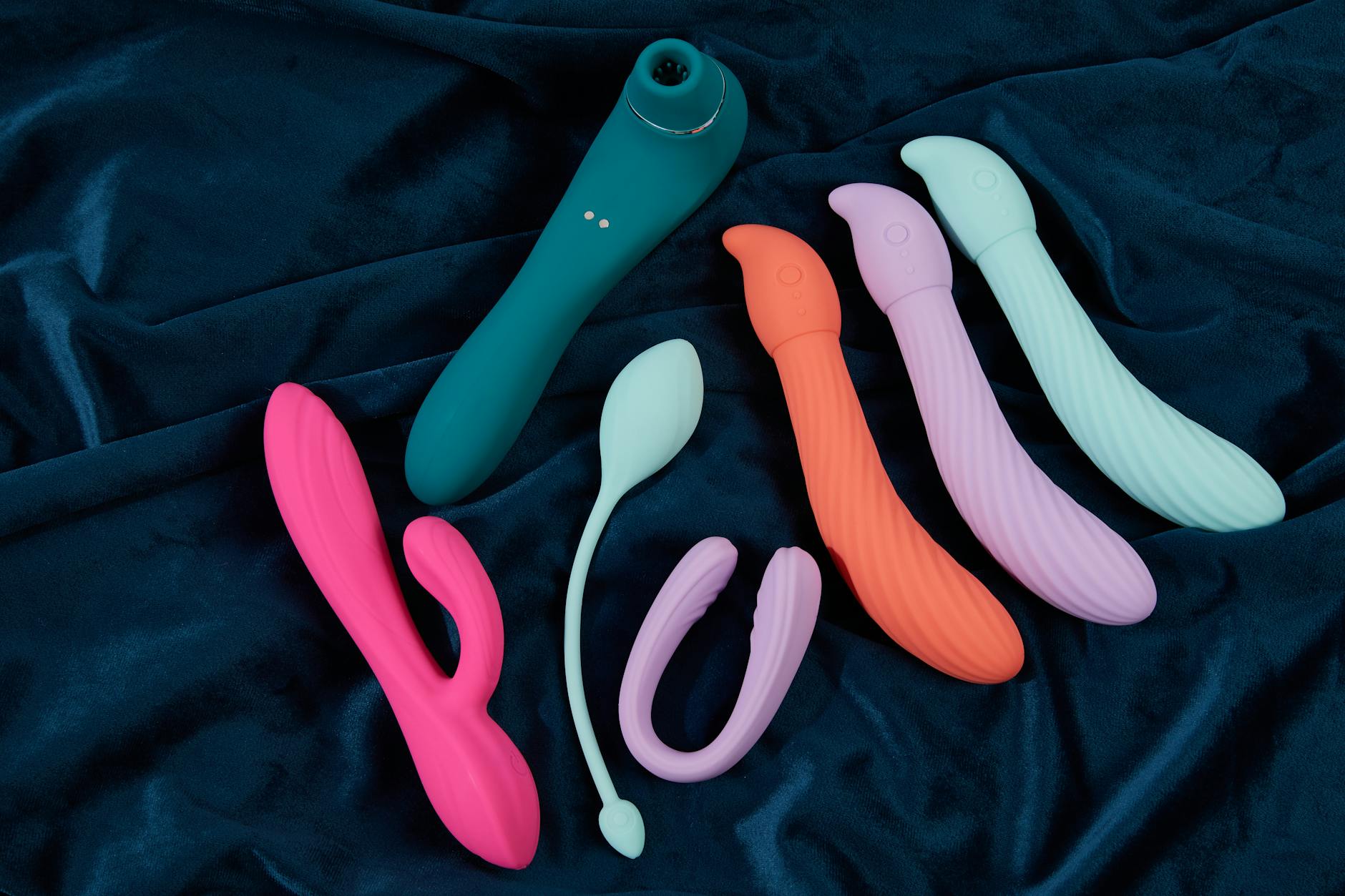
Photo by IFONNX Toys on Pexels
How to use a lemon vibrator when you're in a relationship
This is the trickier conversation, and it matters.
Many stressed people worry that using a lemon vibrator alone feels like rejecting their partner. That's backwards. Using a lemon clitoral vibrator to rebuild your own desire is actually one of the best things you can do for your relationship. You're not bypassing your partner. You're fixing yourself so you can actually show up.
Here's how to frame it: "My stress has suppressed my arousal. I'm going to spend time alone rebuilding that, so I can feel more present with you." That's honest. That's kind. That's different than "I don't want you right now."
After two to three weeks of solo work, once your baseline desire is returning, bring your partner into the conversation. Let them know that you're healing and that you'd like them involved. They might watch. You might use the lemon vibrator together. You might use it to warm up before partnered sex. The point is: you're back in agency. You're not stuck.
For couples where stress has damaged intimacy overall, this is actually a reset button. It says: we're not broken, we're stressed. And here's what rebuilding looks like.
The role of consistency over intensity
When stress has flattened desire, consistency matters more than how intense your sessions are.
Three short 10-minute sessions a week beats one 45-minute marathon. Your nervous system learns through repetition, not duration. You're not trying to force a big orgasm. You're trying to prove to your body that pleasure is safe and regular.
Set a timer. Build it into your routine. Tuesday evening. Saturday morning. Wednesday when you have 15 minutes before work. Something predictable. Your brain will start to anticipate it. That anticipation is actually arousal rebuilding itself.
Also: go slow on intensity settings. Stress often makes us numb, so there's a temptation to jump to maximum intensity. Resist that. Start at pattern one or two. You want sensation that feels gentle and slightly pleasant, not jarring. Over three to four weeks, you can gradually move toward higher intensities. But early on, less is more.
When to bring in other support
If after four weeks of consistent use with a lemon vibrator your desire still isn't returning, that's worth discussing with a therapist or sex therapist.
Sometimes stress is just stress. Sometimes it's a sign that something deeper needs attention. Relationship dissatisfaction. Unresolved conflict. Burnout that needs more than solo time with a toy. A therapist who specializes in couples can help you distinguish between normal stress-related desire loss and something requiring deeper work. There's no shame in that.
Similarly, if the stress is work-related and you're running on 80-hour weeks, the lemon vibrator can help, but it's not a substitute for actually changing the situation. You can't pleasure your way out of unsustainable stress. You can use pleasure as a bridge while you're working on the real problem.
The bigger picture: pleasure as nervous system medicine
Here's what I want you to know. When stress has shut down your desire, using a lemon clitoral vibrator isn't frivolous. It's not something you should feel guilty about. It's medicine.
You're literally teaching your nervous system that pleasure is possible. That your body is safe. That you're allowed to feel good. That's the opposite of what stress teaches. And it works. I see the shift in couples and individuals all the time. Three weeks in, their texts change. They go from "I don't know if I'll ever feel like sex again" to "Oh, I actually wanted to this morning." That's not a dramatic recovery. That's a nervous system healing.
Stress is real. Its effects are real. And they're treatable. A lemon vibrator is a small tool, but it's a direct path to reclaiming a part of you that stress tried to take.
People also ask
How long does it take to feel desire again after stress has killed it?
Three to four weeks of consistent use (three sessions a week, 10 minutes each) is usually when people notice baseline desire returning. You'll feel anticipation. You'll think about pleasure between sessions. Full arousal flexibility usually takes six to eight weeks. But the shift from "nothing" to "something" is typically within the month.
Can I use a lemon vibrator if my stress is making me feel numb down there?
Yes, actually that's when lemon clitoral vibrators shine. Numbness and stress go together. The air-pulse technology on devices like the Lem works well on desensitized tissue because it doesn't require existing sensation to feel pleasant. It creates sensation. Start on the lowest setting and let your body gradually remember what pleasure feels like.
Should I tell my partner I'm using a lemon vibrator to rebuild desire?
Yes, with the right framing. Don't hide it. Say something like: "My stress has suppressed my arousal, and I'm taking a few weeks to rebuild that on my own, so I can be more present with you." Most partners respond well to that honesty. It reframes the toy as part of solving the problem together, not as a rejection.
Is it normal that orgasm feels different or harder to reach when stress is high?
Completely normal. Stress changes blood flow, pelvic floor tension, and mental focus. All three affect orgasm quality. That's why the reset protocol focuses on sensation and nervousness system regulation first, not on orgasm goals. Orgasm usually returns naturally once the nervous system calms down.
Can I use lemon vibrators alongside therapy for stress-related desire loss?
Absolutely. In fact, I recommend it. A lemon sucker helps you rebuild the physical sensation and nervous system regulation, while therapy helps you address the root stress. They work together. You're healing from multiple angles.
What if my partner's stress is affecting their desire toward me?
This is where having a conversation separate from sex helps. You can say: "I've noticed your stress has affected intimacy. I'm wondering if there's something I can do to help." Sometimes the answer is "use a lemon vibrator together so we can rebuild this slowly." Sometimes it's "I need solo time first." The point is naming it, not pretending everything is fine.
You're not broken, you're stressed
Stress is one of the most underrated libido killers out there. It's not about attraction. It's not about your relationship. It's your nervous system in protection mode.
And the good news is that your nervous system learns. It can relearn safety. It can relearn pleasure. A lemon vibrator gives you a practical, physical tool to do that teaching. Consistency beats intensity. Patience beats forcing. And after a few weeks of showing your body that pleasure is possible again, you might be surprised at what comes back.
If you're feeling stuck and want to work through this more deeply, reach out. That's what I'm here for.
See also
If stress is affecting your desire, you might also find these helpful: How to Use Lemon Vibrators When Anxiety Affects Arousal, How to Use Lemon Vibrators to Reduce Performance Anxiety in Long-Term Relationships, and How Long Does It Take to Orgasm With a Lemon Vibrator.