Let's start with what anxiety actually does to arousal
Anxiety doesn't make you broken. It makes your nervous system think you're in danger. When your brain perceives threat, the parasympathetic nervous system (the one that handles relaxation and arousal) gets sidelined. Your body is too busy checking for tigers to care about pleasure.
This is especially true if you're dealing with generalized anxiety, panic attacks, or relationship stress. The moment you try to get aroused, that anxious voice shows up: "What if I can't orgasm? What if my partner is judging me? What if something is wrong with me?" Suddenly, arousal doesn't stand a chance.
Here's what matters: this isn't a you problem. It's a nervous system problem. And nervous systems respond to specific signals.
Why lemon vibrators work differently for anxious bodies
Most traditional vibrators demand patience. You have to build arousal gradually, maintain focus, stay still. If your nervous system is already in overdrive, that's asking for something you can't deliver right now.
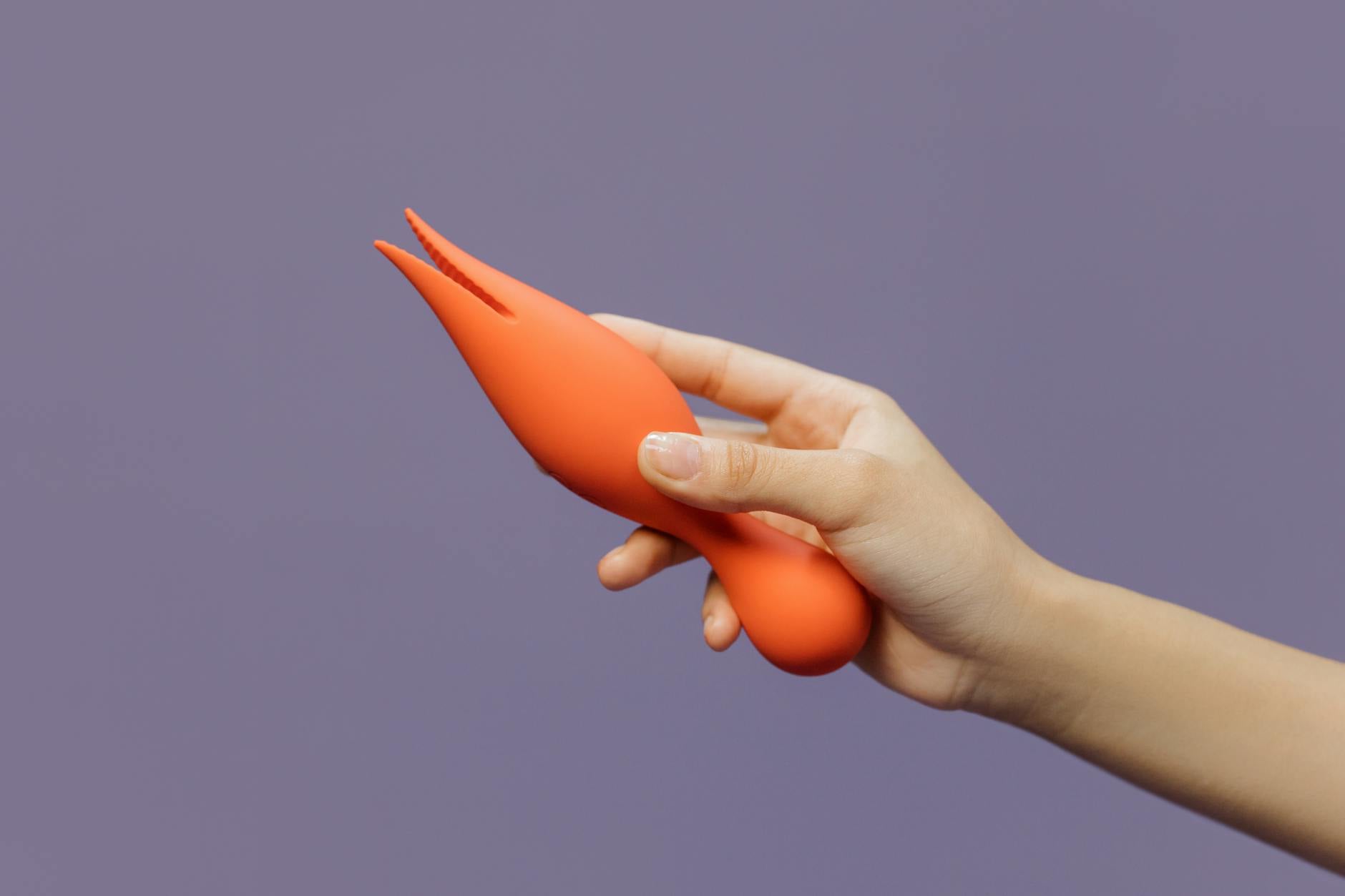
Lemon vibrators, especially the Hello Nancy clitoral vibrators, work in a way that bypasses some of that anxiety script. The rhythmic suction and air-pulse patterns create consistent sensory input that your nervous system recognizes as non-threatening. You're not waiting for arousal to build. You're giving your body a clear, repetitive signal: this is safe, this feels good, you can relax.
The design itself matters too. Lemon vibrators are smaller, quieter, and less intimidating than traditional wands. They don't require perfect positioning or sustained effort. They feel less like performance and more like permission.
The three-phase anxiety unwinding process
Phase 1. Regulate before stimulation (10-15 minutes).
Don't start with the vibrator. Start by telling your nervous system it's okay to relax. Box breathing works: inhale for four counts, hold for four, exhale for four, hold for four. Repeat eight times. Your vagus nerve responds immediately to slow exhales.
Listen to something with minimal lyrics. Scan your body from your toes to your head and mentally release any tightness you notice. This isn't meditation. It's just checking in. You're teaching your nervous system that you're creating a safe container.
Phase 2. Light touch without expectation (10-20 minutes).
Introduce the lemon vibrator at the lowest setting. Don't aim for orgasm. This is the hardest instruction to follow when you're anxious, but it's the most important one. You're training your body to receive sensation without the pressure of outcome.
Start on your inner thigh or the outer edges of your vulva. Let your nervous system adjust to the sensation for two or three minutes before moving closer. You're building trust with your own body. Some sessions will feel like nothing. That's not failure. That's information.
Phase 3. Gradually increase intensity only if arousal appears (10-30 minutes).
If you notice even a tiny spark of arousal, warmth, or interest, that's your green light to move inward or increase intensity. If nothing shifts after 15-20 minutes, stop. Pressure kills arousal. Rest kills nothing.
Over time, your nervous system learns that this ritual is safe. That's when arousal starts to flow more easily.
Grounding techniques to use alongside your lemon vibrator
Your hands matter as much as the vibrator itself. When anxiety shows up, anchor yourself in sensation.
The 5-4-3-2-1 technique. While using your lemon vibrator, deliberately notice five things you can see, four things you can touch, three things you can hear, two things you can smell, one thing you can taste. This pulls your attention out of your anxious thoughts and into your senses. Your nervous system can't be in panic mode and present in your body at the same time.
Pressure holds. Place your other hand on your chest or your lower belly. Press gently and hold steady. This activates the parasympathetic nervous system through gentle pressure. Many people find that combining lemon vibrator stimulation with one hand and steady pressure from the other creates a calming anchor.
Guided focus. Some people's anxious brains need a narrative. Instead of generic porn, try erotic audio specifically designed for anxiety (many creators now make anxiety-friendly content that focuses on breath, body sensation, and reassurance rather than performance). Let the voice guide your attention.
When to use your lemon vibrator if anxiety is running high
Timing matters. Don't try this when you're in acute panic or after an argument with your partner. Pick a time when anxiety is present but manageable. Morning often works better than night (your cortisol is lower). Right after yoga, a walk, or a shower can help.
Solo sessions are easier than partnered ones when you're learning this. Your nervous system has fewer variables to manage. Once you rebuild confidence in your own arousal, partnered pleasure becomes more accessible. This isn't about avoiding your partner. It's about rebuilding your baseline first.
If you're in a long-term relationship, let your partner know what you're doing. Explain that you're working on unwinding anxiety, not avoiding them. This conversation prevents them from internalizing your struggle as rejection.
What actually changes when you do this consistently
After two to four weeks of regular practice, most people notice a shift. Arousal doesn't feel like trying to start a cold engine. It feels more like turning on a switch that actually responds.
You also start to notice the difference between anxiety symptoms (racing heart, tight chest, scattered thoughts) and arousal symptoms (elevated heart rate, sensitivity to touch, focused attention). Your nervous system becomes more literate. You stop confusing the two.
Anxiety will still show up sometimes. That's not failure. But you'll have proof that it's not permanent, and you'll have a tool that works with your nervous system instead of demanding it behave differently.
Some people find that as arousal returns, anxiety about arousal decreases. Your brain stops catastrophizing about pleasure because your body has actually experienced it. That's the real win.
How to talk to your partner about this
If you're partnered, this is important. Don't make solo pleasure sessions a secret. Say something like: "I'm working on reconnecting with my own arousal because anxiety has been getting in the way. I'm using some grounding techniques and taking some time to myself. This isn't about us. This is about me rebuilding my baseline so I can show up more fully with you."
If they get defensive or make it about themselves, that's separate information. You might need a couples therapist to unpack that. But a partner who understands is a partner who can help, not by doing anything different, but by giving you the mental space to heal.
Anxiety is not a character flaw. It's a nervous system that learned to protect you. You can teach it a new job.
FAQ: Anxiety and lemon vibrators
Q: What if I feel more anxious when I use the vibrator?
A: Stop and try again another day. Anxiety sometimes spikes when we slow down and turn inward. This is normal. You might benefit from even more regulation time before introducing the vibrator. Box breathing for 20 minutes before touching anything can help. If vibrators consistently trigger panic, talk to a therapist who specializes in somatic work. Your nervous system might need a different approach first.
Q: Can I use my lemon vibrator during sex with my partner if I have anxiety?
A: Yes, but only once you've rebuilt some confidence solo. Having your partner present adds variables. Start solo, build trust in the sensation, then gradually introduce a partner into the equation. Some couples find that incorporating a lemon vibrator into partner sex reduces performance anxiety because the focus shifts from "Am I doing this right?" to "What does this sensation feel like?" That's collaborative, not isolating.
Q: How long before I feel "normal" arousal again?
A: There's no universal timeline, but most people report noticeable shifts within two to four weeks of consistent practice. Significant changes often take eight to twelve weeks. Your nervous system learns slowly. It unlearns even more slowly. Be patient with yourself.
Q: Is there a lemon vibrator setting that's best for anxiety?
A: Start with the lowest setting and the most gentle pattern. Many anxious people respond better to rhythm than to intensity. The Hello Nancy clitoral vibrators offer multiple patterns. Experiment and notice which ones feel grounding versus which ones feel overstimulating. Your preference will tell you something important about what your nervous system needs.
Q: Should I use my lemon vibrator if I'm on anxiety medication?
A: Yes. Medication doesn't disable pleasure. It can make it harder to reach sometimes (some antidepressants and anti-anxiety meds do affect arousal), but a lemon vibrator paired with these nervous system regulation techniques can help bridge that gap. If medication is significantly affecting your arousal, talk to your prescriber. Sometimes dose or timing adjustments help. But don't stop using your vibrator because of medication. Use it more intentionally.
Q: Can lemon vibrators actually change my nervous system, or are they just a distraction?
A: Both. The vibrator itself provides consistent sensory input that your nervous system recognizes as safe. Over time, that repeated safety signal actually does rewire your nervous system's response. You're not just distracted. You're teaching your body that pleasure is possible without threat. That rewiring is real and measurable.
The truth about anxiety and pleasure
Anxiety doesn't mean you're broken. It means your nervous system learned to protect you really well. Now you're teaching it that pleasure is also safe. That takes time. That takes patience. That takes tools that work with your neurology, not against it.
A lemon vibrator is one of those tools. It's designed to provide consistent, non-threatening stimulation that your anxious nervous system can actually receive. Combined with simple grounding techniques and the understanding that arousal takes time to rebuild, it becomes a real pathway back to pleasure.
Your capacity for pleasure didn't go anywhere. It's still there. Sometimes it just needs your nervous system to get quiet enough to hear it.
When you're ready to explore this more deeply, reach out. We're here to help you rebuild what anxiety has temporarily hidden.