The script problem
Here's what happens after you've been with someone for five, ten, fifteen years. Sex becomes predictable. Not always bad predictable, but predictable. You know what's coming. Your partner knows what you like. There's an efficiency to it that can feel comforting or, honestly, just efficient in a way that kills any real spontaneity.
Then performance anxiety settles in, even though nobody really talks about it in long-term relationships. You worry about finishing too fast or not finishing at all. Your partner worries they're not doing enough. Both of you are thinking about the orgasm instead of experiencing anything. The script breaks down. Neither of you wants to follow it, but you don't quite know how to write a new one.
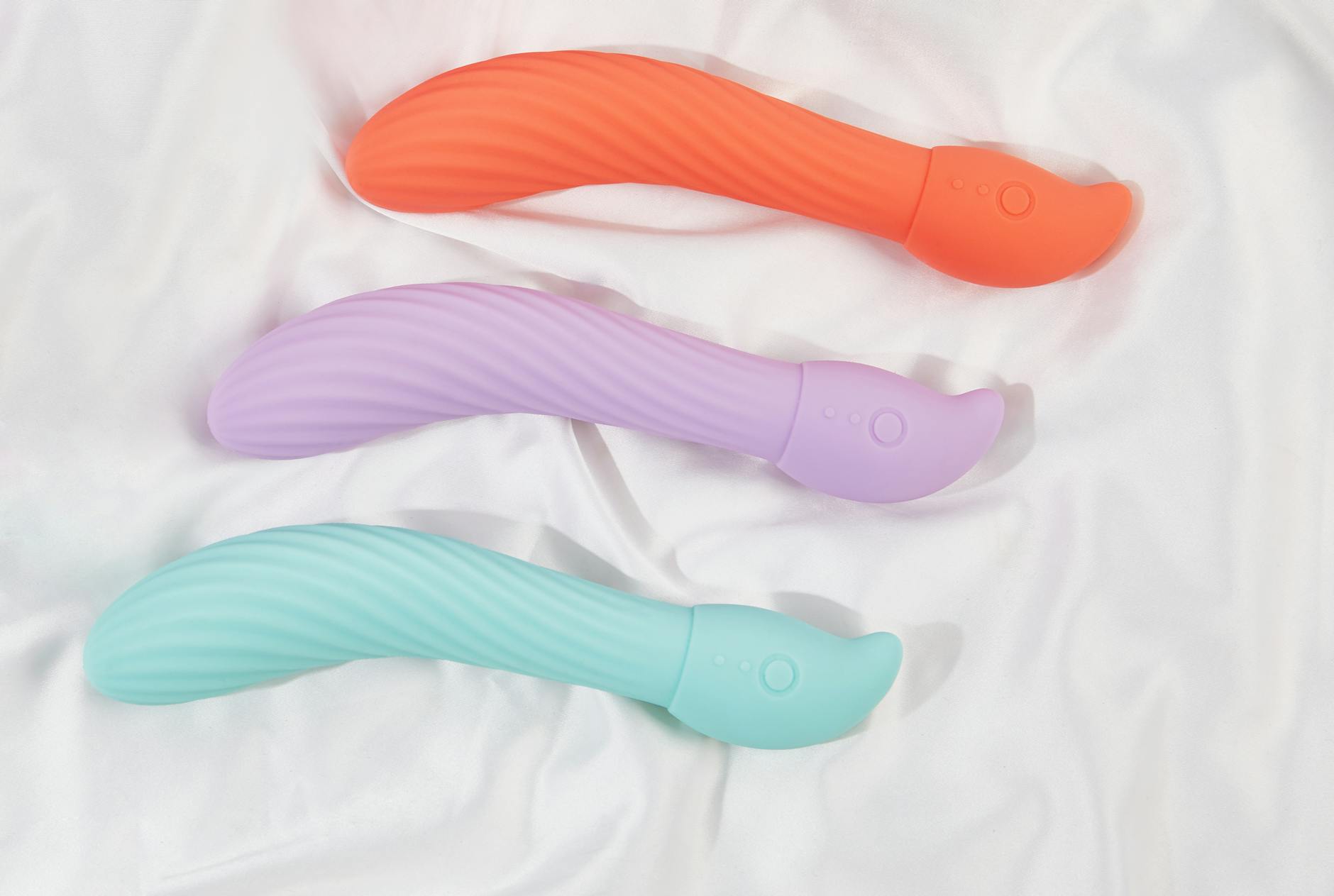
Lemon clitoral vibrators solve this in a way nothing else does. They're not about replacing your partner or making sex "better" in some generic sense. They're about breaking the performance pressure entirely so you can both remember why you wanted to touch each other in the first place.
Why performance pressure gets worse with time
In new relationships, novelty carries a lot of the weight. Your body doesn't know what to expect. Your brain is flooded with dopamine just from the newness. Everything feels fresh because it mostly is.
After years together, that neurochemical advantage disappears. Your body knows the rhythm, knows what's coming next, and honestly, has probably heard that same thing said during sex a thousand times. This isn't a reflection of how much you love your partner. It's just neurobiology. Familiarity reduces arousal activation unless you actively do something to rebuild it.
What usually happens instead is both partners start trying harder. You put more energy into foreplay. You buy lingerie. You schedule date nights. Sometimes this helps. Often it adds another layer of pressure because now you're performing the performance.
A lemon vibrator changes the dynamic because it introduces a variable neither of you fully controls. It's not about what either partner is doing. It's about sensation. And sensation that bypasses the script entirely.
How introducing a clitoral vibrator actually reduces pressure
Let me be direct. When you bring a toy into a long-term relationship, it immediately removes the idea that one person is responsible for the other's orgasm. This is the biggest anxiety killer available.
Instead of "Can I make them come?" the question becomes "What sensations do we both enjoy?" It's a completely different conversation. One has pressure baked in. The other doesn't.
A lemon vibrator specifically does this because it's not a replacement for anything. You can't compare it to what your partner could theoretically do with their hands or mouth. It does something singular. It uses air-pulse technology and suction to stimulate nerve endings in a way no human body can replicate. So there's no competition. No scoring. No "Am I doing it right?"
For the partner without the clitoris, the shift is equally powerful. Instead of being the sole source of pleasure, they become part of a shared experience. The focus moves off their performance and onto both of you together, enjoying something new.
Setting expectations before you introduce it
The frame matters enormously. If you bring home a toy and treat it like a solution to a problem, it will feel like shame hiding as helpfulness. That's the fastest way to kill interest.
Instead, approach it as curiosity. "I read about air-pulse vibrators. The reviews are wild. Want to try something different together?" Not "We need to spice things up" or "I want to help you finish faster." Those are problem framings. The first one is just exploration.
Before you even touch anything, talk about what you hope to feel. Not what you hope to accomplish. What sensations are you curious about? What feels different from what you already know? This conversation alone often rebuilds desire because you're both suddenly thinking about pleasure again instead of performance.
If your partner is hesitant, don't push. Hesitation in a long-term relationship almost never means "I don't want pleasure." It usually means "I'm worried about what this means about us" or "I'm insecure about my ability to satisfy you." Hearing that fear is worth way more than using the toy immediately. Address the fear first. The toy will still be there.
Using lemon vibrators to rebuild physical sensation
After years of the same touches in the same way, your body's novelty response flatlines. The clitoris doesn't forget how to feel pleasure, but it does get used to specific input. A lemon vibrator's suction mechanism creates sensation that's genuinely foreign. This isn't vibration in a line. It's a pulling sensation that activates different nerve pathways.
Start with intensity setting 1 or 2. You're not trying to race to orgasm. You're trying to remind your body what surprise feels like. Spend 10-15 minutes just exploring. Not with a finish line in mind. Just sensation.
Many long-term couples find that slowing down with a vibrator actually creates more connection than faster sex ever did. Because you're both present. You're both curious. You're both noticing what happens next instead of executing a familiar routine.
Your partner can use the vibrator on you, or you can use it on yourself while they touch you somewhere else. Both change the script. Both feel different because neither is the default.
The conversation that comes after
This part people skip, and it's where the real magic happens. After you've used it together, talk about what you noticed. Not was it good, was it better than before. Just what did you feel? What surprised you? What do you want to try next time?
This conversation does something crucial. It gives you both permission to want something different. And if you can want something different in bed, you can usually want something different in the relationship too. The novelty carries over.
When performance anxiety is actually about something else
Sometimes what looks like sex performance anxiety is actually relationship anxiety wearing a sexy mask. You're worried about whether your partner finds you attractive. Whether you're still compatible. Whether the relationship itself is failing.
A toy won't fix that. What it might do is create the space where that conversation becomes possible. Because you're touching each other again. You're paying attention to each other again. You're not on autopilot.
If that resonates, consider whether couples counseling might be worth exploring alongside rediscovering pleasure together. A marriage coach or therapist can help you untangle what's actually driving the performance pressure.
The long-term shift that happens
After a few months of using a lemon vibrator regularly, something shifts in long-term relationships. The pressure doesn't just ease. It often disappears entirely because you've both proven to each other that pleasure isn't a zero-sum game. One person's enjoyment doesn't require the other person to deliver it single-handedly.
You also rebuild curiosity about each other's body. After five years of the same routine, you forget that your partner's body is constantly changing. What feels good this year might be different from last year. A vibrator gives you a reason to pay attention again.
Many couples report that this actually creates more spontaneous sex, not less. Because the pressure is gone. There's no script that has to be followed perfectly. You're just two people who are interested in how each other feels.
FAQs
Does using a vibrator mean I'm not satisfying my partner?
No. In fact, the opposite. You're actively expanding what satisfies them. A lemon clitoral vibrator does something a human body literally cannot do. Using it together means you're both interested in their pleasure enough to try something new. That's the opposite of neglect.
Will introducing a toy make my partner feel like I'm criticizing their performance?
Only if the framing suggests that. If you approach it as "I want to try something new with you" rather than "You're not doing enough," it reads completely differently. The tone and context matter more than the object itself.
How often should we use it?
There's no rule. Some couples use it every time they have sex. Others use it occasionally for variety. What matters is that it doesn't become the only way either of you can enjoy sex. It's a tool, not a crutch. If you notice either of you is only interested in sex when the vibrator is involved, that might be worth exploring separately.
Can lemon vibrators cause numbness or desensitization in long-term use?
No reliable evidence supports that. The clitoris has a remarkably high threshold for stimulation. That said, if you notice decreased sensation, it usually means the intensity is too high for too long. Back off. Take breaks. Let your body recalibrate.
What if my partner refuses to try a vibrator?
Respect that. Sometimes the block isn't really about the toy. It's about vulnerability, or shifting roles, or something else entirely. Pushing creates distance. If this matters to you, it's worth a conversation about what the actual block is. The toy is secondary to understanding each other.
How do I bring this up without it feeling like rejection of my partner?
Lead with curiosity, not criticism. "I've been reading about lemon clitoral vibrators and they sound interesting. Want to explore together?" Frame it as addition, not replacement. And ask your partner what they'd want to try too. Make it collaborative, not something you're proposing at them.
The real benefit
Here's what a lemon vibrator actually gives you in a long-term relationship. Permission to stop performing and start experiencing. Permission to be curious again. Permission to want something different without it meaning anything is broken.
After enough years together, your body starts to feel like old furniture. You know every corner. You know what works. Using a vibrator together reminds you both that your body is still capable of surprise. That you can still feel new things together. That desire doesn't have to die just because novelty did.
If you're ready to start exploring, a lemon clitoral vibrator is worth the investment. But the real work is the conversation. The willingness to say out loud that you want things to feel different. And your partner's willingness to want that too. The vibrator just makes that desire easier to act on.