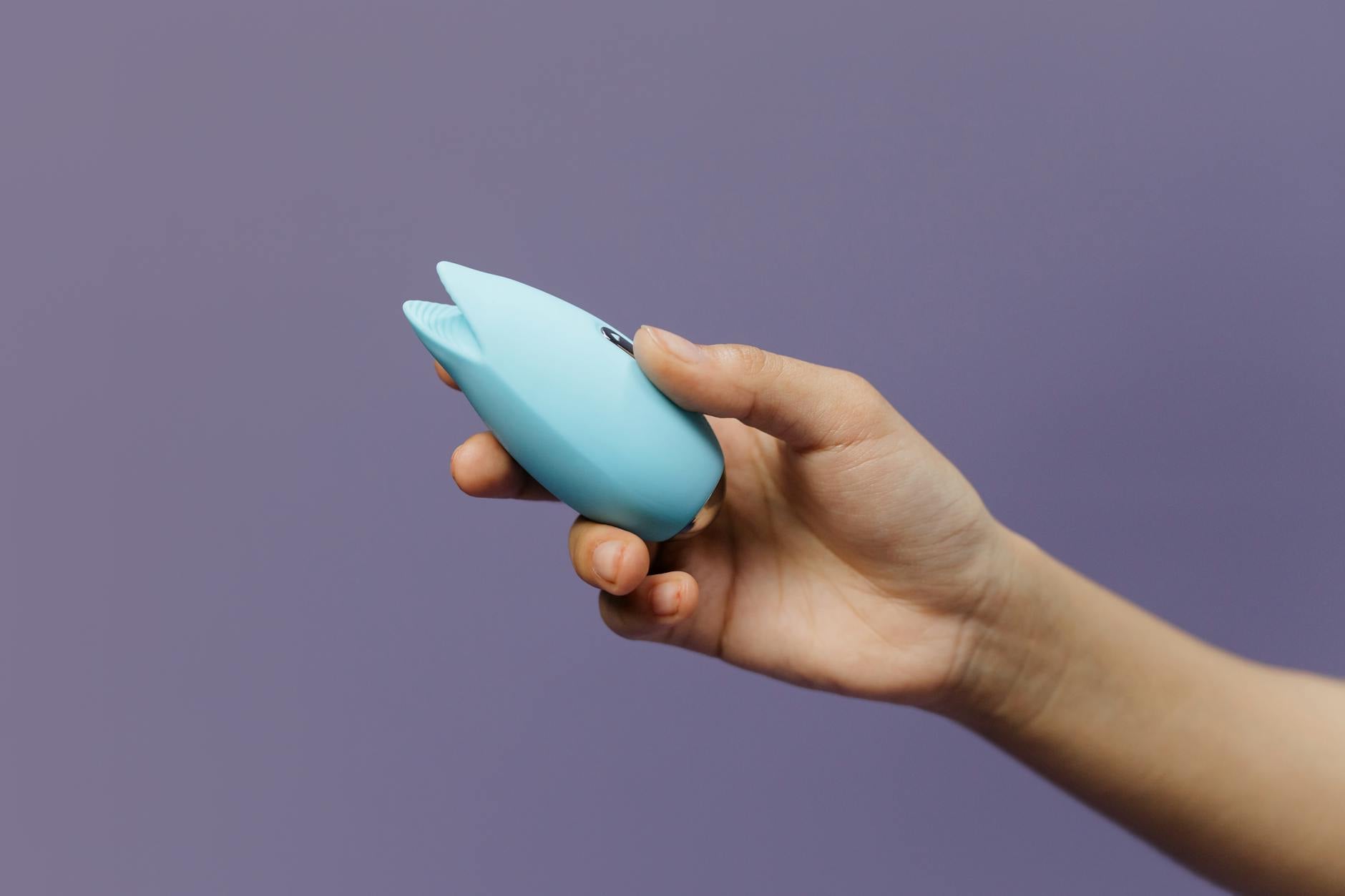
Let's talk about why your lemon vibrator doesn't feel the same every week
Honestly, if you've ever thought your clitoral vibrator felt amazing one week and almost irritating the next, you're not imagining it. Your cycle isn't just about your mood or energy. It's systematically changing how your nervous system responds to sensation, how much blood flow your clitoris receives, and how sensitive your nerve endings are to stimulation.
This means the settings that work brilliantly on day 7 of your cycle might feel too intense on day 21. And the lemon vibrator settings you need mid-cycle might leave you flat during your period. Understanding these shifts isn't about adding complexity to your pleasure. It's about removing friction and getting more consistent, satisfying results.
How estrogen shapes clitoral sensitivity
Estrogen does something wild to your clitoris. As your estrogen climbs during the follicular phase (days 1-14 of a typical 28-day cycle), blood flow to your vulva increases. Your clitoral tissue literally swells slightly, nerve endings become more densely packed near the surface, and your brain becomes more responsive to touch signals.
This is why many people report that mid-cycle, around ovulation, feels almost too intense. Your clitoris is at peak engorgement. That's also why the second half of your cycle, when estrogen drops, often feels duller. You're not broken. Your body has physiologically shifted.
Some research suggests that sensitivity peaks around day 14 (ovulation), plateaus for a few days, and then gradually decreases through the luteal phase. But here's the thing: every body is different. Some people experience one peak. Others have two smaller peaks. Some notice almost no cycle-related change. Yours might follow the textbook pattern or be completely its own thing.
The practical move? Track what actually feels good for two months. You'll learn your own rhythm faster than any app can tell you.
Menstruation: when you might need less stimulation
During your period, estrogen and progesterone are both low. Your clitoris is less engorged, and many people find they either have zero interest in pleasure or need gentler, shorter sessions.
If you're using a lemon clitoral vibrator during menstruation and it feels uncomfortable or overstimulating, try switching to a lower pattern. The Lem's quieter settings can feel soothing rather than aggressive when your body is already in a state of release. Some people find that rhythm or pulsing patterns work better than continuous vibration during this phase.
Other people experience the opposite: menstrual cramps ease slightly after orgasm, and they actually crave more intense stimulation. If that's you, there's nothing wrong with that either. Just make sure you're using enough lube, since menstrual fluid isn't a substitute, and change your approach if anything starts to feel raw.
The follicular phase: building sensitivity (days 1-14)
As your period ends and estrogen starts rising, blood flow to your vulva increases. By day 7 or 8, many people feel noticeably more aroused, more easily orgasmic, and able to handle longer sessions. Your clitoris wants attention.
This is often the phase where people report using their lemon vibrator at higher intensities and loving it. Patterns 4 and 5 on the Lem might feel perfect when day 1 of your cycle felt too much. Your body is preparing for ovulation, and that preparation includes making your nervous system more receptive to pleasure.
You might also notice that arousal builds faster. Where you might have needed 20 minutes of buildup at the start of your period, you might need only 10 during this phase. That's the estrogen surge at work.
Ovulation: peak sensitivity (around day 14)
This is where many people hit their pleasure ceiling. Estrogen peaks, your clitoris is maximally engorged, and your nervous system is primed to respond. Some people say orgasms feel stronger. Others say it's easier to have multiple orgasms back-to-back.
Here's the catch: that heightened sensitivity can also mean that overstimulation happens faster. If you normally use pattern 3 on your lemon vibrator, you might need to dial back to pattern 2 during ovulation or increase lube significantly to buffer the sensation. It's not regression. It's recalibration.
This is also the phase where pulsing or wave patterns sometimes feel better than continuous vibration, because your nervous system doesn't get fatigued as quickly. Many people find this is the ideal time to explore new sensations or new patterns on their toy because their body is most responsive.
The luteal phase: shifting needs (days 15-28)
After ovulation, progesterone rises and estrogen falls. Your clitoris starts to feel less engorged, less eager. Many people describe this phase as feeling more "internal" or finding that they need deeper pressure or more sustained stimulation rather than light surface touch.
If you rely on the Lem during this phase, you might find you need longer sessions or double sessions to reach orgasm. You're not losing sensitivity permanently. You're experiencing a natural shift that happens in every hormonally cycling body.
Some people in the luteal phase prefer broader, sustained pressure over precise stimulation. The Lem's suction still works beautifully, but you might combine it with internal or deeper external pressure. Others find they need mental focus or fantasy, not just physical sensation. Your pleasure during this phase is still valid, it's just asking for something different.
The practical strategy: track and adjust
Here's what actually works: keep a one-month log. Note the date of your cycle, what setting you used on your lemon vibrator, how long it took to orgasm, and how the sensation felt (too intense, just right, underwhelming). After one cycle, patterns will emerge. You'll know whether you prefer pattern 2 or 3 during your follicular phase, and whether you need lube or longer sessions during your luteal phase.
That information is gold. It means you stop reaching for the same setting every time and wondering why some sessions feel off. You're working with your body instead of against it.
FAQ
Does my birth control change how my cycle affects sensitivity?
Yes, dramatically. Hormonal birth control flattens the hormonal peaks and valleys that create cycle-based sensitivity shifts. If you're on the pill, patch, or ring, you might notice significantly less variation week to week. This is actually why some people find clitoral vibrators work better with hormonal birth control changes. Your body isn't cycling through the same sensitivity swings, so you're chasing a more stable baseline.
Can cycle tracking apps predict my pleasure peaks?
Apps can predict when ovulation typically happens based on cycle length, but individual variation is huge. Two people with identical cycle lengths can experience totally different sensitivity curves. The only reliable predictor is tracking your own body for 2-3 months. Generic predictions are a starting point, not a guarantee.
What if my cycle isn't 28 days?
Your follicular phase might be shorter or longer. Your luteal phase might be the same or different. The sequence of sensitivity shifts still applies: low during menstruation, rising during the follicular phase, peaking around ovulation, then declining in the luteal phase. The timing is just personalized to you.
Does lube help if my sensitivity shifts feel too extreme?
Absolutely. Water-based lube buffers sensation and can make a vibrator feel more manageable when your clitoris is hypersensitive. It also helps during phases when you feel duller or less easily aroused, because it reduces friction and allows longer sessions without discomfort. Think of it as a tool for phase-matching, not just a base layer.
Should I use different intensities on my lemon vibrator at different cycle phases?
Yes. Start low during your period and early follicular phase. Experiment with medium to higher intensities around ovulation. Then dial back again as you enter your luteal phase. Your clitoris isn't broken if it needs less intensity one week and more the next. It's responding to hormones, which is normal and healthy.
What if I don't notice any cycle-related sensitivity changes?
Not everyone does, especially if you're on hormonal birth control or if your body just doesn't follow the textbook pattern. That's fine. You don't have to track or adjust. But if you're curious, try a two-month experiment anyway. You might notice subtler shifts even if they're not dramatic.
The real advantage of understanding your cycle
When you know why your lemon vibrator feels different week to week, you stop blaming yourself or your toy. You're not broken. Your toy isn't broken. Your body is doing exactly what it's supposed to do. That shift in perspective alone makes pleasure feel less fraught.
Beyond that, working with your cycle instead of against it means better orgasms, shorter sessions during phases when arousal is easier, and real permission to take longer when you need it. You're not forcing an outcome. You're matching your tools to what your body actually needs, when it needs it.
If you're using a lemon vibrator when you feel pressure to perform in bed, understanding your cycle removes one layer of that pressure. You know the difference between a genuinely off day and a cycle phase that just asks for a different approach. That clarity is freedom.