Here's the thing about performance anxiety
Performance anxiety isn't about lacking skill or desire. It's about your brain being split in two. Half of you is trying to feel pleasure. The other half is watching, judging, timing, and asking: Am I doing this right? Is my partner enjoying this? Why isn't this working like it should? That internal audience kills arousal faster than anything else.
When you're caught between performing and feeling, you end up doing neither well. And then the anxiety deepens because you feel like you've failed.
Here's what I've learned from years of working with couples: lemon vibrators can break this cycle. Not by being magic, but by removing you from the equation of proving something.
Why performance anxiety kills pleasure
The brain needs two things for arousal to build: safety and focus. Performance anxiety destroys both.
When you're worried about how you look, how long you're taking, whether you're wet enough or hard enough or responsive enough, your nervous system is in threat detection mode. Your blood flow is diverted from your genitals to your muscles (fight-or-flight physiology). Your natural lubrication slows. Arousal becomes impossible because your body doesn't trust that it's safe to relax.
The second issue is mental focus. Arousal requires you to be present in sensation, not narrating your performance like a sports commentator. Performance anxiety forces you to commentate. You can't do both simultaneously.
The data backs this up. Studies consistently show that people who struggle with sexual anxiety report fewer orgasms, lower satisfaction, and more avoidance of sex altogether. But here's the useful part: the anxiety itself isn't a reflection of your actual sexual capacity. It's just static.
How lemon vibrators shift the pressure
Lemon clitoral vibrators work on the performance anxiety problem in three specific ways.
First, they externalize the work. When you're using a tool, the responsibility for stimulation isn't solely on you or your partner. It's distributed. This tiny shift releases a surprising amount of mental pressure. You're not performing the stimulation. You're using something that stimulates you. It's a different thing entirely.
Second, they give you physical permission to stop trying so hard. Anxiety often feels like trying harder will fix it. But trying harder is the problem. A lemon vibrator gives you explicit permission to receive instead of perform. You can lie back. You can focus on sensation instead of execution. That permission matters.
Third, they work fast enough to interrupt the anxiety loop. Clitoral vibrators stimulate nerves at a frequency and intensity that your hand often can't match. This speed means arousal can build before anxiety has time to derail it. You get into sensation before your internal critic wakes up.
The specific setup that helps most
If you're using a lemon vibrator specifically to work through performance anxiety, a few practical things shift the odds in your favor.
Solo first, always. This is not a compromise. This is essential. If you're learning how your body responds to a lemon vibrator, do that alone. No audience. No one watching. No wondering if your partner is bored. Spend 2-3 weeks using it solo before introducing it with a partner. This builds the neurological pathway of arousal without the anxiety layer.
Start with lower patterns. The Lem vibrator has multiple intensity settings. When anxiety is in the picture, resist the urge to jump to maximum intensity. Start at pattern 1 or 2. This keeps stimulation in the sensory range (pleasurable) rather than the functional range (goal-oriented). You're not trying to come. You're learning what feels good.
Set a time boundary. Performance anxiety often includes the fear of taking too long. Set a timer for 20 minutes. Give yourself permission that within that time frame, if you orgasm, great. If you don't, you still win because you spent 20 minutes not performing. You spent it feeling. That's the whole point.
Use it with a partner differently than solo. When you introduce a lemon vibrator into partnered sex, the frame changes. You're not proving anything. You're inviting your partner into your pleasure. Show them how you like it used. Let them hold it for you. Let them watch what makes you arch your back. This transforms the experience from performance to invitation.
The mental reframe that actually sticks
Technique matters less than philosophy here. If you're still operating from the belief that "good sex" means you perform flawlessly without tools, a lemon vibrator won't help. It'll feel like admitting defeat.
But if you reframe it, everything changes.
Good sex isn't about how hard you try or how much you prove. It's about how present you are. It's about whether your nervous system feels safe enough to let arousal happen. It's about whether you're feeling pleasure or monitoring yourself feeling pleasure.
A clitoral vibrator is just a tool that makes presence easier. Using one doesn't mean you're bad at sex. It means you're smart enough to use what works.

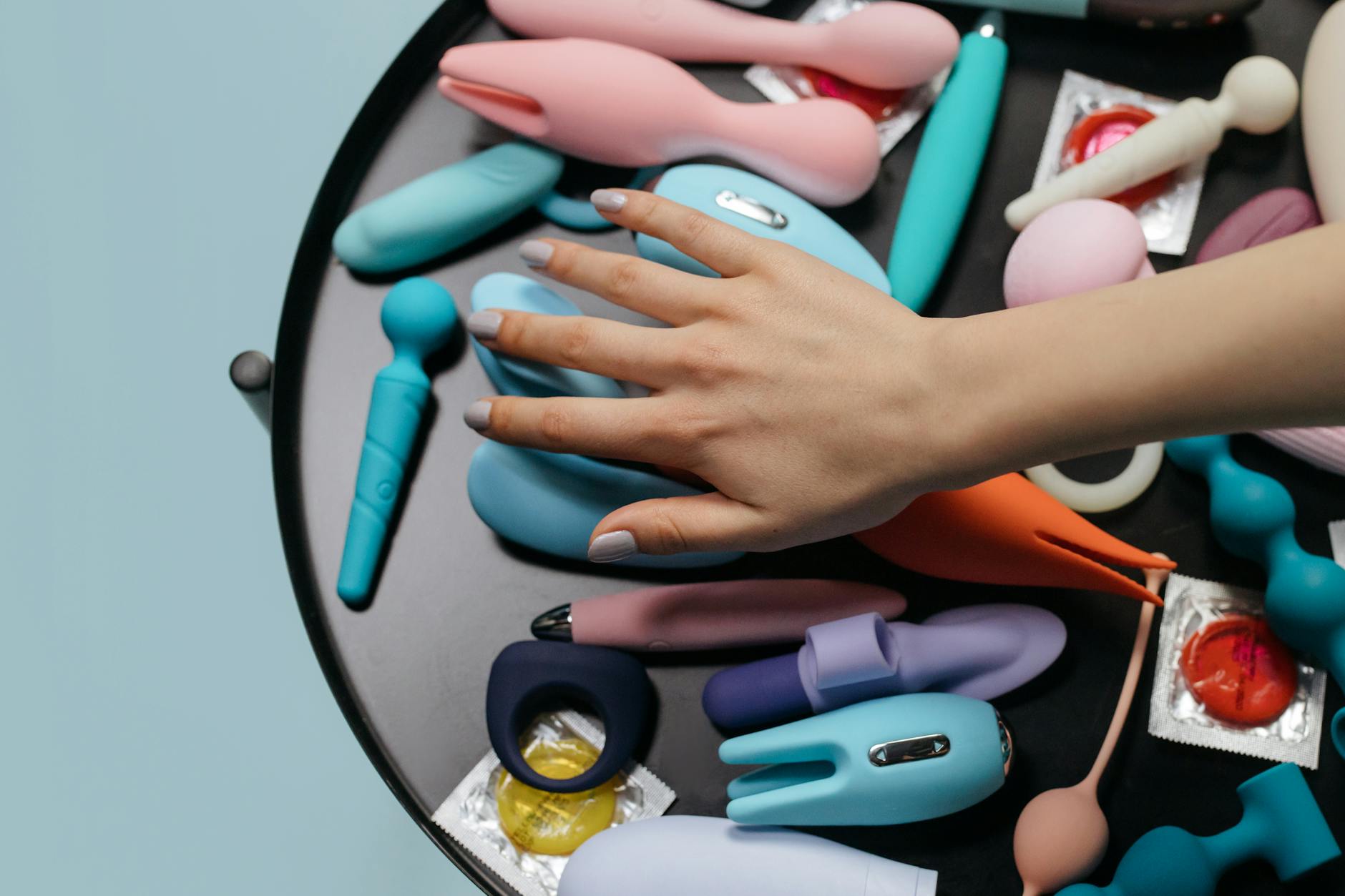
Photo by Madison Inouye on Pexels
Many of my clients who've struggled with performance anxiety describe the same shift. They start using lemon vibrators and suddenly notice: I'm not thinking about how I look. I'm not timing myself. I'm not waiting for my partner to finish so I can relax. I'm actually here. That "here-ness" is the goal. The orgasm is a side effect.
When to bring it into your partnership
If you're in a relationship and you've been managing performance anxiety solo, the question becomes: How do I introduce this with my partner without it feeling like I'm rejecting them?
Honestly, it's almost never about rejection. Your partner probably has their own performance anxiety running in the background. When you introduce something that makes you visibly relax and enjoy yourself more, most partners are relieved, not hurt.
The frame matters. Don't lead with "I need this because you can't satisfy me." Lead with: "I want to show you something that helps me relax and actually be present with you." There's a difference.
If your partner is resistant to toys, that's worth a separate conversation. How to Use a Lemon Vibrator When Your Partner Doesn't Know How to Ask for Toys might help with that specifically.
For most couples, though, the introduction is simpler than the anxiety makes it seem. Showing your partner how you use a lemon vibrator, what makes you respond, how your body changes when you're truly relaxed. That's not a threat. That's information. It's generosity.
What changes when the pressure lifts
Once you've spent a few weeks using lemon clitoral vibrators without the performance frame, something shifts. Your nervous system starts to believe that pleasure is safe. That you don't have to earn it. That your body's responses are valid whether they happen fast or slow or at all.
Some clients find that after a few weeks of this, they can use the vibrator less and still feel the same ease. Their baseline anxiety drops because they've proven to themselves that they can experience pleasure without proving anything.
Others find they just like using them. And that's fine too. This isn't about graduating away from tools. It's about removing the shame or urgency from using them.
Performance anxiety whispers: You should be able to do this without help. Confidence says: I use what works and I enjoy myself. Both are true. Only one of them gets you the pleasure you deserve.
People also ask
Can lemon vibrators actually help with performance anxiety or is it just a distraction?
It's not a distraction, it's a reset. Performance anxiety is a nervous system state. Clitoral vibrators interrupt that state by shifting where your attention goes. Instead of focusing on your performance, you're focusing on sensation. That shift is neurological, not psychological. Your brain can't simultaneously monitor your performance and be fully present in pleasure. The vibrator makes presence easier by filling your sensory bandwidth with something other than self-judgment.
Should I use a lemon vibrator alone before using it with my partner?
Yes, absolutely. Especially if performance anxiety is the issue. Solo exploration removes the audience effect entirely. You can learn how your body responds, what intensities feel good, how long arousal takes, what patterns work best. All without the anxiety of being watched or judged. Once you've built that solo confidence, introducing it with a partner becomes an invitation rather than a confession.
What if using a vibrator makes me feel more anxious, not less?
That's worth paying attention to. Sometimes performance anxiety masks deeper shame about pleasure itself. If a vibrator amplifies anxiety, slow down. Try a lower intensity. Try a different setting. Or consider whether the anxiety is about the tool or about a belief underneath that using tools means something negative about you. A therapist who specializes in sexual health can help untangle that.
How do I talk to my partner about using a lemon vibrator if I have performance anxiety?
Lead with your own experience, not a complaint about them. "I've noticed I get in my head during sex and it makes it harder for me to relax. I want to try something that might help me be more present with you." That frames it as self-care, not criticism. Most partners respond well to that. If yours doesn't, the resistance is about something else worth exploring.
Will using a lemon vibrator change what I'm attracted to in my partner?
No. Using a vibrator is about managing your nervous system and your pleasure, not about your partner's desirability. In fact, many people report feeling more attracted to their partner after introducing vibrators because the pressure lifts and they can actually enjoy intimacy again.
How long does it take for performance anxiety to actually improve?
You'll notice a shift in presence within 2-3 sessions of solo use. Real change in how you show up partnered typically takes 4-8 weeks of consistent solo exploration first. That might sound long, but you're literally rewiring a nervous system response. That takes repetition.
The bigger picture
Performance anxiety in bed is never actually about sex technique. It's always about safety, permission, and whether you believe your pleasure matters. A lemon vibrator can't give you those beliefs. But it can create the conditions where your nervous system starts to feel safe enough to believe them.
Your capacity for pleasure hasn't changed. Your anxiety just got between you and it. The vibrator is the tool that lets you back in.
Sources
Gottman, J. M., & Silver, N. (2015). The Seven Principles for Making Marriage Work. Harmony.
Barlow, D. H. (1986). Causes of sexual dysfunction: The role of anxiety and cognitive interference. Journal of Consulting and Clinical Psychology, 54(2), 140-148.
Martens, W. A. J., Sumner, R. B., Maltin, A. C., et al. (2007). Anxiety sensitivity and sexual arousal. Archives of Sexual Behavior, 36(1), 53-64.