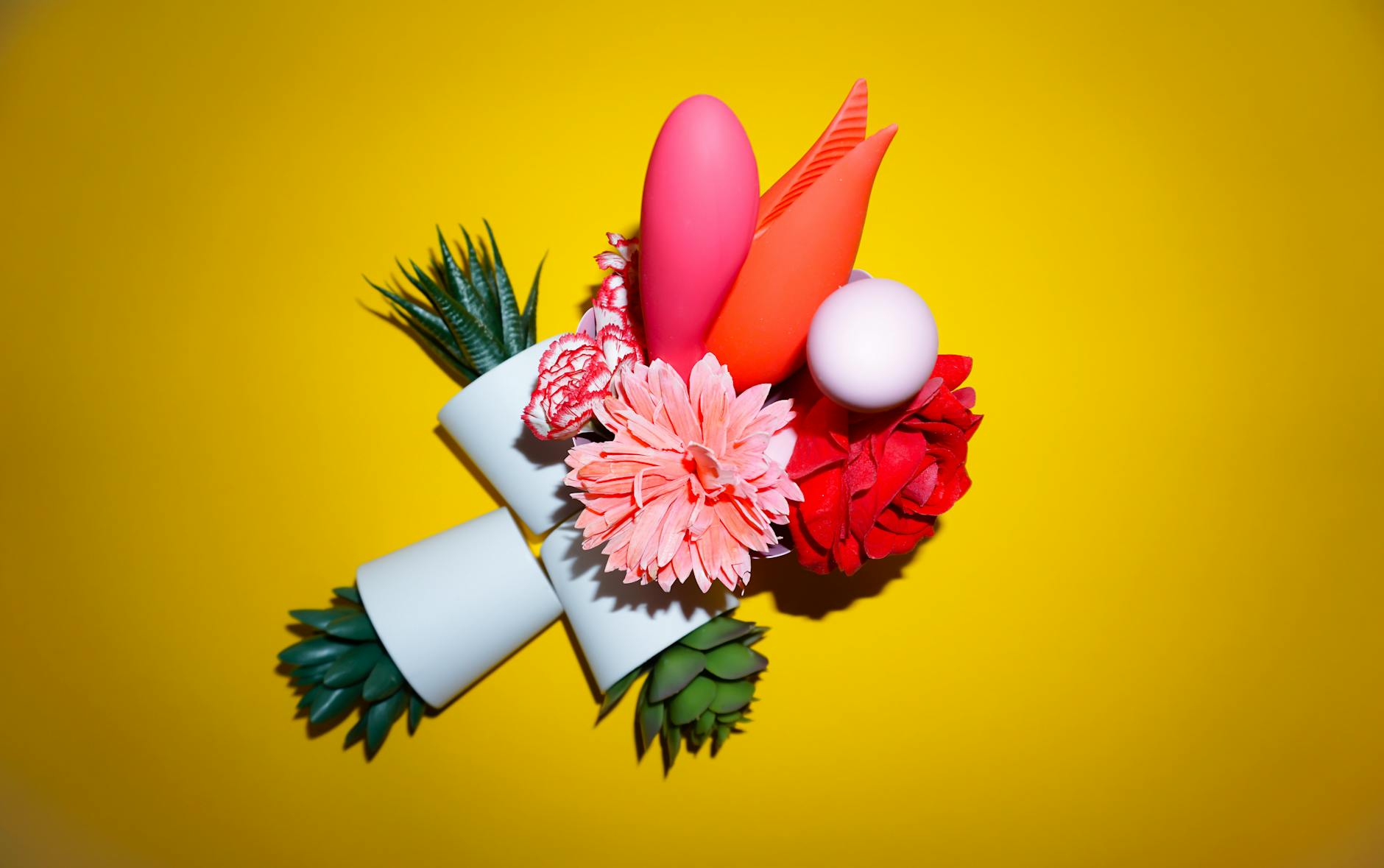
Let's talk about the fade
You've had your lemon vibrator for years. It used to make you gasp. Now it feels like background noise. You're wondering if you've somehow broken yourself, or if the toy is dying, or if you've just become impossible to please. Here's the relief you need: none of that is true. What's happening is measurable, predictable, and fixable.
Why sensation fades with the same toy
Your nervous system adapts to repeated stimulation. This is called "habituation," and it's not a flaw in you. It's how your brain works. When a stimulus stays constant, the neurons that fire in response to it gradually downregulate. The lemon vibrator that felt electric in month three feels like a gentle hum by year three. Your body isn't broken. It's just gotten efficient.
There's also a neurochemical layer. The first time something feels novel, your brain floods with dopamine. The hundredth time, less so. That's why vacation sex hits different. It's not that your partner got better. It's that your brain is wired to reward novelty.
The good news: novelty is something you can engineer.
What's actually changing in your toy
Silicone doesn't degrade fast, but the motor can. If you've been charging your lem vibrator daily for three years, the motor has made billions of rotations. Motors wear. The vibration amplitude decreases gradually, so subtly that you might not notice until you compare it side by side with a new one. Battery capacity also degrades. Even rechargeable batteries lose efficiency over time. After 500 charge cycles (roughly three to four years of regular use), a battery can hold 70-80% of its original capacity. Less charge means less sustained intensity.
The silicone itself stays pretty stable. Clean it well, store it dry, and it'll look fine for a decade. But if you've been storing it in a humid bathroom or in direct heat, the material can experience minor surface breakdown, which doesn't hurt function but might affect how the sensation feels on your skin.
None of this means your toy is garbage. It means it's aging normally.
The hormonal piece no one mentions
Your body is a chemistry experiment. If your hormones have shifted over the years you've owned that toy, sensation changes. Estrogen affects tissue sensitivity. Testosterone drives desire and pleasure response. If you've gone through major hormonal transitions (pregnancy, hormonal birth control changes, menopause, medication shifts), your nerve sensitivity might genuinely be different than it was when you first bought that lemon clitoral vibrator.
This isn't bad. It's just different. And different doesn't mean worse—sometimes it means you need to find new angles or intensities that match where you are now. When you're dealing with how lemon vibrators help when sensation feels numb after anxiety medication, the solution isn't stronger. It's smarter.
Tolerance is real, and it's not shameful
People talk about needing stronger vibrators the way they whisper about needing more alcohol to feel drunk. There's guilt baked in. Stop. Your nervous system adapts to sensation over time. That's not a character flaw. It's biology. And it's absolutely reversible.
Tolerance to one toy doesn't mean you need to escalate forever. It means you have options: introduce a different sensation (air-suction feels wildly different from traditional vibration), vary the intensity settings, build in breaks, or alternate between toys. The novelty alone resets your nervous system's baseline.
How to get intensity back without buying new toys
Four strategies that work:
1. Take breaks. You don't need to use your lemon vibrator every day. If you've been using it regularly, take a week or two off. Seriously. When you come back, the sensation will feel stronger because your nervous system has reset its baseline. This is the cheapest fix and it actually works.
2. Layer sensations. Don't use just the vibrator. Add penetration, add partner touch, add temperature play (ice on your inner thigh before starting), add a different location. Your brain isn't habituated to the combination. It's only habituated to the vibrator alone. Mixing textures and pressures resets that novelty circuit.
3. Change your patterns. If you always start at intensity 3 and build up, flip it. Start at 1 and stay there for longer. Or start at the highest setting and go down. Your nerves respond to change, not absolute intensity. Unpredictability is a feature.
4. Explore different tools. You don't need to abandon your beloved lem vibrator. But if you add occasional air-suction stimulation (which works through a different mechanism than traditional vibration), your body remembers what intensity actually feels like. Then when you go back to your original toy, it lands differently.
Many people find that alternating between a traditional lemon vibrator and another sensation type keeps both feeling fresh. It's not about being greedy for more intense toys. It's about keeping your nervous system engaged.
The battery and motor question
If you're pretty sure your toy is genuinely losing power, test it. Hold it up to a mirror with your phone camera in slow-motion video. A healthy motor should produce a clearly visible blur. If you're barely seeing movement, the motor is likely degraded. At that point, you have options:
Check if your toy has a warranty. Many well-made lemon vibrators and other quality clitoral vibrators have multi-year coverage. A dead motor might be covered if you're within the window.
If it's out of warranty, replacing just the motor is sometimes possible if the toy is modular. Some brands support this. Some don't.
If neither of those applies, it's probably time for a new toy. But that doesn't mean your years with your current one were wasted. That toy taught your body what it likes.
The psychological layer
Here's something people don't talk about: sometimes the fade isn't physical at all. You've used this toy hundreds of times. It's familiar. Familiar is comfortable, but it's not exciting. Your brain knows what's coming. There's no anticipation. No surprise.
This is actually why how to use lemon vibrators when you want deeper connection with your partner works. Introducing someone else into the experience—whether that's using the toy together, having them control it, or just knowing they're present—reintroduces novelty to a sensation your nervous system has mapped.
If you're flying solo, novelty can come from different contexts. Different room. Different time of day. Different mindset. Different fantasy. The toy isn't changing, but the story around it is.
When to actually replace your lemon vibrator
If the motor is genuinely failing, replacement makes sense. If the battery no longer holds a charge even after days of rest and charging, it's probably done. Silicone toys last longer than their electronics, so usually it's the motor or battery that gives out first.
Before you assume your beloved lem vibrator is finished, try the break strategy. Take two weeks off completely. Seriously. Then come back to it with fresh eyes and a reset nervous system. You might be surprised how much better it feels.
If you do decide to upgrade, that's fine too. But consider keeping the old one for variety. Many people find that rotating between two or three toys keeps all of them feeling intense and new.
FAQ
Can vibrator motors really weaken over time?
Yes, absolutely. Continuous motor operation causes normal wear. After 500+ charge cycles or several years of regular use, vibration amplitude typically decreases noticeably. This isn't a defect. It's just entropy. Even well-made lemon clitoral vibrators experience this eventually.
How long does a quality vibrator usually last?
Most well-designed toys last 3-5 years with regular use if the motor is what gives out first. With less frequent use, longer. The silicone itself can last a decade or more. Storage matters: keep it cool, dry, and out of direct heat, and lifespan extends.
Is needing a stronger vibrator a sign something is wrong with me?
No. Nervous system habituation is completely normal and happens to every body. It's not a sign of damage or dysfunction. It's a sign that your nervous system is doing its job: adapting to repeated stimuli. The fix is usually novelty, not escalation.
Can hormonal birth control affect vibrator sensation?
Yes. Hormonal BC can change tissue sensitivity, lubrication, and desire. Some people report that switching birth control methods changes how sensation feels. If this happened to you, that's worth exploring before assuming your toy is failing. How to use lemon vibrators when lubrication decreases with hormonal birth control has more specific strategies.
Is it normal to want a different toy after years with the same one?
Completely normal. Your body changes. Your preferences evolve. Novelty is neurologically rewarding. Wanting variety doesn't mean your original toy failed you. It means you're ready for a different experience. Many people keep favorite older toys in rotation rather than replacing them entirely.
What's the difference between needing more intensity and just being habituated?
Habituation is when the same stimulus feels weaker over time, but other sensations still feel normal. If everything feels duller (not just your favorite toy), that might be worth mentioning to a doctor, as it can sometimes signal depression, medication side effects, or hormonal shifts. If it's just this one toy that feels muted, habituation is the likely culprit.
The fade you're feeling is real. It's not you, and it's not permanent. A break, a little variation, and a fresh perspective on what intensity actually means for your body right now can bring the spark roaring back. Sometimes that means a new toy. Usually it just means a smarter approach to the one you already love.
If you want personalized guidance on reigniting pleasure in your intimate life, reach out to us. We're here to help.