
Antidepressants saved your life. Now they're making orgasm impossible.
Let's be real: sexual side effects from SSRIs and SNRIs are wildly common, barely talked about, and almost never framed as something you can actually fix. Studies show 40-60% of people on antidepressants experience some form of sexual dysfunction, with delayed orgasm being the most frequent complaint. But here's the thing nobody tells you: delayed orgasm is not a permanent trade-off. It's a signal that your nervous system needs different input.
A lemon clitoral vibrator works differently than your fingers or a partner's touch. It bypasses the dulled nerve response by using consistent suction and vibration patterns that don't rely on the intensity of sensation your body used to feel. This isn't a workaround. It's a legitimate physiological hack.
How antidepressants actually change orgasm
SSRIs (like sertraline, paroxetine) and SNRIs (like venlafaxine, duloxetine) work by increasing serotonin availability in your brain. That's why they ease depression and anxiety. The problem: serotonin also regulates sexual response. It dampens dopamine at the moment of orgasm, which is good when you're in crisis. It's less good when you want to have an orgasm again.
The delay shows up in three ways. First, arousal takes longer to build. Your body's early-warning system for pleasure gets quieter. Second, the plateau phase stretches out. You can get there, but it takes 45 minutes instead of 15. Third, the orgasm itself feels muted or distant, like you're watching your own pleasure happen rather than feeling it.
Dosage matters. Some people have zero sexual side effects on 50mg of sertraline. Others on 100mg hit a wall. Timing matters too. New-onset side effects can improve within weeks as your body adjusts. Delayed side effects that show up after months often stick around unless something changes.
Why a lemon vibrator works when other tools fail
Your fingers provide variable pressure and rhythm. A partner's touch is reactive and often lighter than what you actually need when sensation is dampened. Both require your nervous system to recognize pleasure through traditional routes.
A lemon clitoral vibrator (specifically the suction-based design that characterizes the Heilonancy approach) works on a different principle. Instead of relying on penetration or friction, it creates rhythmic suction pulses against the clitoris. This stimulates a different set of nerve endings and uses a pattern your brain hasn't dulled yet.
The consistency is key. Your medication doesn't fade in and out. Neither does the vibrator. Patterns 1-2 on a lemon sucker deliver steady micro-pulses that activate the clitoral bulb without requiring you to consciously "feel" subtle sensation. For many people, this breaks through the pharmaceutical numbness in a way nothing else does.
The clinical reason: suction-based clitoral stimulation engages the clitoral complex more broadly than direct vibration. It creates pressure and release cycles that mimic the natural build of arousal, even when your brain chemistry is working against you.
Starting over: timing and settings
If you've been struggling with delayed orgasm for months, your nervous system has basically learned that pleasure takes forever or might not arrive at all. This learned response is separate from the medication side effect itself. A lemon clitoral vibrator can interrupt that pattern, but you need to time it right.
Wait until you feel the earliest hint of arousal. Not full excitement. Not even "ready." Just the moment you notice warmth or tingling. That's your signal to start. Most people on antidepressants make the mistake of waiting until they're fully aroused to introduce the vibrator, which defeats the purpose. You're essentially saying "prove to me you work on a system that's already shut down."
Start on the lowest setting. This sounds counterintuitive when sensation is muted, but a lemon vibrator's lowest pattern is actually more effective than you'd guess. Spend 3-5 minutes on pattern 1. Let your body remember what stimulation feels like without the pressure of building toward orgasm. If after 5 minutes you feel nothing, move to pattern 2.
Many people reach orgasm faster when they stop waiting for it to happen and instead focus on the physical sensation of the vibrator itself. I know that's a cliche, but it's neurologically true. You're literally redirecting blood flow from your sympathetic nervous system (stress response) back to parasympathetic (rest and pleasure). That redirection is what lets orgasm through.
The medication conversation you haven't had yet
Delayed orgasm is not inevitable on antidepressants. If you're 3+ months in and seeing zero improvement, talk to your prescriber about three options.
Option 1: Timing adjustment. Taking your SSRI at night instead of morning, or vice versa, can reduce sexual side effects for some people. This is free and sometimes actually works.
Option 2: Dose reduction. A smaller dose might maintain your mood stability while lightening sexual side effects. This is worth discussing, especially if your depression is stable.
Option 3: Medication switch. Bupropion (Wellbutrin) is an atypical antidepressant that actually increases dopamine. It causes fewer sexual side effects than SSRIs and sometimes increases libido. It's not suitable for everyone (particularly people with eating disorders or seizure risk), but it's worth asking about.
Note: never adjust or stop your medication without prescriber approval. But your prescriber should absolutely have this conversation with you. If they dismiss sexual side effects as trivial, they're not serving your actual health.
While you're working on that conversation, a lemon clitoral vibrator bridges the gap. It's not a substitute for finding the right medication. It's a tool that works while you're optimizing treatment.
Building the framework that actually works
Delayed orgasm from antidepressants is often worse in isolation. When you're alone, your body knows it's performance-focused and that's stressful. Stress locks down pleasure further. When you have a partner, pressure (real or imagined) does the same thing.
The framework that actually works involves three things. First, solo sessions with your lemon clitoral vibrator where there's zero expectation of orgasm. Just sensation. Second, partnered time where the vibrator is part of foreplay, not the whole story. Your partner can use it on you, or you can use it while they touch you elsewhere. This grounds arousal in connection instead of isolated intensity. Third, patience with the process. Orgasms return, but they return on a different timeline than they arrived. Expecting them to feel exactly like they did before medication is setting yourself up for disappointment.
The data on this is clear: people who stop fighting the antidepressant side effect and instead adapt their approach (including using vibrators designed for dampened sensation) recover orgasm capacity much faster than people who white-knuckle through hoping something will change.
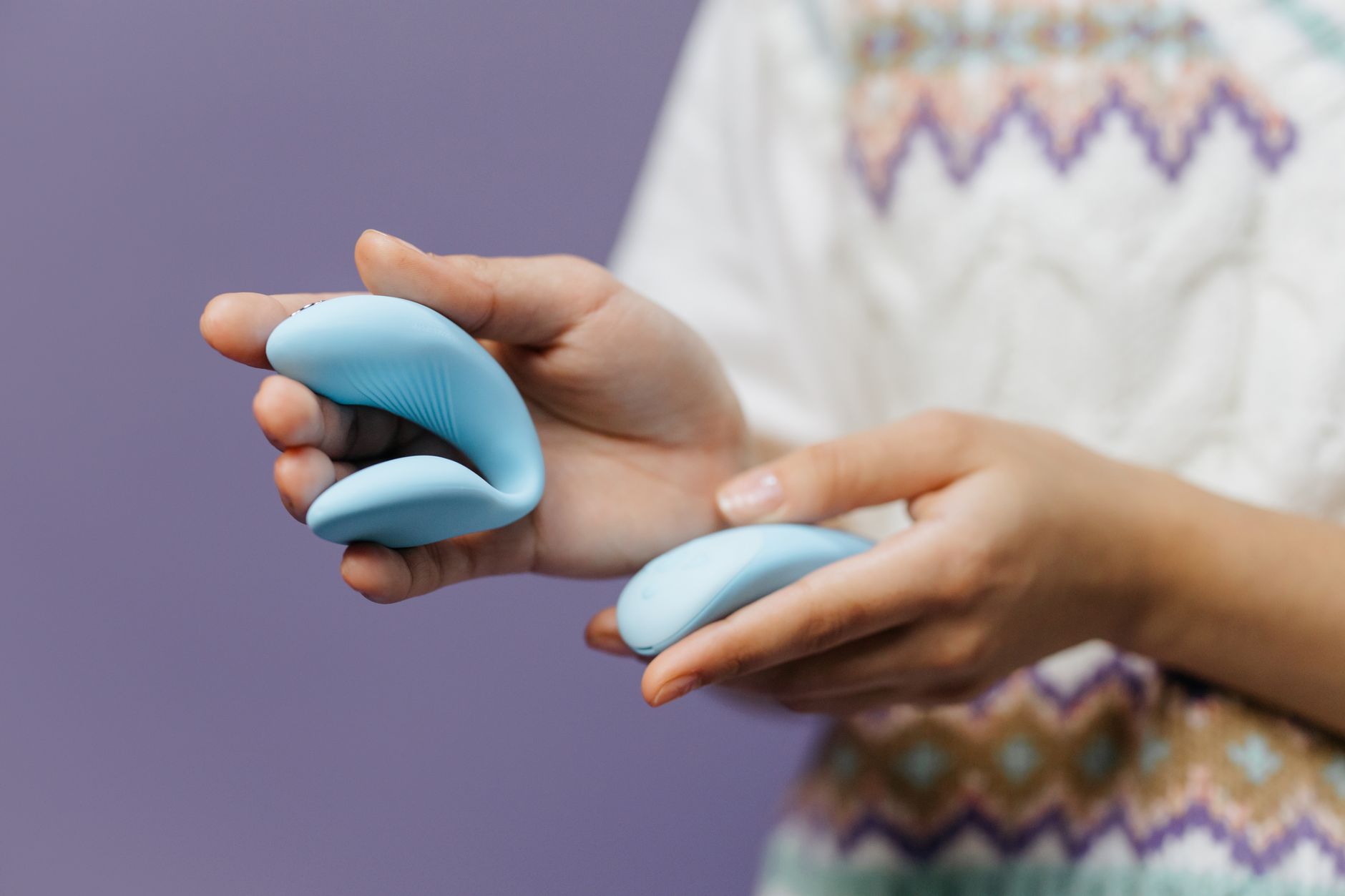 Photo by cottonbro studio on Pexels
The partner conversation
If you're in a relationship, delayed orgasm from your medication affects both of you. A partner might interpret the delay as a reflection on them, or assume you've lost interest. You might feel pressure to fake orgasm to relieve their worry. None of this helps.
Here's what actually works: tell your partner what's happening and what you need. "My antidepressant is making orgasm take longer. This isn't about you or attraction. Here's what helps me: [longer foreplay / less goal-focus / using a vibrator sometimes]." A lemon clitoral vibrator is not a replacement for partnership. It's a tool that makes pleasure possible again when chemistry is working against you.
Partners who feel threatened by vibrator use are often anxious about their own performance. This is worth addressing separately, ideally with a therapist. But you deserve pleasure. Your medication is necessary. The vibrator is the bridge between those two truths.
When to expect results
Some people see improvement within a few sessions. Others need 2-3 weeks of consistent use before the numbness lifts enough to notice. This depends on your medication, how long you've been on it, and how much your body has adapted to chemical changes.
One honest thing: if you reach orgasm with a lemon clitoral vibrator and it still feels muted or distant, that's not a vibrator failure. That's a signal that your medication dose or type might need adjustment. The vibrator should make orgasm feel more intense and more present, not just possible.
Frequently asked questions
Can I use a lemon vibrator while I'm still on antidepressants?
Yes, completely. A lemon clitoral vibrator is designed to work with dampened sensation. It doesn't interact with your medication or make it less effective. In fact, many therapists recommend vibrator use specifically because sexual pleasure is part of recovery, and antidepressants often block that pathway.
How is a lemon sucker different from a regular vibrator for this problem?
Traditional vibrators rely on you feeling subtle vibration through tissue. When antidepressants numb sensation, subtle vibration disappears. A lemon clitoral vibrator uses suction-based stimulation, which creates pressure waves that work even when fine-touch sensation is dulled. It's a completely different signal to your nervous system.
Does this mean my sexual response will never return to normal?
Not necessarily. Sexual response often improves over time as your body adjusts to medication, or if you switch to a different antidepressant. Some people find that after 6-12 months, arousal and orgasm start returning even without changes to medication. Others find they need to adjust their medication or add a tool like a lemon clitoral vibrator long-term. Both are normal.
What if I'm not on antidepressants but still have delayed orgasm?
Delayed orgasm has many causes: hormonal birth control, hormonal changes with age, high stress, pelvic floor tension, or relationship dynamics. If medication isn't the culprit, you might find that how to use lemon vibrators when arousal takes longer to build or how to use lemon vibrators when sensitivity returns after numbness speak more directly to your situation.
Is there a "best" pattern on a lemon vibrator for delayed orgasm?
This varies, but most people dealing with antidepressant side effects find success starting on pattern 1 or 2 (the gentlest) and staying there longer than they would if sensation weren't dampened. Jumping to higher patterns often overstimulates without actually building toward orgasm. Patience with lower settings usually works better.
Can my partner use a lemon vibrator on me, or do I need to do it myself?
Either works. Some people find partnered use reconnects them to their body and to their partner simultaneously. Others find solo use less distracting because there's zero performance pressure. Try both and notice what feels better. There's no rule here.
The bigger picture
Antidepressants are not the enemy. They save lives. But the sexual side effects are real, they're predictable, and they're fixable. A lemon clitoral vibrator is one tool in that fixing process. Talking to your prescriber about timing or dose adjustments is another. Patience with your nervous system as it relearns pleasure is a third.
You're not broken. Your medication isn't making you permanently numb. Your body is just asking for a different kind of input than it used to need. That input exists. Give yourself permission to use it.
If you want to talk through this more or explore what might help your specific situation, reach out at /contact. You deserve pleasure, medication or not.