The thing nobody tells you about hormonal birth control and pleasure
Hormonal birth control works. It prevents pregnancy, regulates periods, clears skin, and gives millions of people their lives back. But here's the conversation that doesn't happen in the clinic: it also changes how your nervous system responds to touch.
This isn't a flaw in the medication. It's chemistry. And it's absolutely fixable.
I've worked with hundreds of people in long-term relationships who started birth control and suddenly felt distant from their own pleasure. Most of them assumed something was wrong with them, or worse, with their relationships. The real answer is usually much simpler. Their bodies needed a different approach.
Why hormonal birth control shifts arousal
Hormonal contraceptives work by keeping your natural hormones stable and low. This prevents ovulation, which is why they're so effective. But those same hormones that fluctuate through a natural cycle also influence arousal, lubrication, and how quickly sensation builds.
When you take hormonal birth control, three things happen physiologically:
Testosterone drops. Yes, people with vulvas produce testosterone, and it's one of the primary drivers of sexual desire. Hormonal contraceptives suppress it. Lower testosterone doesn't mean zero desire, but it often means desire arrives more slowly and feels less urgent.
Vaginal fluid changes. Some people notice less natural lubrication on hormonal birth control. Others report the opposite. It depends on the specific formulation and your individual body. Either way, the texture and amount shift.
Neural sensitivity shifts. The brain's response to stimulation becomes more subtle. This isn't damage. It's more like turning down the volume slightly. But if you're used to a certain intensity of sensation, that quieter signal can feel like nothing is happening.
The good news: this is completely manageable. You don't have to choose between contraception and pleasure.
Why lemon vibrators work when birth control changes your response
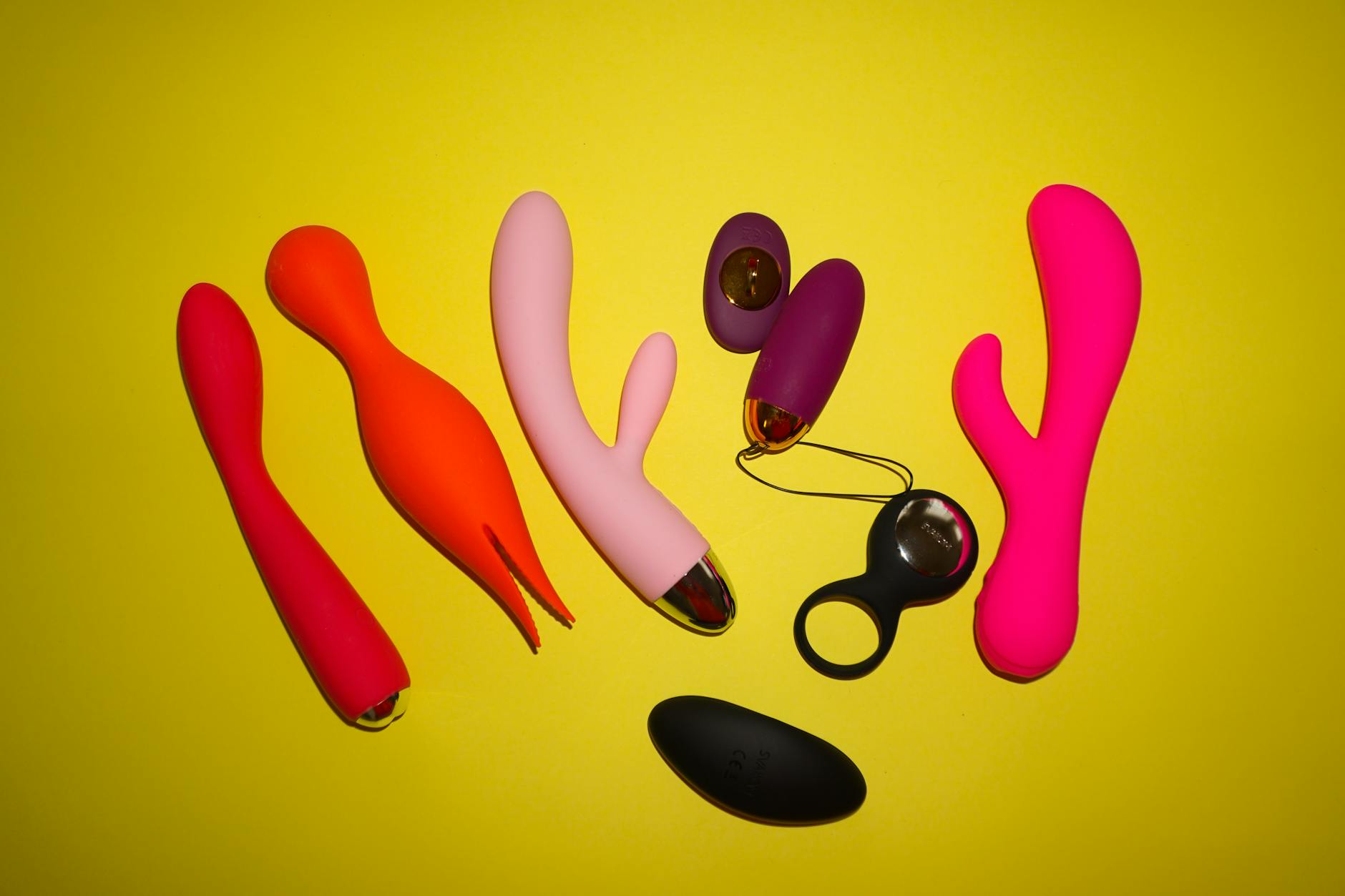
Lemon clitoral vibrators, like the ones Hello Nancy makes, use suction and gentle pulsing instead of direct vibration. This matters more than you might think when you're on hormonal birth control.
Here's why they're particularly helpful:
Suction creates a broader sensation. Instead of vibration hitting one small area intensely, suction stimulates a wider area of nerve endings at once. When testosterone is lower and neural sensitivity is quieter, this broad signal is often much easier to feel and respond to.
Pulsing builds arousal gradually. The pulsing rhythm of lemon adult toys mimics the way natural arousal builds in waves. If your birth control has made arousal feel sluggish, the rhythm helps guide your body back into that upward trajectory.
Gentle intensity is more sustainable. Many people find that when they switch to hormonal birth control, traditional vibrators that used to feel amazing suddenly feel either too intense or weirdly numb. Lemon sexual toys sit in a middle ground that often feels just right.
I worked with a client named Maya who had been on the same pill for two years. She said her orgasms felt "muted," like she was watching pleasure happen to someone else. We talked through her options. She tried a lemon vibrator from Hello Nancy, and within a week she texted me: "Oh, there I am." That's the difference the right tool can make.
How to adjust your approach for hormonal birth control
If you're taking hormonal contraceptives and struggling with orgasm, here are the practical changes that actually help:
Give yourself more warm-up time. This is not negotiable. If arousal used to come in 10 minutes, budget 20-30 now. Your nervous system isn't broken. It's just operating at a different speed. Honoring that speed instead of fighting it changes everything.
Start on the lowest setting. Most lemon vibrators have 3-5 intensity levels. Begin at level 1 and stay there for several minutes before increasing. You're not building to an orgasm quickly. You're waking up your nerve endings and letting sensation accumulate.
Use lubrication, even if you don't think you need it. If your birth control has affected your natural lubrication, external lubricant becomes an extension of foreplay, not a sign something is wrong. Water-based works with all lemon clitoral vibrators. It adds comfort and glide, which helps your nervous system register sensation more easily.
Pay attention to patterns. Some people find their arousal peaks at different times of the month even on hormonal birth control. For others, it stays relatively flat. Neither is wrong. If you notice a pattern, work with it instead of assuming you should feel the same every day.
Explore different rhythms. Lemon sexual toys with pulsing patterns can help. Some people respond better to steady pulsing, others to syncopated rhythms. The variation alone sometimes signals to your nervous system that something new is happening.
The emotional layer that often gets missed
Here's what I see happen repeatedly: someone starts hormonal birth control for completely legitimate health reasons, and then their pleasure changes. They feel frustrated. Their partner feels rejected. The relationship shifts. And then they blame the medication, when really they're grieving the loss of spontaneity.
Hormonal birth control can make sex feel less urgent because, biologically, it is. Your body isn't cycling toward a peak of fertility. That's the entire point. But culturally, we've built a lot of meaning around that urgency and spontaneity. When it softens, it can feel like something is broken.
It's not. It's different.
The couples I work with who navigate this most successfully are the ones who treat it like a conversation rather than a problem. "My body is responding differently to stimulation" is real information. But it's separate from "I want to stay connected with you" or "I need to feel desired." Mixing those conversations usually makes both worse.
If you're with a partner, the most useful thing you can do is name the change explicitly. "I started the pill and I notice my arousal is slower now. I want to explore this together instead of just powering through." That single sentence opens up experimentation instead of frustration.
When to consider switching formulations
Not every hormonal contraceptive affects pleasure the same way. Some formulations have lower hormone doses. Others use different types of progestin. A few people find that switching from pills to a patch, or from one pill to another, completely changes how they feel.
If you've tried the above strategies for 4-6 weeks and still feel stuck, that's worth a conversation with your doctor. It's not a complaint. It's information. You might say: "I've noticed my arousal has shifted since starting this pill. Are there other options we could try?" Many people find that a simple switch improves things dramatically, with zero loss of contraceptive effectiveness.
Some people also find that adding back small amounts of testosterone through a topical cream helps, though this requires a prescription and isn't as commonly offered as it should be. It's worth asking about.
The path forward
Hormonal birth control is one of the most effective tools we have for reproductive autonomy. The fact that it sometimes quiets pleasure doesn't make it a bad choice. It makes it a choice with a tradeoff that you get to manage.
Using lemon clitoral vibrators designed for sensitivity recovery isn't a workaround. It's a strategy. You're not compensating for broken physiology. You're meeting your current nervous system where it actually is and giving it what it responds to right now.
Your pleasure matters. And it's absolutely worth taking the time to rebuild it.
People Also Ask
Does hormonal birth control permanently affect orgasm?
No. For most people, if they stop hormonal birth control, arousal and orgasm return to their baseline within a few weeks to a few months. Some people stay on birth control long-term and their nervous system adapts over time, which is why you might feel differently in month 12 than you did in month 1. Either way, the change is reversible.
Can I use a lemon vibrator with my IUD?
Absolutely. Lemon clitoral vibrators are external, so they don't interact with an IUD at all. Whether your IUD is hormonal or copper, using a lemon sexual toy is completely safe. (You may want to review our full guide on how to use lemon vibrators with an IUD for additional specifics.)
How long does it take to feel a difference with a lemon vibrator on birth control?
Most people notice something within 1-3 sessions if the tool is a good fit for their body. That might be relief, clarity, or just a different sensation than they expected. A full orgasm or a noticeably stronger one often takes 2-4 weeks of consistent exploration as your nervous system wakes up to the new sensation.
Should I tell my partner I'm struggling with orgasm on birth control?
Yes, but frame it as information, not blame. Something like: "I've noticed my body is responding differently since I started the pill, and I want us to explore what works now" opens collaboration. Keeping it secret tends to create distance. More on this in our guide to using lemon vibrators with a partner.
Do certain birth control pills affect pleasure more than others?
Yes. Higher-dose pills tend to have a bigger impact on arousal than lower-dose options. Certain types of progestin also affect some people differently than others. If you're struggling significantly, asking your doctor about a lower-dose formulation or a different progestin type is reasonable and worth trying before switching contraception entirely.
Can lemon vibrators help with both low libido and difficulty with orgasm at the same time?
Often yes. By making sensation easier to access, lemon clitoral vibrators can help wake up desire and increase the likelihood of orgasm. But if your libido has vanished completely, that's worth discussing with your doctor separately. Sometimes it's the birth control. Sometimes it's stress, relationship dynamics, or something else entirely. Our guide on low libido and lemon vibrators covers this in more depth.
If you're navigating this shift right now, you're not broken and you're not alone. Your body is doing exactly what the medication intended, and your pleasure is absolutely worth the time to rebuild. If you have questions or want to talk through what might work for your body, reach out. We're here for this conversation.