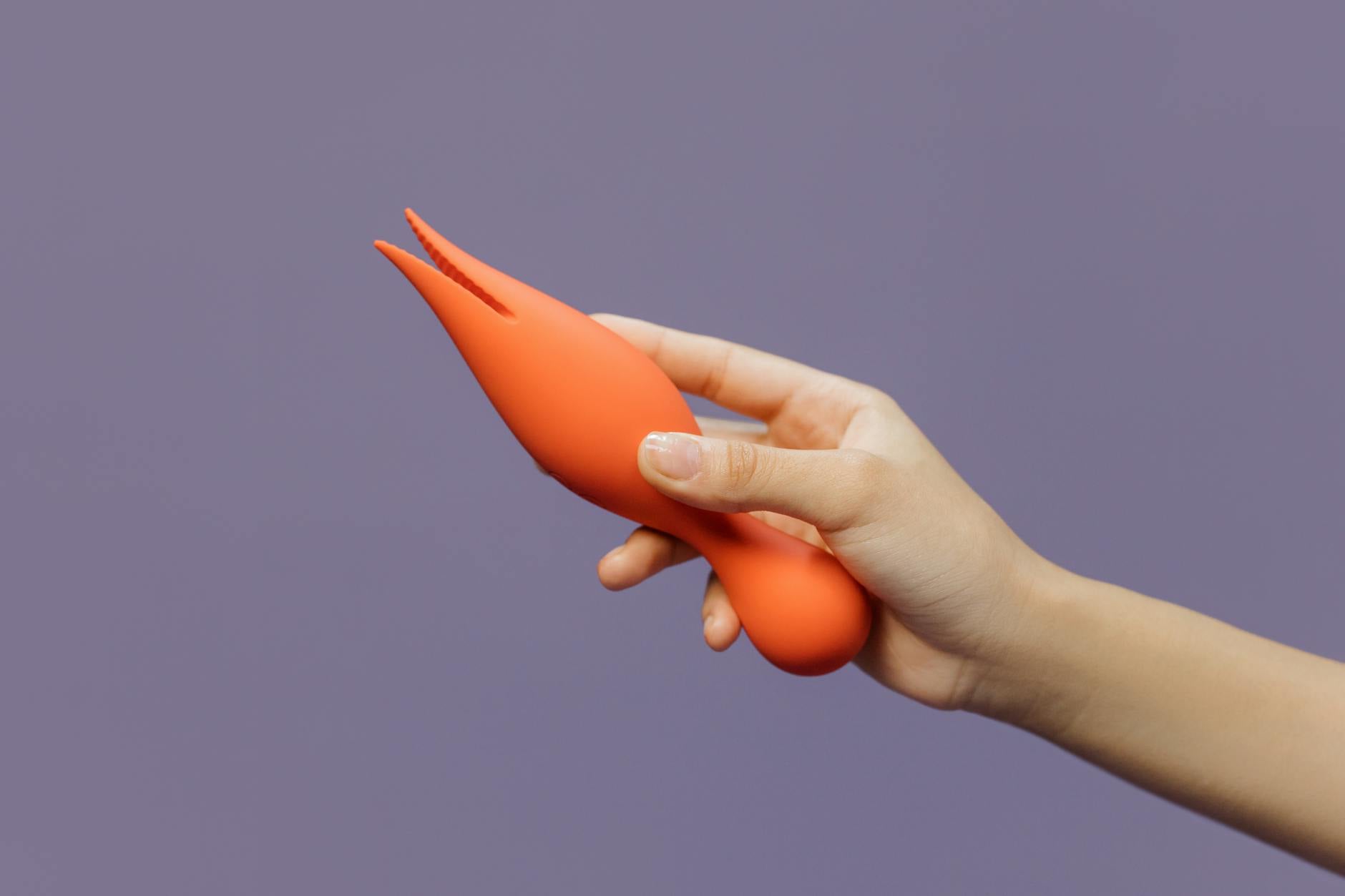
Let's talk about what actually happens
If a lemon vibrator or clitoral vibrator felt incredible at 35 and feels different now, you're not imagining it. Your body has genuinely changed. The good news: different doesn't mean worse. But it does mean you might need to adjust how you use one.
Years ago, I worked with a client in her early 50s who said, "The Lem used to make me come in two minutes. Now it takes ten, and honestly, it feels weird." She thought she'd broken something. She hadn't. Her tissue, nerves, and pelvic floor had simply evolved. Once she understood the shift, she adapted her approach and found she could have longer, more intense sensations than before.
That's the real story nobody tells you about pleasure after 40.
How tissue changes affect sensation
Your clitoral tissue gets thinner as estrogen declines. This happens gradually, often without you noticing until suddenly a toy that used to feel perfect feels slightly off. The clitoris itself doesn't shrink meaningfully, but the supporting tissue around it becomes more delicate.
What does this mean for a lemon vibrator or clitoral suction toy? Direct vibration can feel sharper or even uncomfortable on thinner tissue. That's not a sign you should stop using one. It's a signal to shift your approach. Many people in their 40s and 50s find that lemon sexual toys work better when:
- You start at lower intensity settings (pattern 1 or 2 instead of jumping to 3 or 4)
- You use a thin barrier between the toy and your skin (a soft cloth or your underwear)
- You focus on broader stimulation rather than pinpoint intensity
- You give yourself more warm-up time, usually 10-15 minutes before reaching full arousal
Your pelvic floor also loses some of its collagen and elasticity. This changes how orgasms feel. Some people describe them as more localized. Others say they're less intense. Many actually report they're more satisfying because the sensation lasts longer and feels deeper. It depends on your body.
What nerve changes actually mean
Here's something most articles skip: your clitoral nerve density doesn't decline with age. The nerves are still there. What changes is how quickly they fire and how much sensation builds before reaching threshold.
In your 20s and 30s, arousal might peak quickly. The lemon clitoral vibrator switches on, and you're at 80 percent intensity in ninety seconds. At 45 or 55, the same toy might take three to four minutes to build that same sensation level. This isn't numbness. It's a slower ramp.
Understand the difference. With numbness, stimulation produces almost no sensation no matter how long you wait. With age-related changes in nerve response time, sensation absolutely builds. It just requires patience.
I've worked with dozens of people who mistakenly diagnosed themselves with numbness when they actually just had a different arousal timeline. Once they stopped fighting the pace and leaned into it, they found the experience was actually richer.
Lubrication and comfort matter more now
Estrogen supports the vaginal and clitoral tissues' ability to self-lubricate. As estrogen drops, that process slows. You might notice:
- You need more time to become aroused before using any toy
- Dry sensation during or after use, even if you were wet at the start
- Slight irritation that wouldn't have happened before
This doesn't mean lemon vibrators stop working. It means lubricant becomes essential, not optional. I recommend:
- Water-based lube for any silicone or glass toy (it's compatible with everything)
- A generous amount, applied directly to the toy before use
- Reapplication during longer sessions (arousal may produce natural lubrication, but it often comes later in your 40s and 50s)
Silicone-based lubes feel slicker and longer-lasting, but they can degrade silicone toys over time. Stick with water-based unless you're using stainless steel or glass exclusively.
Why warm-up time transforms everything
One of the biggest shifts I see with clients over 40 is the arousal curve. If you've spent decades with a fast peak and quick plateau, adding 10 extra minutes to foreplay might feel like a waste of time at first. It's not.
Longer warm-up does several things:
-
It gives your nervous system time to activate fully. Blood flow increases to genital tissues gradually. This means more sensation and a lower pain threshold.
-
It engages your brain. Pleasure at 45 and 55 is less automatic and more responsive to mental engagement. A rushed approach flattens the experience. A intentional one deepens it.
-
It allows natural lubrication to build. Even with estrogen changes, your body can produce adequate lubrication when given proper time.
Many people I work with say that the extra warm-up time actually improved their pleasure because it forced them to slow down in a way they hadn't in years.
When intensity needs to change
Lemon adult toys and clitoral vibrators come in different intensity profiles. The Lem, for example, uses gentle suction and pulsing patterns rather than raw vibration. This often feels better for bodies in their 40s and 50s than traditional vibrators do.
If you're finding that your usual toy feels uncomfortable, try:
- Switching to a toy with gentler, slower patterns (the Lem's lower settings can feel more nuanced than a basic vibrator's high setting)
- Exploring toys designed for sensitive tissue, if you haven't already
- Testing different pattern sequences. Sometimes a consistent pulse feels better than rapid cycling
You may also notice that positions matter more. A toy that felt fine lying flat might feel uncomfortable at an angle. Experiment. Your body is telling you something important about what works now.
The psychological shifts that matter just as much
Physical changes are real. But the mental landscape matters equally. By your 40s and 50s, you've often spent decades calibrating your pleasure around someone else's preferences, timing, or needs. The physical changes of midlife sometimes create permission to prioritize your own sensation in a way you never did before.
I've noticed that many clients who initially blamed age-related changes for reduced pleasure were actually experiencing reduced desire because they were still approaching sex the way they had at 25. Once we worked through the relationship dynamics or communication patterns, the physical shifts became less significant.
If you're partnered, this is worth a separate conversation. "My body responds differently to toys" is not the same conversation as "I need us to slow down and focus on my sensation." Mixing them creates confusion. Keep them separate.
When to check in with a provider
If you experience pain (not just unfamiliar sensation, but actual pain) during stimulation with lemon vibrators or any clitoral toy, that's worth mentioning to a gynecologist who specializes in midlife care. Genitourinary syndrome of menopause (GSM) is treatable, often with topical estrogen creams that have minimal systemic absorption.
If you've experienced numbness or loss of sensation that hasn't improved with longer warm-up time, more lubricant, or gentler toys, that's also worth exploring with a healthcare provider. Sometimes it indicates something else entirely (medication side effects, vascular changes, nerve involvement) that has treatment options.
Most of the time, though, what feels different after 40 is simply your body adapting naturally. It's not a decline. It's an evolution.
FAQ: What people actually ask
Do clitoral vibrators work less well after 40?
Not less well. Differently. The sensation often intensifies with proper warm-up time and adjusted intensity. Many people report their most satisfying orgasms come in their 40s and 50s because they're no longer rushing and have clearer knowledge of what they need.
Should I switch from vibration to suction toys in my 40s?
Not necessarily. Some people prefer suction toys like the Lem because they're gentler on thinner tissue. Others stick with vibration and simply adjust settings. Try both approaches if you're curious, but don't assume you must switch.
How much lubricant is actually enough?
More than you think. A quarter-sized amount on the toy itself, plus a thin layer on your skin, is a reasonable starting point. If it dries out during use, add more. Lubrication is not an indulgence. It's part of the equipment.
Is it normal for warm-up to take longer?
Completely normal. Arousal typically takes longer to build in your 40s and 50s. This isn't dysfunction. It's a natural part of how your nervous system changes. Reframing it from "Why am I so slow?" to "I get to have a longer, deeper build" changes the experience.
Can I use the same lemon vibrator intensity I used before?
You can try. Most people find that starting lower and building up feels better than immediately jumping to high settings. Experiment over a few sessions to find your current baseline.
Does this mean my pleasure is declining?
No. It means it's shifting. The data shows no decline in pleasure capacity after 40. What changes is the timeline and sometimes the texture of sensation. With the right approach, most people find pleasure more accessible and more satisfying than it was before.