Here's the thing about toys in a relationship
Most couples don't bring up lemon vibrators because they're worried it means something. That their partner will think they're bored, that they're admitting the sex isn't good enough, that introducing a toy is basically saying "you're not doing it right." So instead, nothing changes. The conversation never happens. And quietly, one or both of you wonder what it might feel like to try something different.
Here's what I see clinically: couples who talk openly about lemon clitoral vibrators experience a measurable shift in intimacy. Not because the toy itself is magic. But because the conversation that brings the toy into the bedroom opens a door that was previously closed.
The real reason couples avoid this conversation
It's not actually about the vibrator. It's about what the vibrator represents. In many long-term relationships, especially heterosexual ones, there's an unspoken agreement that if penetration or manual stimulation "isn't enough," it's a failure. A lemon sucker or other clitoral vibrator forces you to name that out loud, and naming it feels risky.
The other thing I hear: "What if they take it personally?" Or the flip side: "What if I suggest it and they think I'm asking for permission to leave?" Both of those fears are real. And both of them shrink dramatically once you actually say them out loud to your partner.
Here's the data twist: couples who introduce toys together report higher sexual satisfaction and better emotional intimacy overall. Not just in the bedroom. The communication that happens around "Do you want to try a lemon vibrator?" transfers to other conversations. Suddenly discussing what you actually want becomes easier across the board.
How to start the conversation without pressure
Don't frame it as a problem. Frame it as curiosity.
"I've been thinking about trying a clitoral vibrator together. Not because anything's wrong, but because I'm curious what it would feel like with you. Would you be open to exploring that?" Notice there's no pressure in that sentence. There's no assumption. There's just honesty.
If your partner says no right away, ask why. Don't accept "I don't know." Dig in gently. Is it about feeling replaced? Fear that you've been unsatisfied? Confusion about how it would even work? Each of those is a different conversation, and each one is worth having.
If your partner needs time, give them space. Don't bring it up again for a few weeks. Let them sit with it. Often that's all they need. The idea terrifies them until it doesn't.

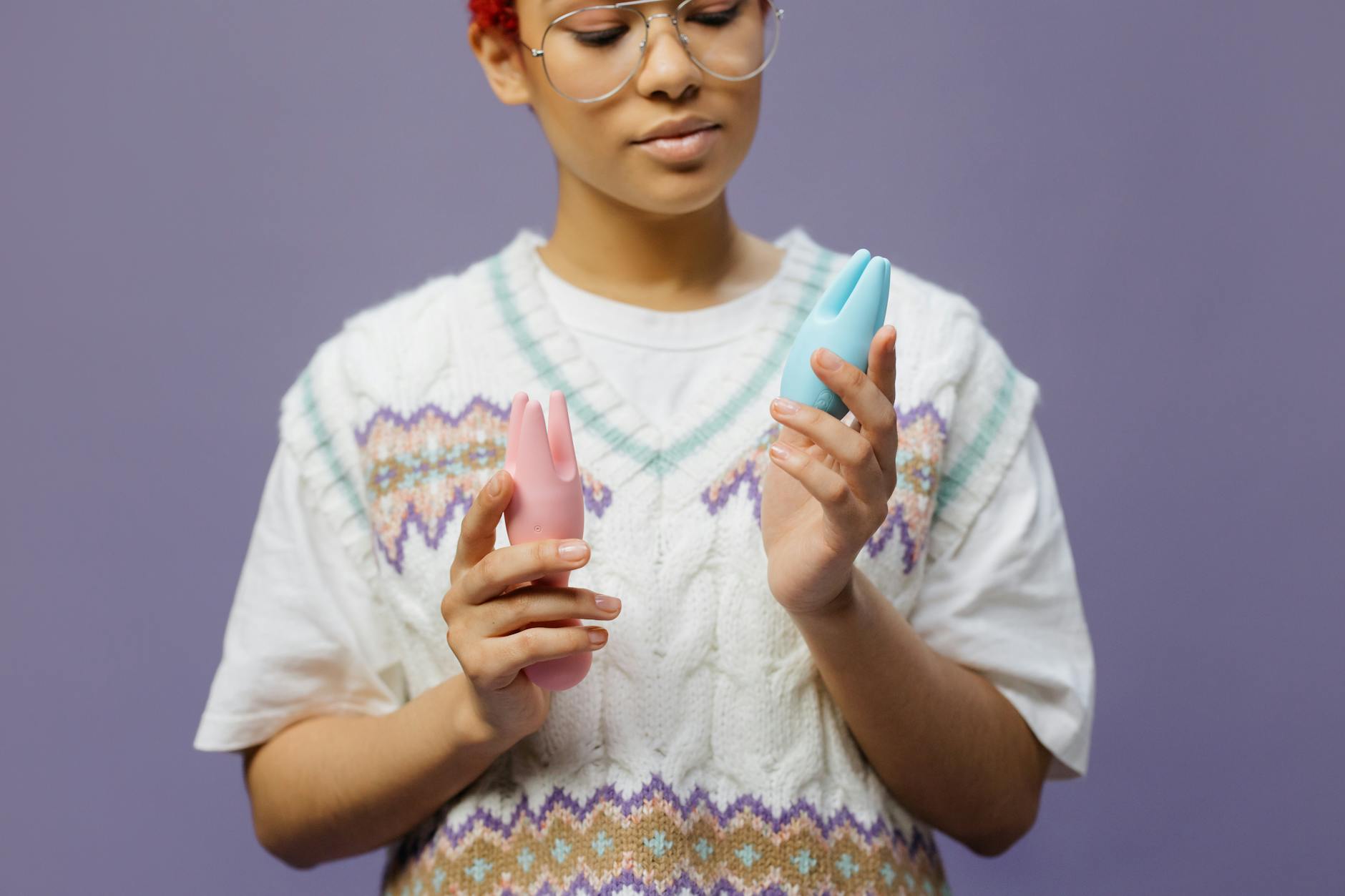
Photo by Anna Shvets on Pexels
What actually happens when couples use a lemon vibrator together
I work with a lot of couples in their 30s and 40s. Often one partner (statistically more likely to be the woman) has been masturbating with a toy solo for years. The other partner either doesn't know or knows but they've never used it together. Here's what changes when you do.
First, the person receiving gets to experience something specific: consistent, precise stimulation that's hard for a partner to replicate manually. A lemon clitoral vibrator like the Lem delivers focused suction. Most partners find they can't recreate that pressure and rhythm combo just with their hands. Knowing that takes away the shame of "needing" it. It's not because your partner isn't good at sex. It's because a lemon vibrator is built to do one thing really well.
Second, the partner holding the vibrator discovers they have more control and more time. Instead of getting a crampy hand, they can focus on kissing, on eye contact, on responding to their partner's body. Many partners say that's when they actually feel most connected. They're not working. They're playing.
Third, there's novelty. After 10 years of the same rhythm, something shifts when you introduce a tool that changes the physical sensation. That novelty is neurochemically real. It rewires some of the boredom that creeps into long-term relationships.
How to actually integrate it during sex
Don't make it a performance. Most couples overthink this.
Start with the lemon vibrator in solo play, both of you, so there's no pressure and nobody's watching. Get comfortable with how it feels and what patterns work. Then, next time you're together, bring it in. It doesn't have to be penetrative sex. It can be foreplay. It can be the main event.
If you're the partner receiving: tell your partner what you like. "A little slower," "Right there," "More pressure." Give feedback. This is actually crucial for the person holding the vibrator because they can't feel what you're feeling. They need your words.
If you're the partner holding it: pay attention. Notice when your partner's breathing changes. Watch their hips. You have more control than you might think. You're not replacing yourself. You're expanding the toolkit.
The lemon suction vibrators (the actual Lemon clitoral vibrator) work particularly well for couples because they're smaller and less invasive than traditional vibrators. You can use one while you're still intimate in other ways. It's not a stopgap. It's an addition.
The conversation after
Here's what most couples miss: the debrief matters more than the act itself. After you've tried a lemon vibrator together, talk about it.
"What did you like?" "Was there anything that felt weird?" "Do you want to do that again?" "What would you want to change?"
These conversations build intimacy because they require honesty. You can't have that chat without admitting what you want. And once you've done that once, you can do it about other things.
When introducing a toy creates conflict
Sometimes it does. Sometimes your partner feels genuinely threatened. If that happens, your job is to listen, not to convince them they're wrong.
"I want to be with you. I want to feel closer to you. That's why I brought this up. Not because I'm looking elsewhere. Because I want to expand what we have." That's the honest version. And it's worth saying even if it's scary.
If your partner is consistently resistant after you've had multiple conversations, that's information. It might mean you need a professional mediator. It might mean this specific dynamic isn't going to shift. Both of those are real outcomes, and both of them are okay to grieve or to act on.
When you're the hesitant partner
If your partner brings this up and you immediately felt a spike of something (jealousy, inadequacy, fear), that's normal. Sit with it for a minute before you say no.
Ask yourself: what exactly am I afraid of? Is it that they'll prefer the toy to me? Ask them directly if that's the case. They almost certainly won't. Is it that I don't know how to use a toy? You can learn. Is it that I'm embarrassed about sex? Join the club. That's actually the real conversation worth having.
The actual equipment part
You don't need fancy. You need something reliable, waterproof, and easy to clean. The Lemon clitoral vibrator from Heilonancy is designed to be used by couples. It's small enough to fit between bodies during partnered sex. The suction technology means it doesn't require direct friction, which is gentler on tissue. It's also quiet enough that you're not in a dystopian movie moment. Those things matter in the actual experience.
Make sure whatever you pick is medical-grade silicone and rechargeable. Batteries die. Nothing kills the mood like hunting for a triple-A.
Use water-based lubricant if you want more glide. The suction works with or without it, but some couples find lubrication helps with comfort.
Why couples who talk about toys stay together
Okay, that's overstated. But here's what's true: couples who can have difficult conversations about desire, about what they want physically, about what they need tend to be more resilient. When you've admitted you want your partner to use a clitoral vibrator on you, admitting that you're unhappy about something else in the relationship feels less impossible.
A lemon vibrator isn't relationship glue. But the conversation it requires? That's the thing that builds durability.
FAQs
Can we use a lemon clitoral vibrator if we're not in a steady relationship?
Absolutely. The communication piece matters even more, actually. With a new or casual partner, you want to be extra clear: "I'd like to try a toy together. Would you be open to that?" No assumptions. No pressure. Same rules apply.
What if we tried a lemon vibrator and it felt awkward?
That's fine. Awkwardness is data. Ask yourselves what made it weird. Was it the moment you chose? The position? The pressure? Too much eye contact? Sometimes a small adjustment fixes it. Sometimes you try once, it's weird, and you move on. Both are okay.
Do I have to use a lemon suction vibrator specifically?
No. Any clitoral vibrator works. The Lemon vibrator is designed for couples specifically because it's smaller and less disruptive during partnered sex. But your comfort and your partner's preference matter more than brand loyalty. Use what works.
Should we buy a toy together or should one of us surprise the other with one?
Buy together. This removes the surprise (which can land as scary) and makes it collaborative. You get to have a fun conversation about what you're looking for. You get to touch it, feel the weight, understand the buttons. You both have agency.
What if our partner wants to use the toy but I don't want to touch it or be involved?
You can absolutely have partnered sex where one person uses a toy solo and the other is present and involved in other ways. You can hold them, kiss them, touch them elsewhere. The toy doesn't have to be a shared object for sex to be shared.
How often should couples use a toy?
There's no schedule. Some couples use one every time. Some use one occasionally. Some buy one and end up not using it much. All of that is normal. The point is that the option exists, you've talked about it, and there's no shame around it.
The real thing
Introducing a lemon vibrator to your relationship isn't about fixing a broken thing. It's about choosing to stay curious about each other. It's about saying, "I want to know what you like. I want to try new things with you. I want to be vulnerable about what I want." Those conversations don't stay in the bedroom. They seep into how you handle conflict, how you talk about the future, how you show up for each other.
The toy is just the vessel. The real thing is the willingness to have the conversation.
If you're thinking about this and you're not sure where to start, reach out. Talking through relationship dynamics before you make a change is sometimes all you need.
References
- Rubin, J. D., Moors, A. C., Matsick, J. L., Ziegler, A., & Conley, T. D. (2014). On the margins: considering diversity among consensually non-monogamous relationships. Relationship Equality: Contemporary Research on Non-Monogamy, 5, 2-23.
- Haavio-Mannila, E., & Kontula, O. (2003). Correlates of increased sexual satisfaction. Archives of Sexual Behavior, 32(3), 201-214.
- Meston, C. M., & Frohlich, P. F. (2000). The neurobiology of sexual function. Archives of General Psychiatry, 57(11), 1012-1030.
- Perel, E. (2018). Mating in Captivity: Unlocking Erotic Intelligence. Harper Perennial.