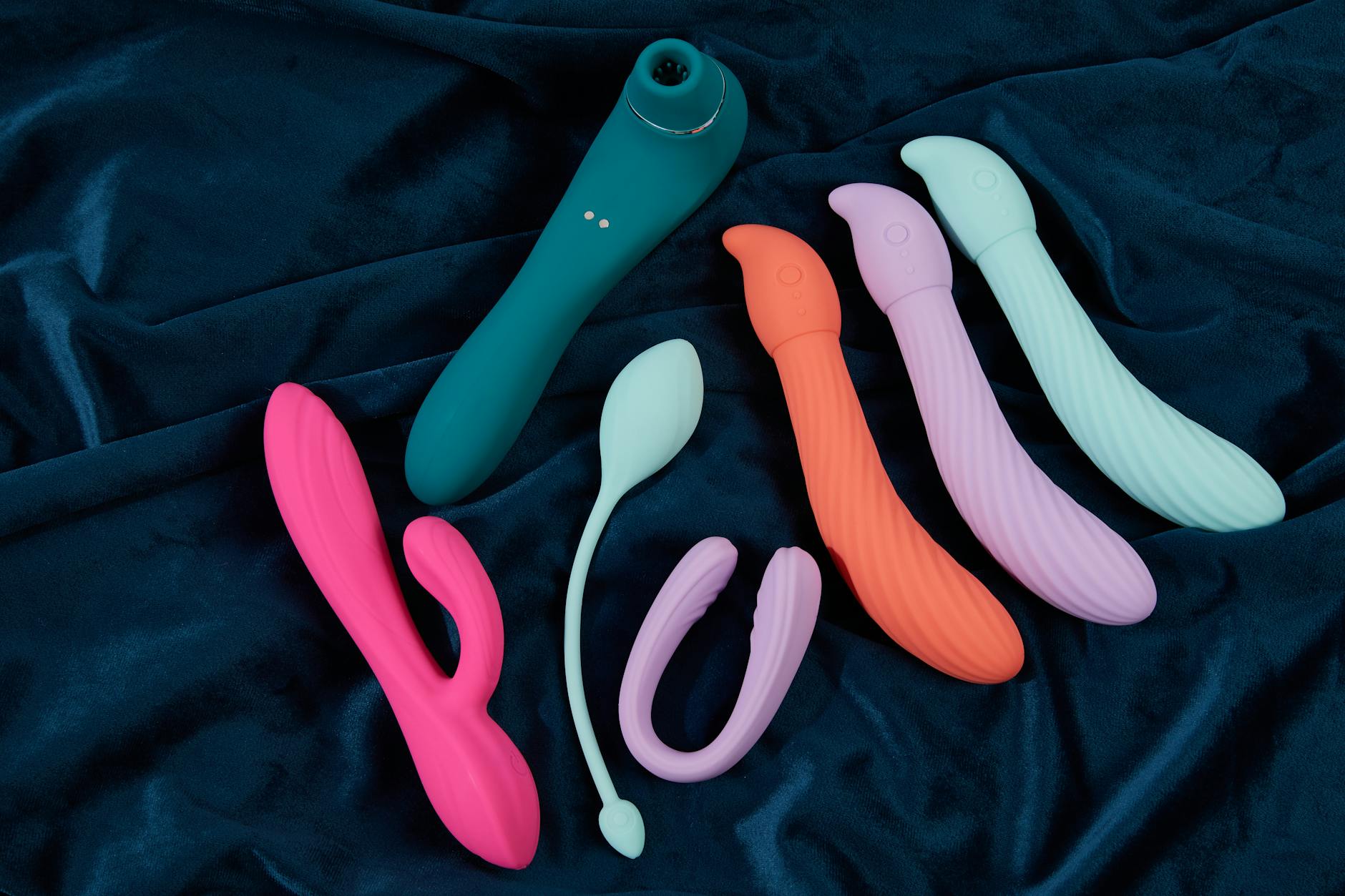
Let's be real about the thing nobody talks about
Introducing a lemon vibrator into partnered sex is less about the device and more about what it means to the person sitting across from you. Will they feel replaced? Inadequate? Does bringing it up feel like you're criticizing them or the sex you already have? These are the actual conversations happening in your head, not "Will the Lem vibrator work on the settings I want."
Here's the thing: a clitoral vibrator doesn't threaten your relationship. Bad communication does. And good communication around pleasure actually strengthens intimacy in ways that have nothing to do with the toy.
The reframe that changes everything
Most people approach this conversation backward. They think: "How do I introduce a sex toy?" when they should be thinking: "How do I tell my partner something about my body that I've never said out loud before?"
That reframe matters because it shifts the conversation from "You're not enough" to "I want to explore something that makes me feel good, and I want you there." Those are completely different conversations with completely different outcomes.
If you've been together for years and have never explicitly talked about what feels good during sex, a lemon vibrator isn't your real problem. Communication is. The vibrator is just the vehicle for finally having the conversation you should have been having all along.
When to bring it up (and when not to)
There's a specific window for this conversation, and it's not during sex. Not before sex. Not when either of you is stressed, tired, or defensive about something unrelated.
The best time is a calm, clothes-on moment where you're both relaxed and have at least 20 minutes. Sunday morning coffee. A walk. A car ride. Something that feels low-pressure and gives you an exit route if things get weird (which they might, and that's normal).
What you don't do: spring this on someone mid-intimacy. Don't say "I want to try a lemon clitoral vibrator" when they're already inside you or inside your head. That's not a conversation. That's a gotcha.
The actual words to use
Honestly though, you don't need a script. You need honesty. Here are three honest openings:
Option 1 (Direct). "I've been thinking about trying a vibrator during sex, and I wanted to talk to you about it first. I'm not unhappy with what we're doing. I'm curious about what feels even better."
Option 2 (Curious). "I've been reading about clitoral vibrators, and I'm really curious about trying one. I know that might sound random. Can we talk about it?"
Option 3 (Vulnerable). "I haven't always felt comfortable asking for what I actually want in bed. I want to change that. I think a vibrator might help me figure out what I'm missing. Are you open to exploring that with me?"
The common thread: you're naming your desire, you're being honest about why, and you're explicitly giving your partner room to react. You're not demanding. You're not apologizing for wanting something. You're just saying it out loud.
What your partner might say (and what it means)
"I don't think you need one. I can do that for you." This usually means: I'm worried I'm not enough. The move here isn't to reassure them. It's to be specific. "A vibrator works differently than your hand or mouth. It's not better, just different. I want to try it with you."
"I don't feel comfortable with that." This is worth exploring, not dismissing. Ask why. Is it about feeling replaced? Performance pressure? Religious beliefs? Insecurity about his own body? These are different problems with different solutions. Sometimes the answer is "I need time" or "I need you to hear why this matters to me." Sometimes it's a real incompatibility. Either way, you get to know.
"Sure, let's try it." Great. Now the real work starts.
"I'm interested, but I have questions." Perfect. That's the partner who's willing to lean in. Answer the questions. Show them Hello Nancy's safety information. Tell them you want them in the room. Let them touch the device. Demystify it.
The conversation about insecurity (because it will happen)
A lot of partners get uncomfortable because they think a vibrator means they're not satisfying you. This is usually not true, but it feels true to them. You're introducing something with a motor into a space that used to be just bodies, and that's a big ask emotionally, even if logically they get it.
Here's what actually helps: stop talking about the vibrator and start talking about what you want together. Not "I want this device." But "I want us to experiment more. I want to feel less self-conscious about asking for what I want. I want you to feel free to tell me what you want too."
Lemon vibrators, the Lem device, clitoral suckers like Hello Nancy's designs—they're tools for a conversation. The conversation is "How do we make sex better for both of us?"
How to actually introduce it during sex
Once you've had the talk and he's agreed, the in-the-moment part is simpler than you think.
Start without the device. Build arousal the way you normally do. Get to a point where you're clearly enjoying yourself and it's escalating. Then, when you're ready, say something simple: "I want to try the vibrator now."
Let him apply it if he's into it. Some partners love being the one holding it, directing the stimulation, feeling like they're part of the experience. Some find it weird. You'll learn fast. If he doesn't want to touch it, you use it. Either way, he's watching, he's present, and you're not hiding it under the mattress like it's contraband.
The Lem vibrator, or any lemon clitoral vibrator, isn't a replacement for him. It's an addition. You're still there. He's still there. The vibrator is just a tool that's doing one specific job better than fingers or mouth can.
If he says no (and what to do about it)
Sometimes the answer is no. Not "not right now." Not "let me think about it." An actual no.
That's information. And it's worth sitting with for a minute before you decide what it means for you two.
A no might mean: "I'm not ready yet, but I could be." That's a conversation about timeline and reassurance. That's workable.
A no might mean: "This contradicts my values and I'm not going to budge." That's a values incompatibility. It's not bad, but it's real.
A no might mean: "I'm too insecure to handle this right now." That's a bigger relationship issue that a vibrator didn't create. It just exposed it.
And a no might mean: "I'm a controlling person and I don't want you to have pleasure independent of me." That's a red flag, and you should pay attention to it.
Whichever it is, you get to decide if it's a dealbreaker or a compromise. But you don't get to decide for him that he's wrong to feel the way he feels. You get to decide if you can live with it.
Making it feel good for him too
Here's what most guides leave out: lemon vibrators, clitoral vibrators, any Hello Nancy device—they can feel amazing for the partner watching too, if you frame it right.
Let him see your pleasure. Let him hear it. Let him be part of creating it. Some people worry that a vibrator means they're off the hook, that they can just sit there. Wrong. You actually need him more, because now you're being more vulnerable and more vocal about what you want.
That's hot. That's intimate. That's the opposite of him being replaceable.
The summary that matters
Introducing lemon vibrators to partnered sex isn't about the device. It's about trust. It's about being able to say "I want this" without shame. It's about your partner being able to hear that without feeling small.
That conversation is harder than the sex part will ever be. But once you've had it—once you've named what you want and he's still there, still interested, still showing up—everything else gets easier.
The Lem vibrator, or any lemon clitoral vibrator from Hello Nancy, is just the thing that prompted you to finally have an adult conversation about adult pleasure. That's the real win.
Ready to have the talk? Let's start it right. Reach out to us if you want to talk through what you're feeling about bringing this up, or if you need clarity on how to answer his questions.
People also ask
Will using a vibrator with my partner make him feel inadequate?
Possibly, at first. But inadequacy comes from bad communication, not from the vibrator itself. If you frame this as "I want to experience more pleasure, and I want you in the room for it," most partners can work with that. The vibrator is doing something your body can't do alone. It's not a referendum on him. If he's truly insecure, that's a conversation for both of you to have, ideally with a couples therapist who specializes in sexual health.
Can I introduce a lemon vibrator if we've been together for years?
Absolutely. In fact, long-term partners often have an easier time with this because the relationship already has trust. The tricky part is breaking old patterns. You've had sex the same way for years, and now you're changing the script. That feels weird for a minute. Then it doesn't. Give yourself permission to be awkward.
What if my partner wants to use the vibrator on me but it makes me uncomfortable?
Then don't let him. You're in control here. You can say "I want to hold it" or "Let me try that myself first" or "Can you do something else while I use this?" If you feel pressured into a sexual act—vibrator or otherwise—that's a bigger red flag. Your comfort matters more than his curiosity.
Is it weird to ask my partner to help me choose a lemon clitoral vibrator?
No. In fact, making it collaborative can help him feel less threatened. Show him Hello Nancy's options. Talk about what you're drawn to. Let him be part of the decision. Some partners even enjoy this because it feels like foreplay—you're both thinking about pleasure, both invested in what happens next.
How do I know if a lemon sucker or clitoral vibrator is right for my relationship?
There's no such thing as "right for the relationship." There's only "right for your body." Lemon vibrators like the Lem work differently for different people. Some people love air-suction devices. Some prefer traditional vibration. What matters is what your body responds to. Once you know that, your partner gets to decide if he's comfortable with you exploring it. That's the real conversation.
What if my partner wants to use the vibrator during sex but I'm not sure I'm ready?
Take your time. You don't have to rush into using it with him just because he's open to it. You can explore it alone first, get comfortable with it, understand what it does. Then when you bring him back in, you're not learning the device at the same time you're managing his reaction. You're already confident about what you like.
Sources
Gottman Institute. "The Sound Relationship House." gottman.com, 2024.
Meston, C. M., & Frohlich, P. F. "The neurobiology of sexual function." Archives of General Psychiatry, 57(11), 2000.
Harmon, L. W., & Bongar, B. "Couple therapy for sexual dysfunction: Clinical and empirical approaches." Journal of Contemporary Psychotherapy, 41(3), 2011.