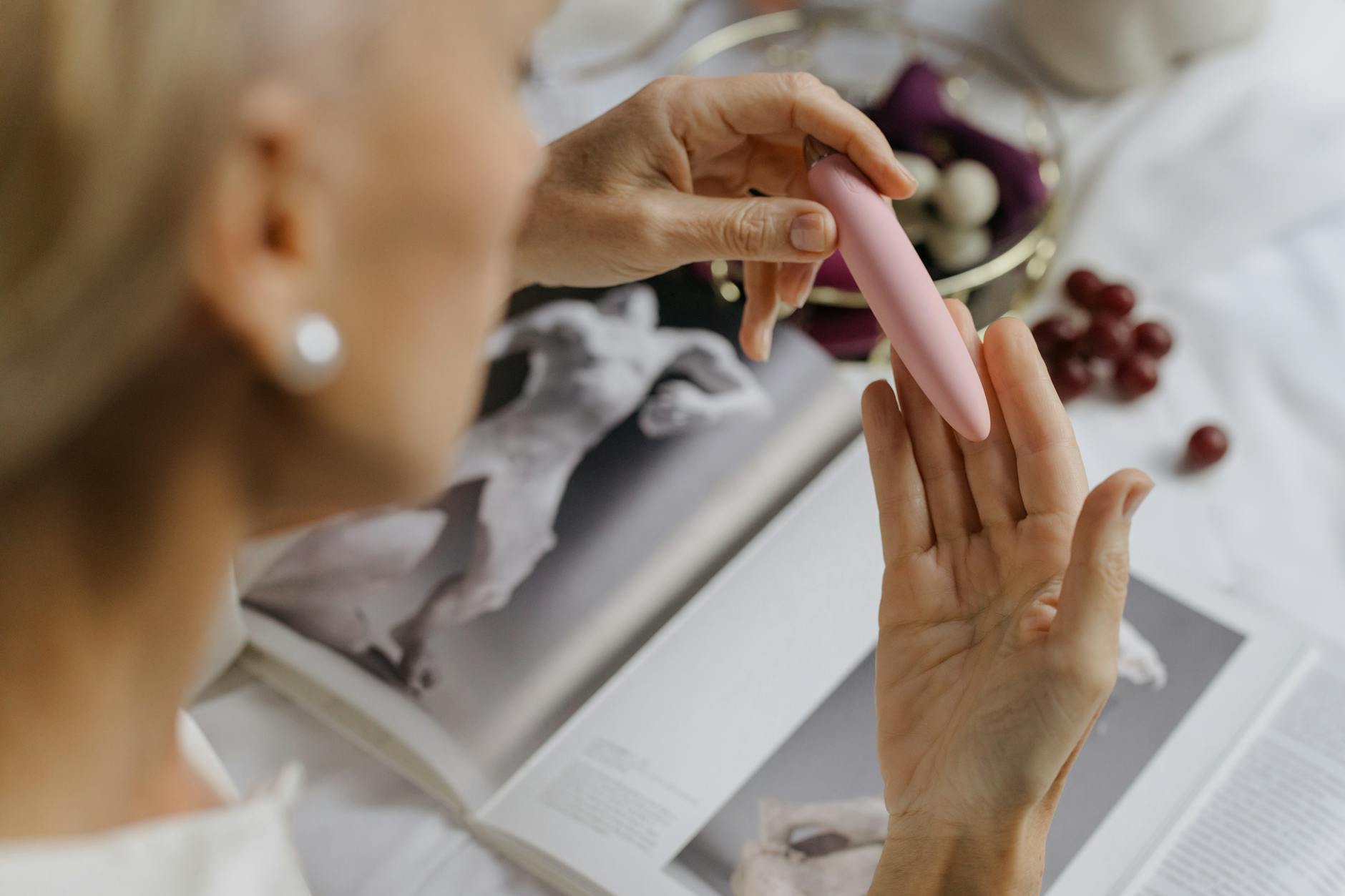
Let's be real: after five, ten, or twenty years with someone, sex often becomes something you schedule around work emails rather than something you actually feel. It's not that you've stopped loving your partner. You haven't. But somewhere between the mortgage, the kids, the exhaustion, and the sheer predictability of it all, pleasure got filed away like tax returns.
The problem isn't that your body broke. It's that the neural pathways for desire got quiet. And quiet pathways can be reactivated. That's where lemon vibrators come in. Not as a band-aid for a dying relationship, but as a tool for rewiring your own capacity for sensation. When you rebuild pleasure solo first, you bring something alive back to partnered intimacy.
After years together, three things happen simultaneously. First, novelty disappears. Your nervous system stops firing at the familiar. Second, you stop touching each other outside the bedroom. The casual hand on a shoulder, the brush of legs in the dark. These small touches prime arousal. Without them, sex becomes an isolated event rather than an extension of ongoing connection. Third, you both develop expectations about what sex should look like, and when reality doesn't match, neither of you bothers to reset.
Then there's the mental load. If you're managing the household, the kids, the emotional labor, your brain is still working even when you're lying down. Your partner isn't inside your nervous system the way they were early on. You're not interpreting every touch as a declaration. You're interpreting it as another demand on your time.
None of this means you don't want pleasure. It means your body needs a reset button. And lemon vibrators, specifically clitoral vibrators like the Lem, are remarkably good at that.
Here's the biomechanics: clitoral suction vibrators, including lemon-shaped designs, work by creating a rhythmic pressure pulse rather than direct friction. This matters after years of routine sex because it feels fundamentally different. Your body can't predict it the way it predicts your partner's patterns. That unpredictability wakes up your nervous system.
Lemon vibrators, in particular, have a specific advantage. They're small enough to explore your clitoris without the intimidation factor of a larger wand. They're precise. And they're less intense than traditional vibrators, which is huge after relationship fatigue because it removes the performance pressure. You don't have to build to a climax on someone else's timeline.
When you use a lemon clitoral vibrator solo, you're not having sex with your partner. You're having a conversation with your own body. You get to discover what actually makes you come now, because your body has changed since year one. Your sensitivity has shifted. Your speed preferences have changed. Your whole architecture of pleasure may have reorganized.
The mistake most people make when trying to reconnect with pleasure after fatigue is jumping straight to partnered sex with a new tool. That's like expecting a cold engine to run the Indy 500. Solo practice first.
Set aside 15 minutes twice a week. Not performance time. Just you, your lemon vibrator, and permission to feel whatever emerges. Start without expectation of orgasm. This sounds therapeutic, but it's actually practical. Expectation kills arousal. When you remove the goal, your body relaxes into sensation.
Begin on a lower setting. The Lem and other lemon vibrator designs offer adjustable intensity for exactly this reason. Your clitoral tissue is sensitive after years of predictable stimulation. Gentle introduction matters. You're not trying to prove anything to yourself. You're trying to remember what pleasure feels like.
Try different patterns. Most lemon sexual toys offer multiple pulse rhythms. Experiment. Some women find that certain patterns trigger memory of younger pleasure. Others find the patterns that work now are completely different. There's data in your response. Pay attention to it.
When you rebuild pleasure solo, three things shift in your partnership. First, you stop approaching sex as something your partner has to provide. That pressure releases on both of you. Second, you bring genuine arousal back to the bed. Your partner will feel the difference. It's not simulated. It's not obligatory. It's real recovery of sensation.
Third, you have something new to talk about. And conversation about pleasure is the thing most long-term couples avoid entirely. Using a lemon clitoral vibrator together, or simply telling your partner what you've discovered solo, opens a dialogue that's often been closed for years.
There's also a neurological component: when you use a clitoral vibrator during partnered sex, it changes the stimulation pattern your nervous system receives. It's not the same rhythm your partner can provide manually. That variation actually strengthens arousal over time because your body doesn't habituate to it the same way.
If you've been using a lemon vibrator solo for a few weeks, you're ready to integrate it into partnered time. This doesn't have to be complicated. Start with communication: "I've been exploring what feels good for me. I'd like to show you."
Then, simply use it during foreplay, or during penetration, or after. Many couples find that clitoral vibrators like lemon-shaped toys eliminate the "are you close" question entirely. The vibrator does the work. Your partner can focus on connection rather than performance anxiety.
Some couples make it a shared ritual. Others keep solo and partnered use separate. Neither is wrong. The point is that pleasure, once reactivated, becomes part of your couple dynamic again. You're not trying to return to the intensity of year one. You're building something new that works for who you actually are now.
If using a vibrator during sex feels awkward, remember: novelty is exactly what broke the fatigue in the first place. Awkwardness means your nervous system is paying attention. That's the goal.
If you've been using lemon clitoral vibrators solo and still can't generate arousal, or if your partner expresses resistance to toys in the bedroom, this might be a moment to work with a couples therapist or sex coach. Long-term fatigue often masks other relationship tensions. Sometimes pleasure can't return until those are addressed.
Similarly, if your desire feels completely absent even when you're alone, that's worth checking in with your doctor. Depression, medication changes, and hormonal shifts can all flatten desire independent of relationship dynamics. A vibrator can't fix those. But recognizing them is the first step.
Most often, though, reconnecting with pleasure after long-term relationship fatigue is exactly what it sounds like: a process of remembering, exploring, and bringing novelty back to a familiar partnership. Lemon vibrators, with their targeted design and gentle approach, are an excellent tool for that journey.
Not at all. In fact, the opposite is typically true. When you bring pleasure back to the bedroom, you bring curiosity back too. The couples I work with who introduce clitoral vibrators together report improved communication and physical intimacy overall. What matters is intention and consent. If both partners are interested in reactivating pleasure, a lemon vibrator is a bridge, not a threat.
Start with twice weekly solo sessions, 10-15 minutes each. That's frequent enough to build new neural pathways around pleasure without turning it into performance. After a few weeks, you'll develop your own rhythm. Some people move to weekly use. Others find daily check-ins with their body meaningful. Listen to what feels right rather than following a prescription.
This is a relationship conversation that needs to happen outside the bedroom. Often, discomfort stems from misunderstanding. Partners sometimes worry that vibrators mean they're not enough. The reality is the opposite: a vibrator makes pleasure possible again, which benefits both of you. Consider reading about lemon vibrators together, or starting with your partner present during solo use so they can see it's not a replacement for them. If resistance continues, couples therapy is worth exploring.
Lemon-shaped and lemon sucker designs have specific advantages for people reconnecting after fatigue: they're precise, less intimidating, and their suction mechanism feels fundamentally different from what you may have experienced before. That novelty is part of what reactivates pleasure. That said, the best vibrator is the one that works for your body. Some people prefer wand vibrators. Others like bullet designs. Experiment and trust your response.
Start with vulnerability, not criticism. "I've been feeling disconnected from pleasure, and I want to change that. I've started exploring solo, and I'd like to bring some of that back to us. I'm not saying anything's wrong with you. I'm saying I want to feel alive again." This frames it as about your own relationship with pleasure, not your partner's performance. Most long-term partners respond well to genuine vulnerability.
This is nuanced. If the fatigue stems from genuine unhappiness or unresolved conflict, a vibrator won't fix the relationship. But it can create a moment of reconnection where important conversations become possible. Many couples find that reconnecting physically opens the door to reconnecting emotionally. If your fatigue is rooted in deeper incompatibility, that's separate work. But if it's about years of routine flattening desire, a lemon clitoral vibrator can be exactly the reset button you need.
After years together, pleasure feels like something that happened to you in the past, not something available now. That's not true. It's dormant, waiting for a signal to wake up. Using a lemon vibrator isn't about fixing your relationship. It's about remembering that your body is capable of sensation and your partnership is capable of evolution.
Start solo. Explore without pressure. Bring what you discover back to your partner. That's the path from fatigue back to connection.
If reconnecting with pleasure feels stuck or if relationship tensions are deeper than physical fatigue, reach out to a couples therapist or coach. Sometimes pleasure needs permission and safety before it can return. We're here to help.