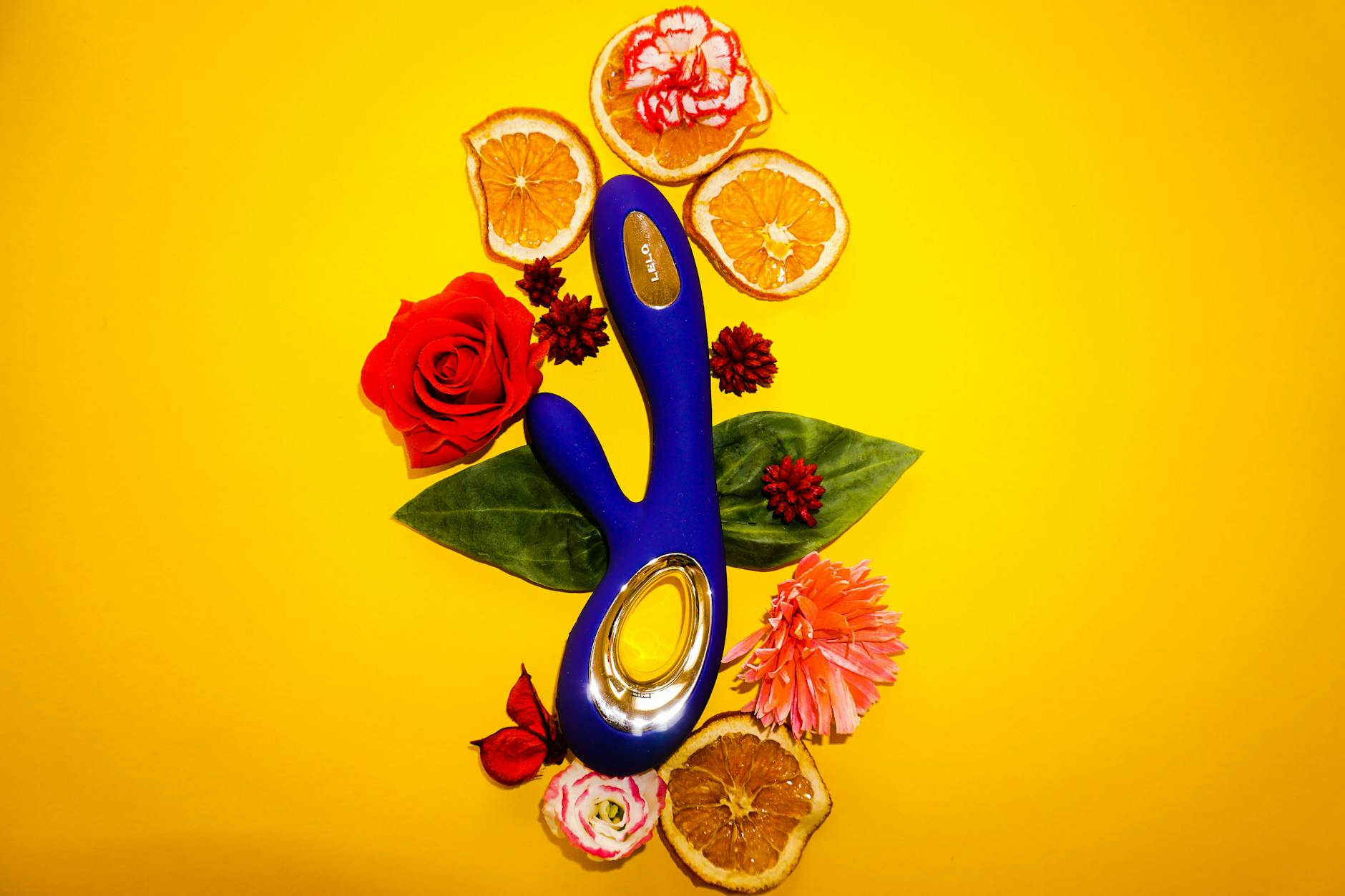
Here's the thing about guilt and pleasure
Most people in relationships feel guilty about solo sex. The guilt shows up as a story: "My partner should be enough." Or: "If I want this, what does that say about our connection?" Or the really quiet one: "They wouldn't understand."
But here's what I've seen in my practice across decades of working with couples. Solo play doesn't weaken intimacy. Shame about solo play does.
The difference matters because one is a relationship problem you can actually fix.
Why solo pleasure actually belongs in a committed relationship
Let me start with something counterintuitive. When people feel ashamed of their sexual needs, they hide. They hide desire, they hide fantasy, they hide parts of themselves that are completely normal. That hiding creates distance. Not the kind of distance you can see. The kind that accumulates.
Solo play does the opposite. When you know yourself sexually, when you understand what actually makes your body respond, you bring that knowledge into partnered sex. You stop performing and start experiencing. You know where to guide touch. You know the rhythm that works. You know the difference between what you think you should want and what you actually want.
That knowledge is magnetic.
Couples therapists spend years teaching people what solo sexuality teaches automatically. How to ask for what you need. How to feel your own pleasure without someone else's approval. How to stay present instead of performing. That's not a luxury. That's foundational to healthy intimacy.
The research actually backs this up
Studies consistently show that people who have a healthy solo sexual practice report higher relationship satisfaction, not lower. They communicate more clearly. They have better sex with partners. They're less likely to feel resentful about unmet needs, because they're not waiting for someone else to meet all of their needs.
This is especially true for women. Solo play is the most reliable way to understand your own orgasm response. And when you understand that, partnered sex stops being a performance and starts being a conversation.
Here's the part that matters: a lemon vibrator or any clitoral vibrator makes that exploration easier and faster. You're not spending years figuring out what your body needs through trial and error. You're learning it directly.
Why lemon vibrators specifically work for solo practice
If you're new to solo play, or you've tried it but never really owned it, a lemon clitoral vibrator is a practical starting point. Lemon vibrators use suction rather than vibration, which means they don't require firm pressure or intense sensation to work well. They're quieter, less intimidating, and honestly, they feel different from your hand in a way that makes the experience feel distinctly separate from partnered sex. That boundary is important psychologically. It's not replacement. It's complementary.
The Lem, for instance, takes about three minutes to understand. It has three intensity levels. You can use it lying down or sitting up. You don't have to commit to a learning curve the size of Iceland. That matters when you're already fighting guilt. You don't need another obstacle.
How to actually talk to your partner about this
Here's where the guilt usually blocks people. They imagine the conversation and stop there. "They'll think I don't want them." "They'll feel replaced." "They'll think something's wrong."
But the conversation that needs to happen isn't about the vibrator. It's about what solo play actually means to you.
Try this approach instead of apology:
"I want to explore my own sexuality more, and I think it'll actually make our sex better. I'm not trying to replace you. I'm trying to know myself better." That's true. That's specific. That's not defensive.
If your partner responds with insecurity, that's information. Not about you. About them. And it's information you two can work with in conversation, not something you need to manage by staying small.
Some partners will immediately say yes. Some will need time. Some will want to be involved. Some will never quite get it and you'll need to set a boundary anyway. All of those are workable outcomes if you're clear about what you need.
The guilt is usually not about the toy
Here's what I've noticed in my practice. When someone feels deeply guilty about wanting solo time with a lemon vibrator, the guilt is rarely actually about the vibrator. It's usually about something else. Are you afraid you don't matter to your partner? Are you worried that wanting something separate means the relationship is failing? Are you tired and don't have the energy to keep showing up sexually the way you've been taught you should?
Those feelings are real. And they deserve attention. But they're not reasons to give up solo pleasure. They're reasons to have a different conversation, either with your partner or with yourself.
Solo play isn't about opting out of intimacy. It's about opting in to knowing yourself.
How to start without shame
Take your lemon clitoral vibrator and give yourself actual alone time. Not stolen time. Not rushed time. Not time where you're listening for your partner to come home. Real time where you're safe and alone and no one needs anything from you.
Start slow. You're not trying to come immediately. You're trying to understand how this works. What intensity feels good. What rhythm. What position. What fantasy or memory or thought actually lands.
Journal about it if that helps. "The low setting felt like nothing. The medium setting was perfect." Or: "I didn't come but I felt close." That's data. That's useful.
Many people find that lemon vibrators feel very different from their hands or other toys. Suction has a totally different quality. It might take two or three times before your body catches up to what's happening. That's completely normal.
The point is to build a practice where solo pleasure becomes normal to you. Not something you do when you're sad or your partner isn't around. Something you do because you deserve to know what makes you feel good.
Why this actually helps your relationship
When you know what you want, you can ask for it. When you can ask for it, your partner stops having to guess. When your partner doesn't have to guess, sex becomes less exhausting and more fun for both of you.
You also stop performing. You stop pretending to come when you don't. You stop saying "I don't really come" when what you mean is "I haven't figured out what works yet." You stop apologizing for your sexuality.
And when both people in a relationship stop apologizing for their sexuality, something shifts. There's more playfulness. More honesty. More actual connection instead of the performance of connection.
That's what solo play does. It's not an escape route. It's a way back to yourself.
People also ask
Is it normal to want solo pleasure when you're in a relationship?
Completely. Research on sexual satisfaction shows that solo sexual practice and partnered sex address different needs. Solo play is about self-knowledge, pleasure without performance, and physical release. Partnered sex is about intimacy, connection, and reciprocal pleasure. Most people want both. Wanting both is healthy. The guilt you might feel about it is cultural, not biological.
Will my partner feel threatened if I use a lemon vibrator alone?
Some might, initially. But that reaction usually says more about their own insecurity than about you or your vibrator. If you approach the conversation from a place of "this helps me know myself better" rather than "I need this because you're not enough," most partners who care about you will come around. If they don't, that's a relationship pattern worth exploring with a therapist, not a reason to hide your sexuality.
How often should I use a lemon clitoral vibrator if I'm new to solo play?
As often as feels good. There's no right answer. Some people find weekly practice helps them learn their body quickly. Others prefer daily exploration. Some do it a few times a month. The point is consistency enough that you build familiarity, not so much that it feels like a chore. If it starts to feel obligatory, scale back.
Can I use a lemon vibrator with my partner too?
Absolutely. Many couples find that solo practice actually makes partnered play better because you know what you like. Some partners love watching solo play. Some want to join in part of the time. Some prefer to keep solo and partnered sex separate. All of those are valid. The key is that you and your partner talk about what feels right for you both.
What if I come faster alone than with my partner?
That's common and usually not a problem if you reframe it. Your body responds to certain types of stimulation more quickly. That doesn't mean partnered sex is worse. It means different. You might use lemon vibrators or other clitoral vibrators with your partner to blend the experiences. You might take more time during partnered sex because you're there for connection, not just orgasm. You might come once solo and then engage differently with your partner. There's no hierarchy.
I feel selfish taking time for solo pleasure when my partner is home.
That feeling usually comes from old conditioning that your sexuality is only valid when it's for someone else's benefit. But your pleasure matters even when no one else is around to witness it. Taking 20 minutes for yourself isn't selfish. It's self-care. If you have young kids or other caregiving responsibilities, solo time is even more important because it's usually the only time your body is entirely yours. Your partner can handle 20 minutes alone.
The bottom line
Guilty solo pleasure looks like sneaking. It looks like shame. It looks like hiding a lemon vibrator or any clitoral vibrator in a drawer and feeling weird about it.
Owned solo pleasure looks different. It looks like knowing what you want. It looks like communicating that to your partner. It looks like understanding that your sexuality is yours, even inside a relationship. It looks like better sex with your partner, not worse, because you're actually present instead of performing.
If you're feeling guilty about wanting solo time with a lemon clitoral vibrator, talk to someone about what's underneath that guilt. Sometimes it's normal boundary-setting. Sometimes it's something deeper about how you were taught to think about your own pleasure. Either way, the guilt isn't a reason to stay small. It's information.
Your pleasure matters. Solo or partnered. Private or shared. That's not selfish. That's human. And a relationship that can't hold that is missing something important.