Let's talk about the orgasm problem
Here's the thing: we've built an entire sexual culture around reaching one single destination. Orgasm. Everything else is foreplay. Everything else is warm-up. And if you don't land there, the whole encounter feels like it failed.
Except it didn't fail. It just wasn't designed for failure in the first place.
I work with people constantly who've decided to stop chasing orgasm as the metric. Not because they can't reach it, but because the chase itself is killing the pleasure. They're tense. They're calculating. They're performing for an imaginary audience or an imaginary timer. And the second they drop the orgasm goal entirely, pleasure becomes accessible again.
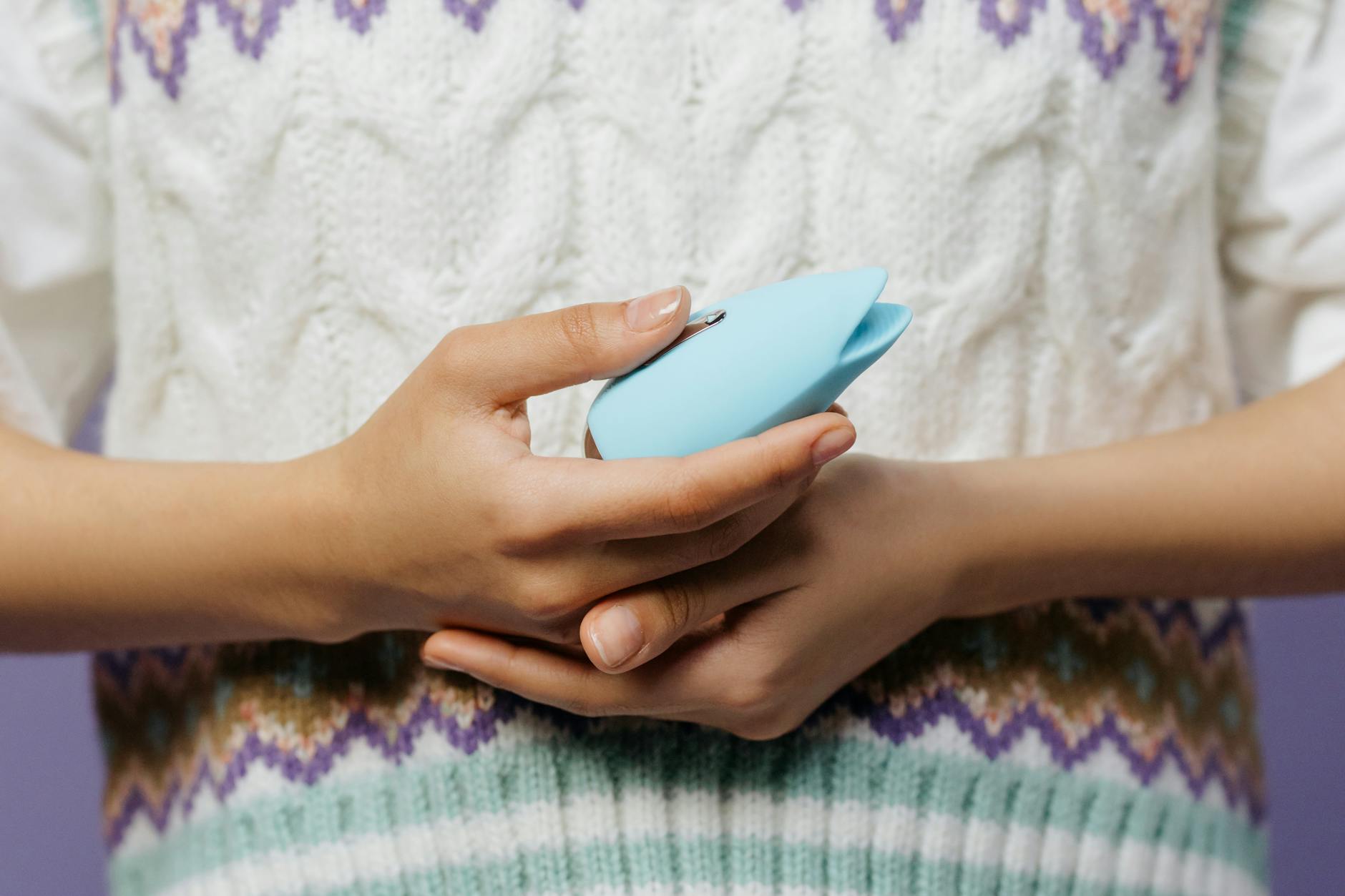
This shift changes everything. Especially how you use tools like a lemon clitoral vibrator.
Why orgasm as the only goal ruins pleasure
Look, I'm not anti-orgasm. Orgasms are great. But when orgasm becomes the only measure of good sex, three things happen almost immediately.
First, you're always in your head. You're monitoring. "Am I close? Why isn't this working? What's wrong with me?" The moment you're narrating your own experience, you've stepped out of it. Neuroscience backs this up: the parts of your brain that track performance and self-consciousness actually suppress the parts that feel sensation.
Second, you create a feedback loop of pressure. If you don't come, you feel like you've let your partner down, or yourself down, or both. Next time, you're more anxious. More tense. And tension is the actual enemy of arousal and sensation.
Third, you miss the actual landscape of your own pleasure. There are sensations between zero and orgasm that are genuinely extraordinary. A pulse of pressure in one specific spot. A building wave that plateaus and then shifts. A moment where your breath catches but your body doesn't tip over the edge. These are the moments people describe as "the best part," once they actually stop long enough to notice them.
What "skipping orgasm" actually means
I need to be clear here because this trips people up: skipping orgasm doesn't mean celibacy. It means taking the orgasm off the to-do list.
Instead of: "Use this vibrator until I come," the goal becomes: "Use this vibrator and see what happens." Sometimes orgasm happens. Great. Sometimes it doesn't. Also fine.
The mental shift is tiny and massive at the same time. You go from a pass-fail framework to a sensation-exploration framework. You're not climbing a mountain anymore. You're walking through a garden. Some parts feel incredible. Some parts are just pleasant. Some parts feel neutral. None of it is wrong.
This is especially valuable when you're using something like the Lem, a lemon clitoral vibrator designed specifically for air-suction stimulation. The Lem's entire design is about prolonged, varied sensation. It's not built for speed-to-finish. It's built for presence.
How pressure actually blocks sensation
Here's what happens neurologically when you're chasing the orgasm: your sympathetic nervous system activates. This is your fight-flight response. Cortisol rises. Your body gets ready to perform. Blood flow concentrates in the major muscle groups, away from the skin and surface nerves.
Meanwhile, the parts of your brain involved in sensation, intuition, and emotional processing basically dim down. You're in performance mode, not pleasure mode.
Now switch the goal. You're not chasing anything. You're just noticing what your body is doing right now. Your parasympathetic nervous system activates instead. That's your rest-and-digest mode. Cortisol drops. Blood flow stays distributed throughout your body, including to the sensitive nerve endings on your vulva. The brain regions tied to sensation and presence light up.
It's the same lemon clitoral vibrator. Same body. Completely different experience, because your nervous system is in a completely different state.
Setting up for sensation-first pleasure
If you're going to actually drop the orgasm goal, you need to set the environment and mindset up to support that.
Start with time. Not "I have 10 minutes before dinner," but actual open-ended time. At least 30 minutes, ideally more. This does two things: it removes the time pressure, and it gives your nervous system permission to actually relax. Your body doesn't believe it has time to explore if it has to keep one eye on the clock.
Then, communication. If you have a partner, tell them before you start: "Tonight, I'm not aiming for orgasm. I'm just exploring sensation. No performance expected." This isn't unsexy. It's actually radically freeing, because now your partner also drops into presence mode instead of coach mode.
Third, create a physical environment that supports calm arousal, not rushed arousal. Dim light. Temperature comfortable enough that you're not thinking about being cold. Maybe music or just quiet. Lube nearby. The Lem or whatever lemon sexual toy you're using already charged and ready. No scrambling mid-experience.
Fourth, start slower than you think you need to. If you usually jump to medium intensity, start at low. If you usually spend five minutes on foreplay, spend 15. You're training your body and brain that there's no finish line to sprint toward.
How to actually use a lemon clitoral vibrator when you're not chasing climax
The Lem is a lemon sucker. It uses air-pulse technology, which means it's creating a gentle suction sensation rather than direct vibration. This design is perfect for sensation-focused pleasure because it allows you to feel layers of stimulation.
Start with the Lem on pattern one or two. Very gentle. The goal isn't to build to a crescendo. It's to notice. Where does the sensation feel best? Is it the direct contact or the surrounding area? What happens when you pause and just breathe?
Move it around slowly. Not searching for the magic spot, but genuinely exploring. Some people find the outer edge more interesting than the direct clitoral area. Some prefer side-to-side movement over stationary contact. You're collecting data on your own body.
Here's the thing that shifts everything: when you stop trying to come, you actually notice more subtle sensations. You feel the pulsing more clearly. You notice your breath shifting. You feel your pelvic floor involuntarily clenching and releasing. These are all genuine sensations of arousal. They're just not the one we've been trained to call "the real thing."
If and when you do reach a point where orgasm feels close, great. Lean into it. But also notice: if it doesn't happen and you're still in deep pleasure, that's also a full and complete experience. Not a failure state.
The emotional part that people skip
This is the part nobody talks about, and it's the most important part. Dropping the orgasm goal is actually an emotional practice, not a physical one.
It requires you to trust that pleasure is enough. Not pleasure-leading-to-orgasm. Just pleasure. That's radical for people who've been taught that sex is about endpoints and achievement.
It also requires you to tolerate uncertainty. You genuinely don't know where the experience will go. You can't plan it. You can't predict the outcome. And for people with any anxiety or control issues, this is genuinely uncomfortable at first.
But here's what happens after a few times: you realize that uncertainty is where actual aliveness lives. The moment you know you're definitely going to come, the experience becomes rote again. The mystery is what keeps you present.
If you're with a partner, this also changes the dynamic. You're not performing for them. You're not trying to reassure them that you're having fun by reaching the traditional finish line. You're just... present. And weirdly, people find that more intimate than any orgasm could be.
When orgasm still happens (and that's okay too)
I want to be really clear: dropping the orgasm goal doesn't mean you never orgasm again. It just means orgasm becomes one possible outcome, not the only valid outcome.
Sometimes, when you're using your lemon clitoral vibrator in this sensation-focused way, orgasm will still arrive. It just shows up differently. It's less of a sprint finish and more of a natural crest. And because you're not striving toward it, when it does happen, it often feels more integrated into the whole experience rather than separate from it.
Other times, you'll reach a beautiful plateau of sensation and just stay there. Your body's arousal levels out, the sensations are gorgeous, and nothing else needs to happen. That's not less-than. That's complete.
What you're actually training when you drop the orgasm goal
This isn't actually about your vibrator technique or your body's capability. You're training your nervous system. You're teaching your brain that pleasure doesn't have to look like a performance. You're showing your body that presence is actually possible, even in sex.
That training carries over. When you're with a partner and you drop the achievement mentality, the sex becomes longer, more varied, and genuinely more connected. When you're alone and you're not chasing, you actually enjoy solo pleasure instead of treating it like a task.
And here's the thing that research actually backs up: people who practice sensation-focused pleasure without the orgasm requirement actually experience more orgasms overall, and more satisfying ones. Not because they're trying harder. Because they're trying less. Because they're actually present.
Common questions people have about this
What if my partner thinks I'm mad for not wanting to come? Start with the conversation before sex happens. Explain that you're experimenting with shifting the focus to sensation. Frame it as something you want to explore, not something wrong with the current dynamic. Many partners actually find this freeing because they also drop into performance pressure.
Does this mean I'll never orgasm again? No. You'll just orgasm less predictably and more authentically. Many people find their orgasms get better once they stop demanding them.
How long does it take to actually relax into this? Usually three to five times. The first couple of sessions feel awkward because your brain's still reaching for the goal. By the fifth or sixth time, it clicks and you actually settle into sensation. Stick with it.
What if I'm using the Lem and I genuinely feel nothing? That's usually anxiety. Slow down even more. Take breaks. Sometimes it helps to spend 10 minutes just breathing and doing nothing, letting your nervous system settle, before you even turn the lemon clitoral vibrator on. The body needs to believe it's safe before it opens up.
Can I do this with a partner? Absolutely. In fact, many couples find this is where real intimacy lives. You're both present, both exploring, neither performing. It's vulnerability and presence all at once.
The actual gift of this shift
Here's what I've watched happen with people who drop the orgasm goal: they get their pleasure back. Not a different kind of pleasure. Their actual pleasure. The one that got buried under performance pressure and goal-chasing and the feeling that sex is supposed to look a certain way.
And then everything else gets easier. Conversation becomes easier because you're not performing. Presence becomes easier because you're not monitoring. Even if orgasm does show up, it shows up more easily, because your body's not braced against failure.
The lemon clitoral vibrator, the Lem, all those tools are just that. Tools. They don't fix anything. But in the hands of someone who's decided that sensation matters more than achievement, they become incredible doorways into presence. And presence, it turns out, is where all the best stuff actually lives.
FAQ
Is it normal to feel anxious when you stop trying to orgasm?
Completely normal. Your brain's been trained that sex equals striving toward orgasm. When you remove that, there's a gap. You might feel like "something's supposed to happen now" or "I'm doing it wrong." That's just your nervous system noticing that the familiar script is gone. Sit with it for a few sessions. The anxiety passes.
Can I use sensation-focused pleasure with a partner who wants sex to lead to orgasm?
Yes, but you both need to be on the same page first. Have the conversation outside the bedroom. Explain that you want to experiment with dropping the performance pressure. You're not rejecting them or rejecting sex. You're just shifting the goal. If they're curious, great. If they're skeptical, maybe do this solo first and experience the difference yourself. You can't convince someone with words. You can only show them through your own shift.
How is using a lemon sucker different when I'm not chasing orgasm?
It's completely different. When you're not goal-focused, you actually notice the nuances of the sensation. The subtle pulsing. The way pressure builds and releases. The way your breath changes. The Lem's air-pulse technology is perfect for this because it's designed for varied, sustained stimulation rather than building toward a peak.
What if I get bored without the goal of reaching orgasm?
That usually means you're going numb, not bored. Your attention is drifting because your brain doesn't have a goal to chase. This is actually where the real work is. Can you stay present without a destination? Can you notice micro-sensations? Can you let pleasure be enough without being productive about it? That's the actual practice.
Is sensation-focused pleasure the same as mindfulness during sex?
Related, but not identical. Mindfulness is about noticing without judgment. Sensation-focused pleasure is specifically about dropping the achievement goal and prioritizing what you actually feel. You can be mindful and still be goal-focused ("I'm noticing my feelings while trying to come"). Sensation-focused pleasure is about actually shifting where the focus lives.
How long should a sensation-focused session last?
There's no timer. That's the point. It could be 20 minutes. It could be 90 minutes. When you're not chasing, time becomes less relevant. Your body will eventually signal that it's had enough, either because you're satisfied or because you're genuinely tired. That's when you stop. No countdown required.
The practice starts now
If you're going to experiment with this, start small. Pick one solo session where you genuinely commit to dropping the orgasm goal. Use a lemon clitoral vibrator, the Lem if you have one, but any tool works. Set a timer for 30 minutes. Turn your phone off. Lie down with no agenda except to notice what you feel.
That's it. One session. See what happens when you're not trying to get anywhere.
Most people who try this once keep doing it. Not because it's magic. But because it actually feels like pleasure instead of work. And that's what it was supposed to feel like all along.