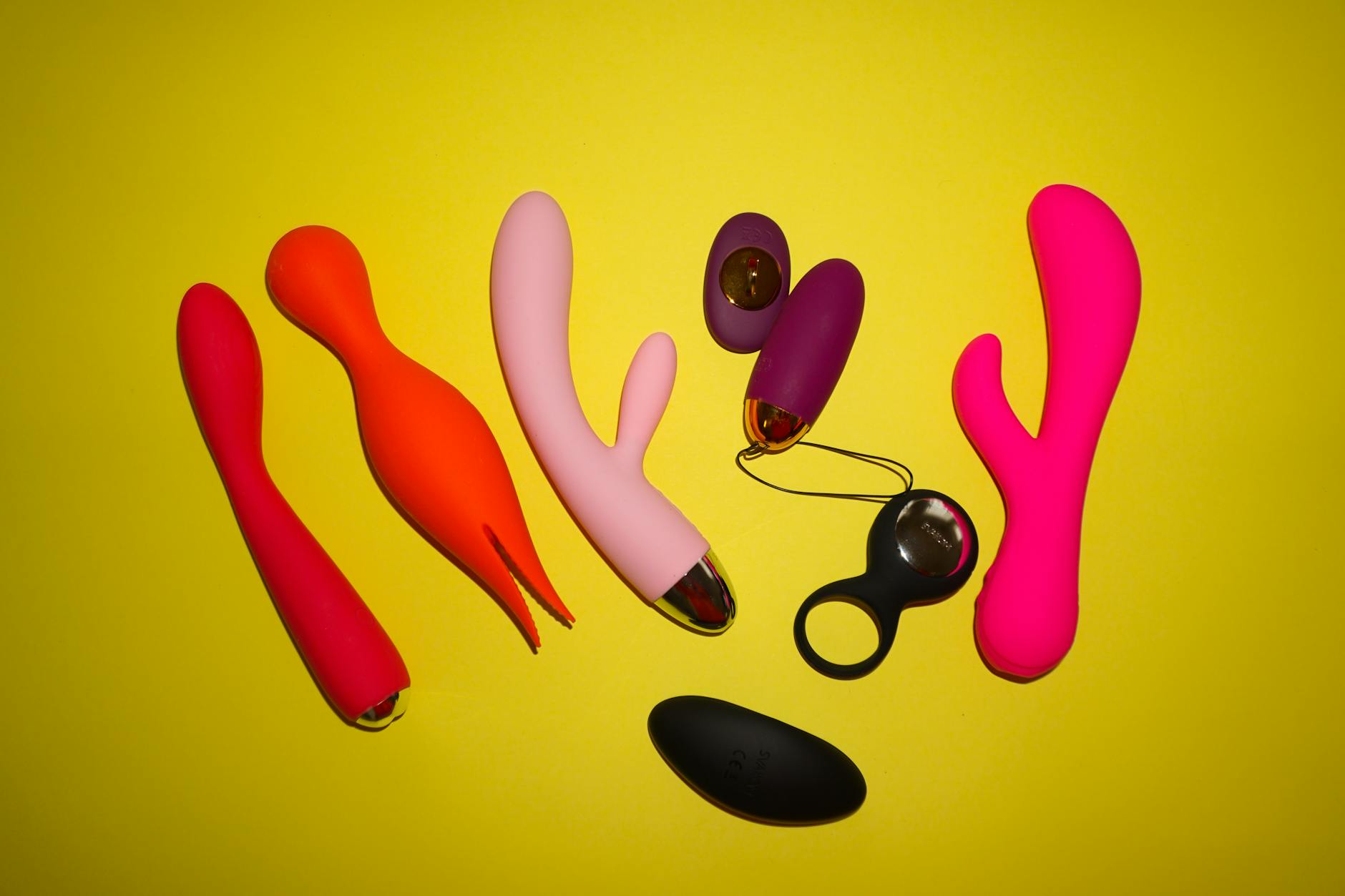
A job loss. A move to a new city. A death in the family. A major health diagnosis. A career pivot that eats your brain for six months. Even positive transitions like a new baby, a promotion, or moving in with a partner can slam the door on pleasure so hard it feels like it's locked forever.
This is not a sign that your sexuality has disappeared. It's a sign that your nervous system has temporarily relocated all available bandwidth to survival mode. Your body is smart. When your brain is processing grief or stress or massive change, it's not going to prioritize arousal. That's actually the correct response, not a malfunction.
But here's what nobody tells you: once the acute crisis passes, pleasure doesn't automatically snap back. The disconnection lingers. The pathways feel rusty. Your body might not feel like yours anymore. That's where the gap lives, and that's where a lemon vibrator becomes less of a luxury and more of a reset button.
When you're in survival mode, arousal networks in your brain go quiet. This is partly neurological (your amygdala is overstimulated, your prefrontal cortex is offline) and partly emotional (your mind is genuinely elsewhere, and your body knows it). The longer this lasts, the more unfamiliar sensation becomes. By the time the crisis stabilizes, you might feel like a stranger in your own nervous system.
If you were partnered during the transition, the disconnection often gets worse, not better. Your partner might still want intimacy at the exact moment you're least able to access it. The pressure to "get back to normal" sex can actually deepen the gap. Solo exploration feels impossible because you're not even sure what you're exploring for.
That's the psychological part. There's also a practical piece: if you've been disconnected for weeks or months, the sensitivity and responsiveness of your tissues shift slightly. Your clitoris doesn't atrophy, but the blood flow patterns change. Arousal might take longer to build. You might need different types of stimulation to wake things up again.
This is why a standard vibrator can feel underwhelming right now. You need something that does the neurological heavy lifting for you. Enter the lemon sucker design. Air-suction technology doesn't require you to find your own rhythm or build arousal through friction alone. It does half the work, leaving you free to actually process what you're feeling instead of performing.
Here's the mistake most people make when trying to reconnect: they go straight for intensity. They think, "I need to feel something again, so I need big sensation." That usually backfires because your nervous system is still partially in lockdown.
Instead, start smaller. Start with intention.
Set aside 20 minutes when you know you won't be interrupted. Not because sex has to feel sacred or special right now (it doesn't), but because your brain needs permission to be bored if it needs to be. Turn off your phone. You don't need music or candlelight or any of that. You just need your body and the space to notice what it's feeling.
Start with your lemon vibrator on the lowest setting. If it has pattern options, begin with a steady pulse rather than anything chaotic. Hold it against your inner thigh first, not your clitoris. You're essentially asking your body, "Hey, is sensation still there?" Not "Can you come?" Just noticing.
The goal right now is information, not pleasure. What does this feel like against your thigh? Does it feel good, neutral, or irritating? There's no wrong answer. If it feels irritating, that's useful data. Your nervous system might need even gentler touch, or you might need a break between sessions to integrate.
Sensation usually returns in stages. First comes awareness ("Okay, I can feel the vibration"). Then comes mild pleasure ("That's not unpleasant"). Then comes actual arousal ("Wait, I want more").
Don't rush this timeline. Some people reconnect in three sessions. Others take two or three weeks. Both are normal.
Once you can feel the vibrator without it feeling weird or forced, move it to your outer labia. Still low intensity. Still just noticing. The goal is to remind your nervous system that touch in this area = potential pleasure, not pressure or performance.
After a few sessions of that, you can move closer to your clitoris. When you do, use the suction on a very gentle setting. The beauty of lemon clitoral vibrators is that they stimulate through air pressure rather than direct vibration, which means less shock to a nervous system that's been offline. You're essentially letting the vibrator do a slow, methodical conversation with your tissue instead of demanding immediate response.
If at any point this feels forced or gross, stop. You're not "doing it wrong." You're just gathering information about what your body needs right now. Maybe that's more time. Maybe that's a different type of toy. Maybe that's talk therapy alongside the physical stuff. All of those are real and legitimate.
Disconnection from pleasure during life transitions is often as much about permission as it is about sensation. You might feel guilty for wanting pleasure while grieving, or selfish for wanting solo time when your partner needs support, or like a failure for not "bouncing back" on the expected timeline.
That's worth naming directly: pleasure is not a betrayal of grief. Taking time for your own body while supporting someone else is not selfish. Reconnecting slowly is not failure.
When you're using your lemon vibrator during this phase, try to stay curious instead of goal-oriented. "Am I getting aroused?" becomes "What am I noticing right now?" This shift from performance to presence is where the real reconnection happens. Your body's job isn't to get you off. Your body's job is to give you information.
If your mind wanders (and it will), that's fine. Your nervous system has legitimate reasons to be elsewhere. Gently bring your attention back to sensation without judgment. You're not trying to achieve transcendence here. You're just rebuilding the connection between your brain and your body, one small moment at a time.
Six to eight weeks of consistent, low-pressure exploration should show you something shifting. Arousal might still feel slower or different than it used to, but there should be a sense of "okay, the pathway is opening again." If you're not noticing anything after that window, or if the disconnection is getting worse, talk to a therapist or sex counselor. Sometimes disconnection from pleasure is actually disconnection from yourself, and that's worth working on with professional support.
If you're partnered, this is also a good time to have a conversation that's separate from sex itself. "My nervous system is recalibrating right now" is different from "I don't want you anymore." Saying it out loud reminds both of you that this is a temporary state, not a new truth about your relationship.
Disconnection after major life changes is your nervous system doing its job. The reconnection takes patience, gentleness, and the right tools. A lemon clitoral vibrator isn't magic, but it does something useful: it gives your body a clear, consistent signal that pleasure is available again. No performance required. No timeline. Just a gentle vibrator and your nervous system slowly remembering that sensation and arousal are possible even after everything shifted.
Your pleasure matters, even (especially) when everything feels overwhelming. Getting back to it isn't selfish or premature or weak. It's a return to yourself.
There's no universal timeline, but most people notice something shifting between four to twelve weeks of gentle, consistent exploration. The key is consistency without pressure. A few minutes a few times a week is better than marathon sessions every few months. Some people reconnect faster if the transition itself is resolved. Others need more time if grief or stress is still active. If you're not noticing any shift after eight weeks of regular practice, that's worth discussing with a therapist. The disconnection might be pointing to something deeper that needs support beyond solo exploration.
Yes, and it might actually help. Numbness is a protective response. When you introduce gentle, consistent physical sensation, it can sometimes help your nervous system realize the threat has passed. It's not therapy, but it can be a pathway back into your body. That said, if you're in deep depression or trauma, reach out to a mental health professional alongside physical reconnection work. They work better together than separately.
That's really common and completely valid. Sometimes solo exploration feels safer when you're rebuilding the connection to your own body. Tell your partner that directly: "I need some time alone with this process before I'm ready to include you." Three to four weeks of solo work often makes partnered exploration feel more natural later. You're not rejecting them. You're gathering information about your own body first, which actually makes the partnered part better when you get there. Check out how other people navigated this scenario in our guide on how to use lemon vibrators when rebuilding intimacy after infidelity, which covers similar dynamics of disconnection and rebuilding.
Not inherently better, but differently useful. Regular vibrators rely on friction and direct stimulation. Suction-based lemon vibrators work through air pressure, which some people find gentler and less jarring when their nervous system is offline. They also require less manual effort, which matters when you're trying to be present instead of perform. Start with what feels like the right choice for your body. Some people prefer the simplicity of a lem vibrator. Others want something with different sensations. Both paths lead back to pleasure.
Absolutely. Reconnection often brings up feelings you've been storing in your body while you were in survival mode. Frustration, anger, sadness, even joy. They can all come up mid-session. That's your nervous system processing and releasing. You don't have to do anything with it. Just let it be there. Some people find it helpful to journal or move their body after a session. Others just need water and rest. There's no protocol. Just awareness and self-compassion.
That might mean the physical reconnection is just one part of a bigger conversation you need to have. Physical pleasure and emotional intimacy don't always come back on the same timeline. If you're reconnecting with solo pleasure but still feeling distant from a partner, that's worth addressing directly together or with a couples therapist. They're separate systems sometimes, and both matter. The solo work creates safety. The partnered work, if there is one, creates connection. Neither one works alone.