When your body says no to everything
Emotional stress doesn't just live in your head. It hijacks your nervous system, floods your body with cortisol, and makes even gentle touch feel like an invasion. You might flinch when your partner reaches for your hand. Hugs feel suffocating. The thought of being touched, even by yourself, triggers a response that feels irrational but is absolutely real.
This is touch aversion, and it's a completely legitimate stress response. Your body is protecting itself. But protection isn't healing.
I've worked with hundreds of people rebuilding sensation after periods of intense emotional strain. What they all share is this: the pathway back to pleasure doesn't start with another person's hands. It starts alone, with control fully in your court, and often with something like a lemon vibrator that lets you set the pace, intensity, and exact moment you step away.
Why emotional stress changes how touch feels
When you're under sustained emotional stress—breakup, loss, family crisis, workplace trauma—your amygdala (the fear center) stays partially activated. Your body interprets incoming sensation as potentially threatening. The slightest touch can feel like a jolt. Your skin becomes hypersensitive in the worst way: not pleasurably sensitive, but defensively reactive.
At the same time, your prefrontal cortex (the reasoning, planning part of your brain) is offline. You can't talk yourself into feeling okay with touch because the part of you that reasons isn't running the show right now. Your survival instincts are.
This is why forcing touch, even with good intentions, backfires. It confirms to your nervous system that touch isn't safe. You need the opposite: prolonged exposure to touch that feels genuinely optional, never forced, and entirely under your control.
The role of lemon vibrators in nervous system reset
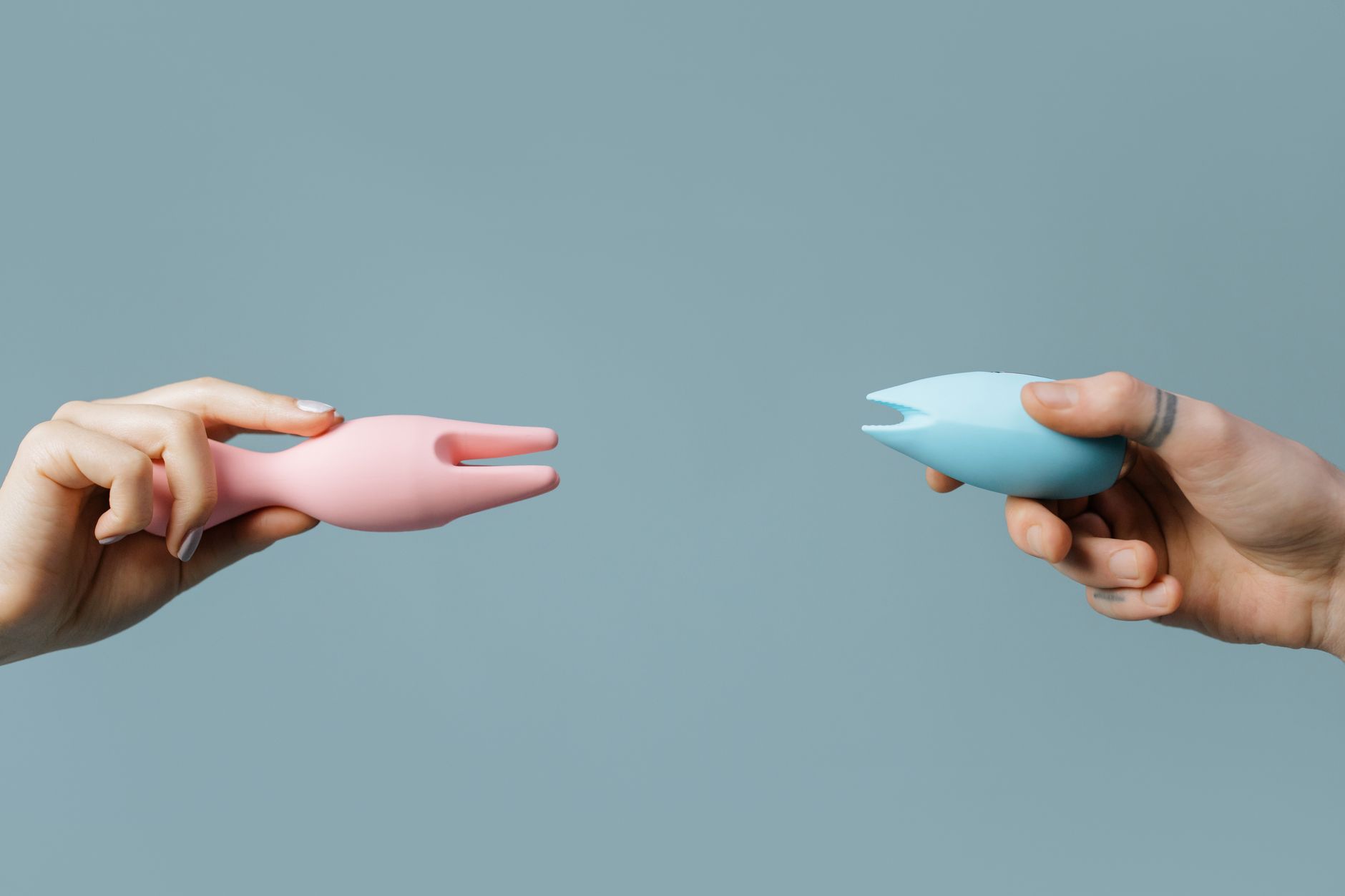
Lemon vibrators and clitoral vibrators more broadly have a specific advantage when touch feels overwhelming. They separate the sensation of stimulation from the vulnerability of being touched by another person. There's no eye contact. No one's breathing on you. No dependence on someone else's mood or energy.
You set the pattern. You set the intensity. You decide the exact second to turn it off.
This agency is neurologically critical. Your brain begins to learn: "Touch can be something I choose. Touch can end the moment I want it to." That reframing—from passive threat to active choice—is where nervous system healing actually begins.

Photo by Olga Lioncat on Pexels
Starting with sensation, not pleasure
Here's the first shift in mindset: you're not trying to orgasm. You're not trying to feel turned on. You're trying to feel sensation without threat.
Start in a safe environment. Somewhere private, locked door, phone on silent. Wear clothes you can easily move in. Give yourself 10 minutes, and zero pressure to reach any outcome.
Turn on the lemon vibrator at the lowest setting. Don't go directly to your genitals. Instead, start with your inner wrist, the inside of your forearm, your collarbone. These are sensitive areas but less charged with anxiety than your clitoris right now. Spend 2-3 minutes just feeling the sensation against different parts of your body.
Notice what happens. Does the sensation feel okay? Does it feel too intense? Is there a sweet spot on your skin where it feels almost pleasant? The goal isn't pleasure yet. It's familiarity. It's your nervous system learning: "This vibration is not a threat."
The graduated approach: finding your threshold
Over several sessions (this might take days or weeks; there's no rush), you'll gradually expand where the vibrator touches. Move from your arms to your thighs. From your thighs to the outer edges of your genitals. From outer to inner. Stay at each level until it feels genuinely neutral or slightly pleasant.
If at any point you feel the old flinch, the defensiveness rising, stop immediately. No shame. Your nervous system is being honest. Go back to the previous level and spend more time there. This isn't linear progress. It's oscillating, which is exactly how nervous system healing works.
Many people find that the suction-based design of lemon clitoral vibrators is gentler than traditional vibratory patterns. The suction stimulates without the sharp mechanical buzz. It feels more like sustained pressure than vibration, which can feel less jarring to a heightened nervous system. If traditional vibration patterns feel too intense, experiment with pulse modes or lower frequencies first.
When your partner is waiting for your "normal" back
One of the hardest parts of this process is navigating the people around you. Your partner might misinterpret your touch aversion as rejection. They might see the solo work with a vibrator as excluding them, or worse, as cheating. This is where honest conversation becomes essential.
Tell your partner: "My nervous system is healing. Part of that is learning touch in a way I control. This isn't about you. This is about me rebuilding safety." Frame it as the responsible, self-aware thing it is. You're doing the work so that eventually, physical connection with them can return and feel good instead of feel obligatory or threatening.
If your partner can't hold space for this—if they pressure you, make it about them, or withdraw emotionally in punishment—that's information about the relationship dynamic that needs attention beyond this post. Consider working with a couples therapist. Sometimes the stress that caused touch aversion is actually rooted in the relationship itself.
What happens when sensation returns
With consistent practice over weeks or months, something shifts. The vibrator that once felt scary starts to feel fine. Then pleasant. Then maybe even good. Your nervous system is learning: this touch is safe, it's under my control, and my body can respond to it without danger.
When that happens, you might notice arousal building for the first time in months. You might have an orgasm. Some people describe it as quiet, almost unexpected. Others say it's profound. There's no single right way this feels.
The key is: don't rush back to partnered sex just because you're functioning again alone. Your nervous system is still healing. Some people need weeks of solo pleasure before they're ready to be touched by someone else. Some need months. This is not a setback. This is respecting the pace of genuine recovery.
Building touch back with a partner
When you're ready, the bridge back to partnered touch doesn't start with sex. It starts with non-sexual physical affection. A hand held during a walk. An arm around you while watching TV. A back scratch. Your partner's hand on your leg. The point is: you're relearning safety with another person's touch in contexts with zero sexual expectation.
Once non-sexual touch feels genuinely okay, you might explore sexual touch together. And here's where a lemon vibrator can stay in the picture. Some couples find that having a vibrator in partnered sex reduces pressure on the person with touch aversion. There's something to focus on besides the vulnerability of being fully exposed and fully dependent on your partner's skill or mood.
Your nervous system is still learning: touch can be shared without being fully merged. You can have pleasure without dissolving into another person. This is, for many people, the most important lesson of all.
The timeline isn't fixed
I want to be clear: there's no standard recovery timeline. I've worked with people who rebuilt sensation in six weeks. I've worked with others who needed six months or longer. Trauma, the intensity of the emotional stress, your personal history with touch, whether you have ongoing support—all of this matters.
If you're working with a therapist, mention this process to them. If you're not and the touch aversion is severe, therapy is worth exploring. A trauma-informed therapist can help your nervous system reset faster than you can alone.
If you're on medications for anxiety or depression, your touch aversion might improve as those meds stabilize your nervous system. Be patient with the process. Healing isn't a race.
Small practical things that help
While you're rebuilding sensation, a few things tend to ease the process. Keep the lemon vibrator clean and warm. Cold silicone against your skin can feel jarring. Warm it up under warm water first. Use it in a space where you feel genuinely secure. Dim lighting, soft music if that helps—whatever signals safety to you. Some people find that breathwork before using the vibrator helps—three to five minutes of slow, deep breathing calms the nervous system and makes sensation feel less threatening.
Avoid alcohol and stimulants beforehand. You need your nervous system clear to notice what you're actually feeling, not numb or activated.
And be kind to yourself on days when you go backward. Stress spikes, you have a difficult conversation, and suddenly touch feels scary again. That's not failure. That's just your nervous system saying it needs more time. Dial it back. Spend the day with sensation at whatever level feels safe. Trust that it gets easier.
FAQ
Can I use a lemon vibrator while taking antidepressants or anti-anxiety medication?
Yes. In fact, if medications help stabilize your nervous system, you might find the rebuild process easier overall. Some medications can affect arousal or sensation, but touch aversion from emotional stress is separate from medication side effects. If you notice changes in sensation after starting a medication, mention it to your prescriber. Many alternatives exist if one isn't working for you.
What if I can't even look at the vibrator without feeling anxious?
That's a sign you might benefit from professional support. A trauma-informed therapist can help you process the emotional stress itself, which might make approach to a vibrator feel less threatening. Sometimes the object itself becomes symbolically linked to the anxiety. A skilled therapist can help you separate those. Consider reaching out to a therapist before diving into solo work with a toy.
Is it normal to feel nothing for months, then suddenly feel pleasure?
Completely normal. Nervous system healing isn't linear. You might have weeks of "meh, this does nothing," then one day something shifts internally and sensation feels good. Your brain is rewiring its response to touch. That takes time. Consistency matters more than intensity.
My partner thinks I'm using the vibrator to replace them. How do I handle that?
This requires a direct conversation. Explain that you're healing your nervous system so that partnered intimacy can feel good again, not obligatory or scary. If your partner can't hear that, or if they're unwilling to support your healing process, that's relationship information that goes beyond this post. A couples therapist might help, or you might realize that this relationship dynamic itself is part of the stress you're healing from.
How do I know when I'm ready for partnered sex again?
You're ready when non-sexual touch feels genuinely okay most of the time. Not perfect every day. But mostly okay. And when the thought of sex feels like something you want, not something you're obligated to do. Your body will signal readiness. Listen to it.
Can I move through this process faster by pushing myself?
No. Pushing actually resets the process. Your nervous system learns safety through consistent, gentle, pressure-free exposure. Forcing sensation is the opposite of what healing requires. Patience is the accelerator here, not willpower.
You're not broken
Touch aversion after emotional stress is your nervous system doing its job: protecting you. The fact that you're exploring ways to rebuild sensation means you're respecting that protection while also choosing to heal. That's not weakness. That's wisdom.
A lemon vibrator is just a tool. The real work is the patience you're giving yourself. The boundaries you're setting. The refusal to rush back into something that doesn't feel safe yet. That's where healing actually lives.
If you want support navigating relationship dynamics around this, or if you'd like to talk through what you're experiencing, reach out to us. We're here to listen without judgment.