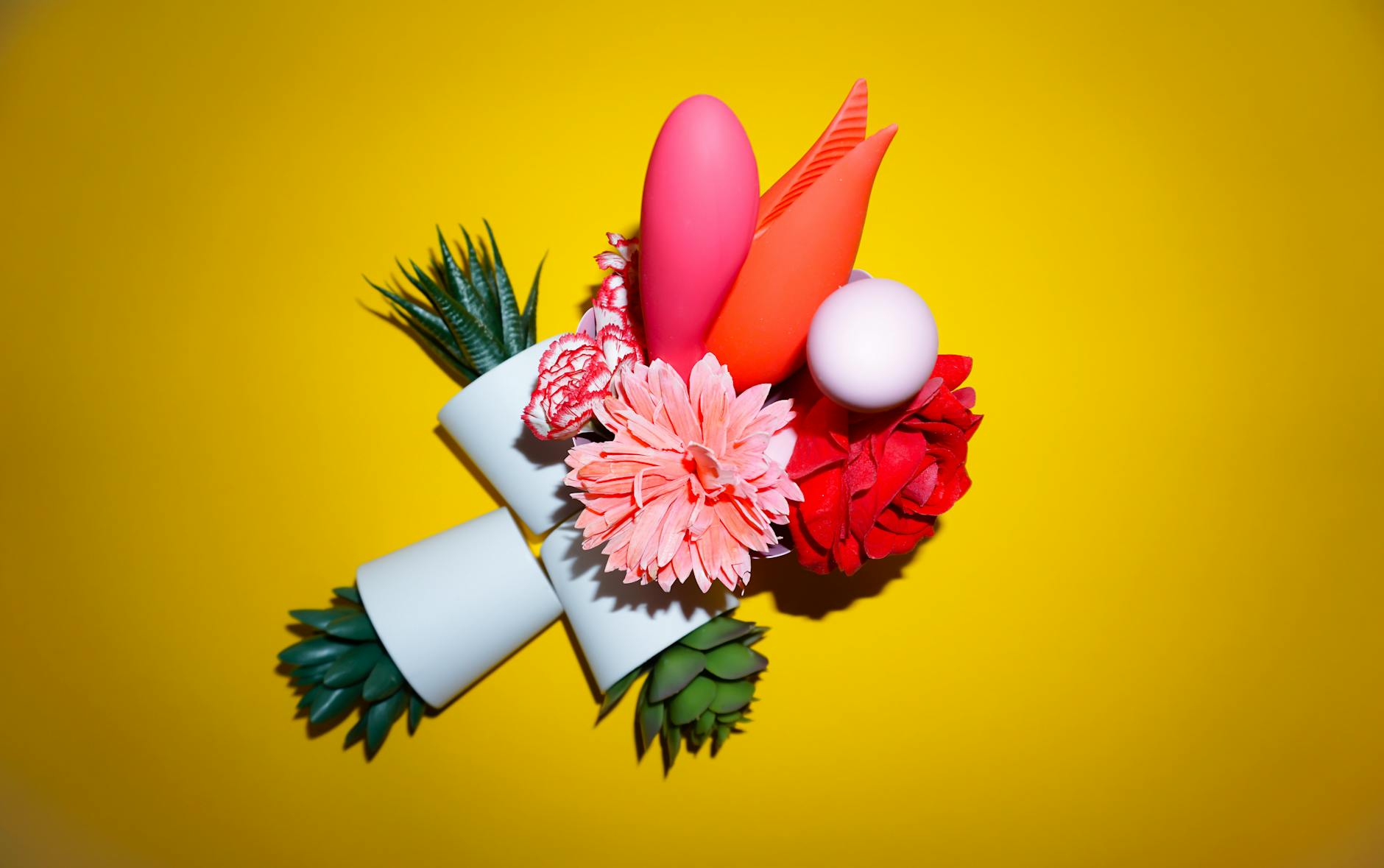
The guilt is real. And it's not actually about you.
Let's be real: after years of partnered sex, the idea of deliberately touching yourself for pleasure can feel weirdly transgressive. Maybe you feel selfish. Maybe you're not sure if your body still responds the way you remember. Maybe you think solo pleasure is what you do when a partner isn't available, not something you intentionally choose for yourself.
Here's the thing. That discomfort isn't a character flaw. It's the predictable result of spending decades calibrating your pleasure around someone else's presence, timeline, and desires. Your nervous system learned that pleasure happens with someone else, not because of you. Unlearning that takes intention, not guilt.
A clitoral vibrator like the Lem isn't just a tool for sensation. It's permission. It's a signal to your brain that you're choosing this, that your pleasure is worth time and attention, that your body's response matters separate from anyone else's. That mental shift matters as much as the physical one.
Why solo pleasure after partnered years feels different
Physiologically, your body hasn't forgotten how to respond to stimulation. But psychologically, a lot has shifted. When you've spent 10, 20, or 30 years having sex primarily with a partner, your arousal pathway becomes entangled with theirs. You're responding to their energy, their touch, their desire. Your pleasure is bundled with relationship security, emotional intimacy, or simply the fact that another body is present.
Solo touch asks something different of your nervous system. It asks you to be the initiator, the responder, and the beneficiary. That's three roles your body hasn't rehearsed recently. No wonder it feels awkward at first.
There's also a social layer. Women especially are taught that self-pleasure is something you do if a partner isn't available, not something you choose because you want to. Wanting it for yourself, prioritizing it, spending time on it. That can feel indulgent in a way partnered sex doesn't. Spoiler: it's not.
Start with no pressure and actual intention
The biggest mistake I see is treating solo pleasure like another task on the to-do list. You set aside 20 minutes, you expect your body to perform on schedule, and when it doesn't, you feel discouraged.
Try something different. The first few times, don't use a toy at all. Just set aside time when you won't be interrupted. Lie down. Notice what your body wants. Not what you think it should want. Not what makes sense. What does it actually want? Sometimes that's direct clitoral touch. Sometimes it's touching your breasts, your thighs, your inner arms. Sometimes it's nothing, and that's information too.
The point isn't orgasm. The point is rebuilding the neural pathway between intention and sensation. "I want to feel good" becomes a thought that gets translated into touch, which creates sensation, which creates pleasure. That sequence is what you're rewiring.
A clitoral vibrator enters the picture once you've had a few sessions of touch without expectation. Then it's not the first thing your brain tries. It's the next thing.
How the Lem (and similar lemon sucker toys) changes the equation
Most clitoral vibrators require you to decide on intensity level upfront. The Lem, and other air-suction lemon vibrators, work differently. They use gentle suction rather than vibration, which means you can use them at lower intensities without losing sensation. This matters when your body is relearning what pleasure feels like solo.
Start at pattern 1 or 2. The suction is gentle, almost teasing. You can move it around, press harder if you want more intensity, or keep it light. That variability means you're making micro-decisions throughout, which keeps your brain engaged. You're not just receiving sensation. You're directing it.
With a lemon clitoral vibrator specifically, the shape is intentional. It's designed to fit the natural angle of the clitoris without requiring you to hold anything in a weird position. That reduces the cognitive load. Your brain isn't thinking about mechanics. It's just feeling.
Many people I work with report that lemon sexual toys feel less clinical than traditional vibrators. They're softer, quieter, less intimidating. If you've been avoiding solo play partly because touching yourself felt weird, starting with something that feels less aggressive can lower the activation barrier significantly.
The rhythm that actually works
Here's a structure that helps when you're starting from scratch. Pick a time when you have at least 30 minutes and you won't be interrupted. This isn't about efficiency.
Start with 10 minutes of non-genital touch. Touch your neck, your shoulders, your thighs. Notice temperature, texture, sensation. This is waking up your sensory system.
Spend 5 minutes on your vulva without a toy. Your hand, your fingers, whatever. Slow. You're reacquainting yourself with what responds. What feels good? What feels too sensitive? This data is yours to collect.
Then use the Lem at low intensity, working slowly. The suction sensation is different from vibration. It builds arousal differently. Some people describe it as more focused, less buzzy. You might notice your arousal climbing more gradually. That's fine. That's actually the point. You're not chasing a state. You're inhabiting a process.
If you orgasm, great. If you don't, that's also fine. You still got sensation, you still showed your body that solo pleasure is a real option, you still proved to yourself that you can want something and make it happen. That's the win.
What your brain is doing while your body learns
When you've spent decades experiencing pleasure primarily in partnership, your brain's pleasure center has learned to activate in response to partner cues. A voice, a touch, a specific dynamic. Removing those cues means your brain has to generate the arousal state more independently.
That's why a clitoral vibrator helps. It's an external signal that says "pleasure is happening." Your brain gets to relax a little. It can respond to something external rather than having to initiate entirely from within. That's not cheating. That's just scaffolding.
Over time, as you practice solo touch, your brain rewires. The pleasure circuits become less dependent on external partnership cues. You start being able to generate arousal on your own. The vibrator becomes less necessary, not because you've outgrown it, but because you've rebuilt the neural pathway.
But here's the beautiful part: even after you've rebuilt that pathway, many people keep using lemon vibrators. Not because they need them, but because they're excellent. A lemon clitoral vibrator gives you something that solo finger touch sometimes doesn't. Consistent sensation. Novel stimulation. A tool that's designed specifically for your anatomy.
Dealing with the guilt head-on
Some of this discomfort isn't just about rewiring arousal. Some of it is cultural. You might feel selfish. You might worry that if you're getting pleasure solo, you're neglecting a partner, or showing that you don't need them anymore. You might even feel like solo pleasure somehow reflects badly on your partnered sex.
None of that is true, and here's why it matters. When you have access to your own pleasure independent of a partner, your partnered sex actually gets better. You show up clearer about what you want. You're not desperately hoping your partner will give you something you can't give yourself. You're not resentful that you haven't had an orgasm in weeks. You're not performing pleasure you don't feel.
Solo pleasure and partnered pleasure aren't competing. They're complementary. One doesn't diminish the other. In fact, reclaiming solo pleasure usually makes partnered sex more intentional and satisfying for everyone involved.
If guilt keeps showing up, that's worth noticing. Not judging, just noticing. Maybe talk to a partner about it. Maybe notice whether the guilt is actually yours or whether you've inherited someone else's discomfort about female pleasure. Sometimes just naming that pattern is enough to loosen its grip.
Why the Lem specifically works for this transition
If you're stepping back into solo pleasure after years away, you want a tool that feels intuitive, not technical. Lemon vibrators like the Lem are designed with that in mind. They're quiet enough that you can relax. They're shaped to fit your anatomy. The suction sensation is different from standard vibration, which means your body isn't just repeating an old pattern with a different tool.
Start at the lowest setting. Use lube even if you don't think you need it. The combination of suction and lubrication creates a sensation that's both novel and surprisingly natural. Many people find that lemon sexual toys feel less foreign than other vibrators when they're restarting solo play.
And honestly, the fact that Heilonancy makes a toy specifically designed this way. The shape, the intensity levels, the texture. It sends a signal too. Someone thought about what your body needs. Someone designed this for you. That matters more than you might think.
Moving from guilt to ownership
This transition takes intention. It takes noticing when guilt shows up and gently redirecting. It takes using a tool like a clitoral vibrator not as a shortcut, but as permission. Your pleasure matters. Your body's response matters. Solo touch is not a consolation prize. It's a practice.
After weeks or months of consistent solo play, something shifts. You stop thinking of it as "what I do when my partner isn't available" and start thinking of it as "something I choose for myself." The distinction is everything. That's when you know you've actually rebuilt the pathway, not just borrowed a tool.
If you're starting from a place of real discomfort or shame, talking to a therapist who specializes in sexuality can help. These patterns run deep. They deserve care, not just willpower.
But the basic path is simple. Start without a toy. Notice what your body wants. Introduce a lemon clitoral vibrator when you're ready. Use it slowly. Let your nervous system remember that your pleasure is worth time, attention, and intention. That's the whole thing. That's enough.
People also ask
Is it normal to feel guilty about solo pleasure after years of partnered sex?
Completely normal. Your nervous system learned to associate pleasure with partnership. Solo touch requires rewiring that pattern. The guilt isn't a sign that something is wrong with you. It's a sign that your arousal system was organized around someone else for a long time. That can shift, but it takes intention and practice. Many people find that understanding the physiological piece helps the guilt release a little. Your body hasn't forgotten how to respond solo. Your brain just needs permission to activate that pathway.
How long does it take to get comfortable with solo pleasure again?
It varies, but most people report noticing a shift within 4-8 weeks of consistent practice. "Consistent" doesn't mean daily. It means regular, intentional touch without performance pressure. If you're using a lemon vibrator, you might notice physical results (arousal, orgasm) faster than you notice the psychological shift. The permission piece, the sense that this is genuinely for you, usually takes longer. Be patient with yourself. The timeline matters less than the consistency.
Do I need a toy to rebuild solo pleasure?
No. Many people rediscover solo pleasure with just their hands. A clitoral vibrator like the Lem accelerates the process and makes it easier because it provides external stimulation your brain can respond to. But the foundational work is touch without expectation. If a toy feels too intimidating, start with your hands. Once your nervous system is more comfortable, a lemon vibrator can deepen the experience. There's no wrong order.
What if my partner knows I'm exploring solo pleasure and feels threatened?
That's worth a direct conversation. Explain that solo pleasure and partnered pleasure serve different functions. Solo touch teaches you what your body wants. That information makes partnered sex better, not worse. Some partners need reassurance that this isn't about them or their adequacy. Others have their own discomfort around female self-pleasure. That's real, and it's worth exploring together. If your partner consistently makes you feel bad about your body's pleasure, that's a larger relationship pattern worth addressing with a therapist.
Can using a lemon clitoral vibrator make regular orgasms harder to achieve?
No. Using any vibrator doesn't "train" your body to need a toy for orgasm. Your body is adaptable. If you orgasm with a vibrator one day and with your hand another, your nervous system adjusts. The only time this becomes an issue is if you're using extremely high intensity constantly and then expect your hand to provide the same sensation immediately after. If you vary your stimulation, vary intensity, and take breaks, your body stays responsive to multiple types of touch. A lemon vibrator is a tool you can pick up or put down. It doesn't own your pleasure.
How do I know if the Lem or another lemon vibrator is right for me?
Lemon vibrators work well for solo pleasure reentry specifically because they use suction rather than vibration. Suction feels more dynamic, less monotonous. The sensation builds gradually, which helps your nervous system engage. But individual preference varies. Some people prefer standard vibration. Some prefer wand toys. The best toy for you is the one you'll actually use consistently. If suction sounds interesting and you like the idea of something shaped to your anatomy, a lemon clitoral vibrator is a strong choice. If you're drawn to something else, that's equally valid. Your pleasure doesn't care about product names. It cares about what works for your body.
Your pleasure is worth rebuilding
Solo pleasure after years of partnership isn't something you have to do. It's something you get to do. That shift in language matters. Get to, not have to. Your body has been waiting to be touched with intention by you. Your brain has been waiting for permission to generate pleasure without external partnership cues. That capacity hasn't gone anywhere. It's just been dormant.
Starting solo doesn't mean you're rejecting partnership. It means you're claiming a part of your sexuality that's entirely yours. That ownership changes everything. It makes partnered sex better, it gives you clearer information about your desires, it builds confidence. And it reminds you that your pleasure was never contingent on anyone else. It was always yours. You're just remembering how to access it.
If you have questions or want to talk through your specific situation, reach out to us. We're here to help.