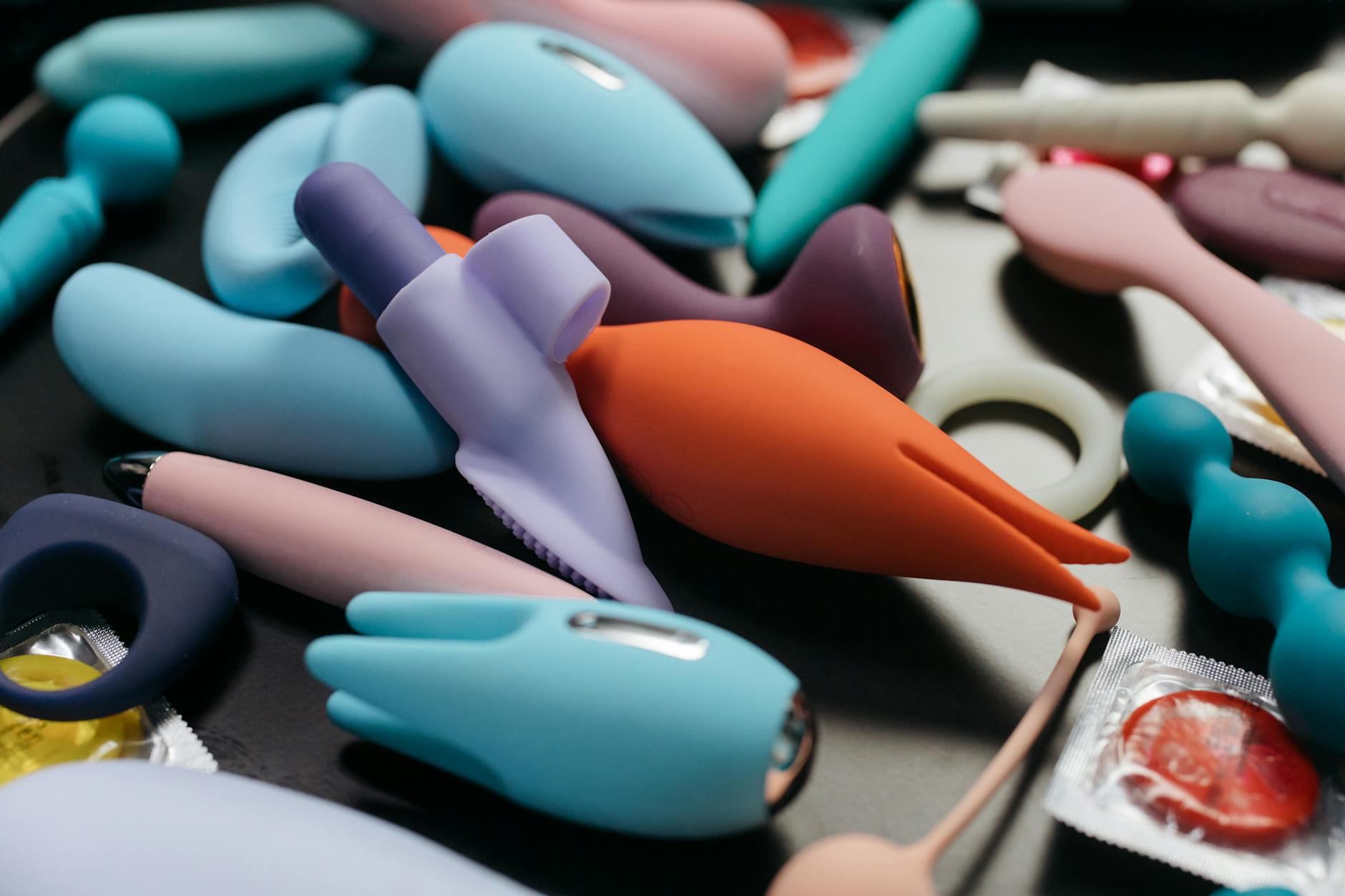
How to Use Lemon Vibrators When Orgasms Feel More Difficult After Medication Changes
Let's be real: your antidepressant or blood pressure medication is probably keeping you alive. It's also very possibly making orgasms harder to reach. This isn't a failing on your part, and it's not something you have to just accept.
About 60% of people taking SSRIs report some sexual side effect. Birth control, blood pressure meds, and certain antihistamines come with the same fine print. The frustrating part isn't just that climax takes longer. It's that pleasure itself can feel distant, numb, or flat. When your body used to respond in seconds, waiting minutes can feel like your sexuality disappeared.
It didn't. Your brain chemistry shifted, and that changes the signal speed. The good news: lemon clitoral vibrators work with your body's new rhythm instead of fighting it.
How medication actually changes the orgasm pathway
Here's the neurological piece. SSRIs work by keeping serotonin around longer in your brain. More serotonin generally lifts mood. But serotonin also regulates dopamine release, and dopamine is the accelerant in arousal and climax. Less dopamine signaling means the cascade that builds toward orgasm slows down. Your body still has the capacity. The circuit just takes longer to light up.
Birth control pills regulate estrogen and progesterone. Higher progesterone (the second half of your cycle, or continuous in some pills) actually dampens genital sensation. You might notice decreased clitoral sensitivity or vaginal lubrication even with arousal. Blood pressure meds, particularly beta-blockers and ACE inhibitors, can reduce blood flow to genital tissues, which makes arousal slower and orgasms shallower.
None of this means you're broken. Your body is responding correctly to the chemistry you've put in it. The solution isn't to quit your meds (please don't). It's to use stimulation that matches your current neurobiology.
Why lemon vibrators work when medication flattens sensation
A lemon clitoral vibrator isn't just stronger stimulation. It's targeted stimulation at exactly the frequency your medication-adjusted nervous system responds to best.
The suction technology that most lemon vibrators use (including the Lem) creates a seal around the clitoris and pulses, rather than vibrating. This matters. Vibration relies on high-frequency nerve signals; suction creates a broader, deeper stimulation that engages more sensory receptors at once. When dopamine signaling is slowed, you need that broader input. You're not waiting for one precise nerve pathway to light up. You're activating multiple pathways simultaneously.
Second, the pulsing pattern is variable. Starting at pattern 1 (usually around 40 pulses per minute) and building to pattern 7 or 8 (sometimes 200+) lets you dial in the intensity that actually registers. On SSRIs, you might find that patterns 2-4 work better than pattern 1. You're finding the frequency where your current nervous system responds. That's not a weakness. That's attunement.
The timing shift: planning for longer warm-up
Medication-related delays usually mean you need 15-25 minutes of foreplay before orgasm, instead of 5-10. This feels frustrating until you reframe it: you get to spend more time on sensation.
Start with a lemon suction vibrator at low intensity, 10 minutes in. Let your body build gradually. Many people find that the first orgasm on medication is harder but later ones come faster. Use the first 15 minutes for slow arousal, then bring the lemon vibrator in around minute 10-12. By that point, your vulva is naturally more engorged, more sensitive.
If you're partnered, this is also where communication saves everything. "I need longer warm-up now, and that's okay" is completely different from "I can't finish anymore." One feels like a shared project. The other feels like failure.
Building sensation back: the progressive intensity approach
When orgasms feel numb or distant, jumping straight to the highest lemon vibrator setting won't help. You actually need the opposite: starting low and letting your nervous system remember what pleasure feels like.
Here's the sequence that works best:
Week 1-2: Use pattern 1 or 2 on your lemon clitoral vibrator for 3-5 minutes every other day. This is reintroduction. You're teaching your desensitized nerve endings to wake up. Don't expect orgasm. Expect noticing sensation.
Week 3-4: Move to 10-15 minute sessions, patterns 2-4. Add lubrication (water-based, always). You're looking for moments where sensation intensifies, even briefly. Bookmark those moments mentally.
Week 5+: Extend to 15-20 minute sessions. Build intensity gradually within a session, starting at pattern 2 and moving to 5 or 6. Orgasm might arrive, or it might not. The goal is reconnecting with pleasure as a sensation, not as a destination.
This sounds slow. It's not. Most people regain full orgasmic response within 4-8 weeks of consistent, low-pressure engagement.
Medication-specific adjustments
Different drugs affect pleasure differently. Knowing which one you're on helps.
SSRIs (sertraline, fluoxetine, paroxetine): Delay is the main issue. Higher intensity and longer foreplay compensate. The lemon vibrator's graduated patterns are perfect here. You're not fighting numbness; you're just working with slower signal speed.
Hormonal birth control: Reduced clitoral sensitivity is the primary complaint. You might benefit from stronger suction (Lem at patterns 5-7) even earlier in your session. Lubrication becomes essential, even when you're aroused.
Beta-blockers (propranolol, metoprolol): These reduce blood flow, so your clitoris engorges less. You need the broadest, most enveloping stimulation. The seal of a lemon clitoral vibrator does this better than a standard vibrator.
Antihistamines: Surprisingly common culprit. They dry mucous membranes. Water-based lube + lemon vibrator is the standard fix.
If you're on multiple medications, effects compound. Be patient. Your body isn't the problem. The combination just needs different tools.
When to talk to your prescriber
Sometimes the medication is worth the trade-off. Sometimes it isn't. That's a conversation, not a secret you keep.
Talk to your doctor if: orgasm disappeared completely (not delayed, but gone). You have pain, numbness in your genitals, or loss of sensation elsewhere. You're considering stopping your medication to regain pleasure. You want to try dosage adjustments or switching to a different med with lower sexual side effects (many have them).
Don't talk to your doctor about this if you're embarrassed. They've heard it a thousand times. Your sexual health is health, full stop.
The mental load: pleasure isn't just physical
Here's what people don't talk about: the frustration of medication-flattened orgasms creates its own barrier. You expect it to be hard. So you tense up. Tension slows arousal further. Now you're fighting both your neurobiology and your anxiety.
This is where the Lem or another lemon vibrator actually helps psychologically too. You're not relying on willpower or partner skill. You have an external tool doing the work. That removes pressure. When pressure lifts, pleasure often follows.
Some people find that using a lemon clitoral vibrator regularly actually extends to partnered sex too. Your body remembers what good sensation feels like. You've practiced the neural pathway. Partner touch starts to register again, faster.
Lemon clitoral vibrators: the practical setup
You don't need anything fancy. The Lem is designed for exactly this work: graduated intensity, quiet, waterproof, and built for the longer sessions medication sometimes requires. Start with 10-15 minutes, water-based lube, patterns 1-4. Your clitoris will let you know when it's ready for more.
Use it solo first. You need to know what works for your body before bringing a partner into the equation. Once you've reconnected with your own pleasure, partnered sex becomes collaborative again, not transactional.
FAQ: medication and orgasms
How long after starting medication does sexual dysfunction show up?
It varies widely. Some people notice changes within days. Others take weeks. SSRIs often cause immediate delay (3-7 days). Birth control effects build slowly over the first few cycles. If you've been on a medication for months without sexual side effects, you probably won't develop them.
Can I just stop my medication to feel pleasure again?
Please don't. Stopping SSRIs especially can be dangerous and cause withdrawal. Talk to your doctor about switching to a different medication, adjusting dosage, or adding something to counteract sexual side effects. Many options exist. You don't have to choose between mental health and pleasure.
Will a lemon vibrator feel different on medication?
Likely yes. You might need higher intensity, more time, or a different pattern than you did before. That's not a sign the vibrator doesn't work. It's a sign your body's feedback system changed. The adjustment is temporary.
Can my partner help if my orgasms are delayed?
Absolutely, but clarity helps. "I need 20 minutes and a lemon vibrator" is actionable. "I don't know what's wrong" is a dead end. Using a lemon clitoral vibrator isn't replacing your partner. It's a tool your partner can help you use, or that you use solo to reconnect with sensation.
If medication caused the problem, will the problem go away if I switch meds?
Often yes. Some people switch to a different SSRI and sexual function returns. Others add a medication that counteracts sexual side effects (bupropion, buspirone). Doctors have tricks. It's worth asking.
How do I know if it's the medication or something else?
Timing. If orgasm difficulty started when you started the medication, the medication is likely the culprit. If it started before medication or you've been on the same dose for years with no change, something else is at play. That something else might be emotional (stress, relationship tension), physical (decreased lubrication, pelvic floor tension), or both. A lemon vibrator helps all three. A conversation with your partner helps the emotional piece. Both together is the full toolkit.
The bigger picture
Medication-related sexual side effects aren't a bug in modern medicine. They're a trade-off. Your brain chemistry stabilized. Your body adapted. Pleasure got harder. That's not permanent, and it's not your fault.
Using a lemon clitoral vibrator isn't a workaround. It's a legitimate tool for working with your current neurobiology. The same way glasses work with changed eyesight. You're not broken. Your nervous system just speaks a different language now.
If you're struggling with this, you're not alone. Talk to your doctor, experiment with a lemon vibrator, give yourself time. Pleasure returns. It just might look a little different than it did before.
Ready to explore what works for your body right now? Reach out to Heilonancy to find the right tool for your journey.
Sources
Ackerman, D.L., Greenland, P. "The role of sexual dysfunction in depression and anxiety." Current Psychiatry Reports, 2002.
Meston, C.M., and Frohlich, P.F. "The neurobiology of sexual function." Archives of General Psychiatry, 2000.
Modell, J.G., et al. "Sexual dysfunction and other neuropsychiatric effects of antidepressants in depression." Journal of Clinical Psychiatry, 1997.
Werneke, U., et al. "Antidepressants for sexual dysfunction." Cochrane Database of Systematic Reviews, 2008.