
The mismatch nobody wants to name
Here's the thing. You want sex twice a week. Your partner wants it three times. Or maybe it's the opposite. Maybe you want it rough and they want it slow. Maybe you want toys involved and they feel threatened. Or you're ready to come and they finished ten minutes ago. These aren't small disagreements. They're the kind that sit under every conversation after a while, quietly poisoning the space between you.
Misaligned sexual expectations are one of the most common reasons couples stop touching each other at all. It's not actually about the frequency or the position. It's about feeling unseen, rejected, or pressured. And when that happens, pleasure disappears. Not just with your partner. In your own body too.
That's where lemon vibrators enter the picture. Not as a replacement for your partner, but as a way to rebuild your own sexual confidence so you can actually engage with them again.
Why misalignment kills desire (on both sides)
Let's start with the physiology. When you feel pressured to perform, your nervous system shifts into a protective state. Blood stays out of your genitals. Your clitoris doesn't swell. Lubrication stops. Orgasm becomes nearly impossible. It's not a choice or a character flaw. It's a biological response to perceived threat.
Your partner, meanwhile, might be interpreting your withdrawal as rejection. If they're the higher-desire partner, they feel unwanted. If you are, they feel guilty or inadequate. Both of you end up in a feedback loop where the more you avoid sex, the more pressure you feel when it does happen. And the more pressure you feel, the less likely orgasm becomes.
This is where many couples get stuck for years. The real problem isn't incompatibility. It's that you've both stopped feeling safe enough to actually enjoy your bodies.
The bridge that lemon clitoral vibrators create
A lemon sucker or lemon vibrator (like the Lem from Heilonancy) does something specific. It removes the performance requirement. When you're using it alone, there's no one watching. No one checking if you're close. No one's orgasm that depends on yours. Your nervous system can actually relax.
That relaxation matters. It's the difference between forced compliance and genuine arousal. When you consistently orgasm alone, something shifts in your brain. You remember what pleasure actually feels like. Your clitoris becomes more sensitive. Your body learns it can say yes without paying a price.
Then, when you're back with your partner, you're not approaching sex as a chore or a negotiation. You're approaching it as someone who knows they can come. That confidence changes everything.
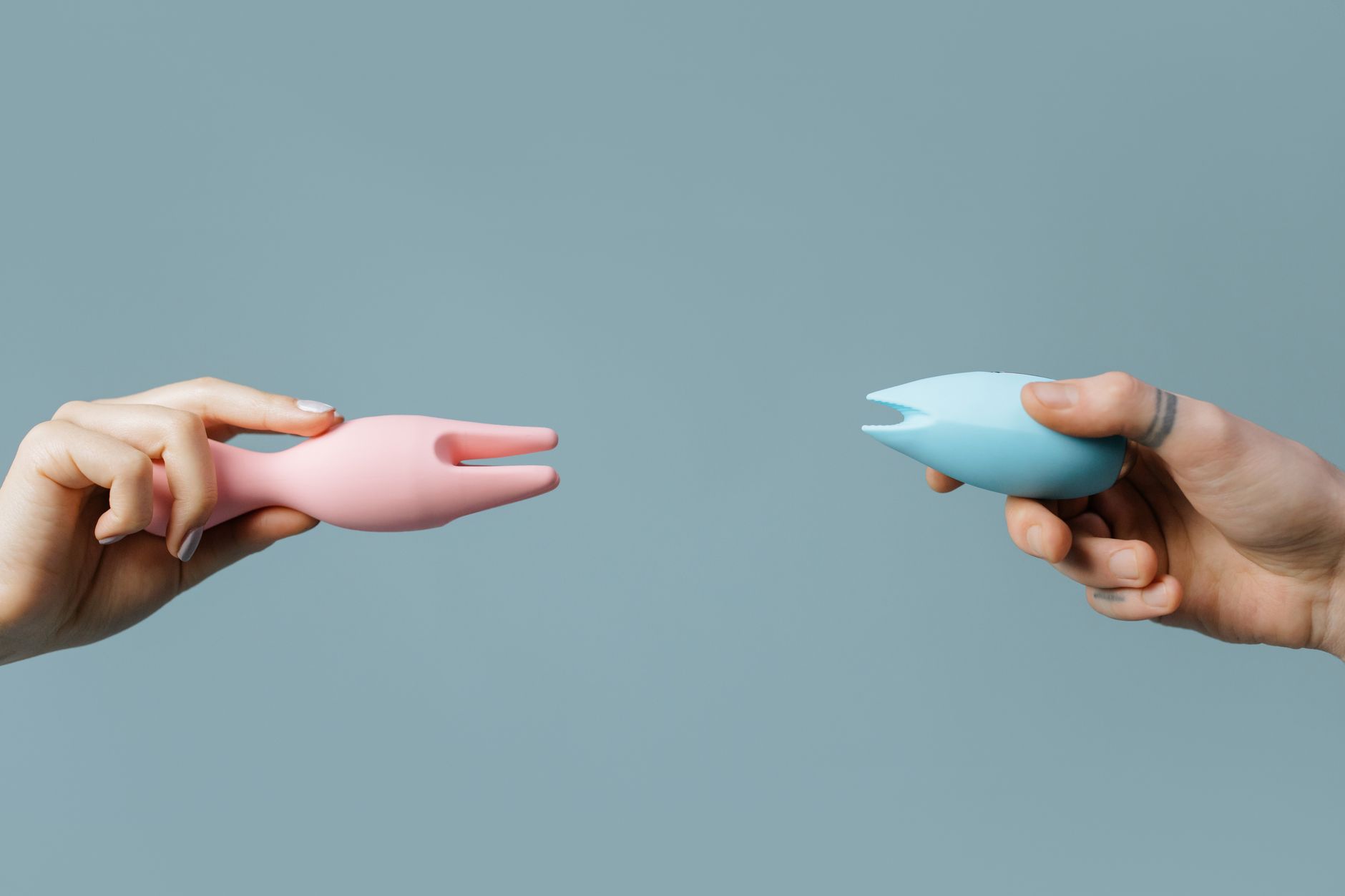
Photo by cottonbro studio on Pexels
Three practices that actually help
1. Solo pleasure on your timeline, not theirs. Schedule time with your lemon vibrator the same way you'd schedule a workout. Not spontaneously or when your partner happens to be in the mood. Your body needs to know that this time is yours. Twenty minutes, twice a week minimum. No phone, no distractions, no audience. The clitoral suction pattern on lemon adult toys makes it easy to find what works without the stamina demands of manual stimulation.
2. Separate the two conversations completely. Don't tell your partner "I'm going to use my vibrator because you're not satisfying me." That's a trap. Instead, reframe it internally: "I'm using this to reconnect with my own pleasure so I can show up better for both of us." If your partner asks, you can say something honest and brief like "I realized I needed more time to warm up before we're together." This isn't deception. It's protection of something that's fragile and yours.
3. Track what actually happens. After two weeks of consistent solo sessions with a lemon clitoral vibrator, notice what shifts. Are you more relaxed when your partner touches you? Are you initiating? Are you finishing more easily? Are you wanting them more often? These changes are real data, not emotions. They help you see that this isn't selfish. It's the opposite.
When to bring it into the bedroom together
Some couples naturally move toward using lemon vibrators together. Some don't. Both are completely fine. If you do want to include your partner, wait until you've had at least two weeks of solo success. Here's why. You need to own the sensation first. If your partner introduces it to you, it stays in their domain. You're still performing.
When you finally do involve them, keep it simple. Let them watch first. There's something deeply connecting about a partner seeing you totally absorbed in your own pleasure. Then, if you want, they can take over the device while you direct them. "Slower here. More pressure there." This is genuinely intimate, because you're finally teaching them what your body actually needs.
But again. This is optional. Some people keep their lemon vibrator use entirely separate. That boundary is healthy too.
The conversation that actually needs to happen
Misaligned expectations usually aren't about how often you have sex or the specific acts. They're about feeling wanted or worrying you're not enough. That's a different conversation than "we need more lube" or "can we try a vibrator."
Before you bring anything else into the bedroom, you might need to say something like this to your partner: "I love you and I'm attracted to you. But I've been feeling pressured, and that's made me shut down. I need to rebuild trust with my own body first. I'm going to do that alone for a few weeks. It's not about you. It's about me finding my way back to wanting sex instead of just agreeing to it."
That's not rejection. It's honesty. Most partners will understand it, especially if they've been feeling the tension too.
When misalignment points to something bigger
Sometimes sexual mismatch is actually about something else. Different love languages. Unresolved resentment from other parts of the relationship. One person dealing with depression or anxiety. A partner who's emotionally withdrawn. In those cases, a lemon vibrator can help with the immediate problem (rebuilding your own pleasure), but the actual issue needs real attention.
If you've tried the solo practice for three weeks and you're still feeling distant from your partner during sex, or if they're getting angry about your boundaries, that's worth talking to a couples therapist about. Sexual mismatch is real. But sometimes it's a symptom, not the disease.
The permission you actually need
Here's what I tell my clients. Your pleasure is not a privilege. It's not something you earn by being a good partner or meeting their needs first. Your orgasm matters. Your solo time matters. Your lemon vibrator matters. And using them is not taking away from your relationship. It's protecting it.
When both partners feel seen and satisfied, the relationship actually thrives. So this isn't selfish. It's the most generous thing you can do.
People Also Ask
Is using a vibrator alone a sign I'm not satisfied with my partner?
No. Solo pleasure and partnered pleasure use completely different neural pathways. Many people in deeply satisfied relationships use vibrators alone because the sensation is different, not because their partner is inadequate. A lemon clitoral vibrator isn't a replacement for partnership. It's a completely separate form of pleasure. Think of it the way someone might love their partner's homemade pasta but also occasionally love restaurant pasta. They're not comparable experiences.
How do I bring up vibrators without my partner getting defensive?
Timing and framing matter enormously. Don't bring it up during sex or right after. Bring it up in a conversation where you're both neutral. Say something like: "I've been thinking about ways to feel closer to my body. I'm thinking about trying a vibrator on my own. I wanted to mention it because I value your trust." You're not asking permission. You're informing them in a way that respects the relationship. If they get defensive, that's worth exploring together with a therapist.
Can I use a lemon vibrator if I have a lower sex drive than my partner?
Absolutely. In fact, it's one of the most helpful tools for exactly this mismatch. When you're the lower-desire partner, you often associate sex with pressure and obligation. Using a lemon sucker on your own schedule helps you separate pleasure from performance. Many of my clients find that after a few weeks, their desire naturally increases because they're no longer defending against pressure.
What if my partner wants to use the vibrator with me right away?
You can say no. This is your body and your pleasure. A simple "I'd like some time with this alone first" is completely reasonable. If they push back hard, that's worth paying attention to. A good partner respects your boundaries around your own pleasure. If this is a pattern in your relationship, that's something to address with a therapist.
Will using a lemon vibrator make partnered sex feel boring by comparison?
Not if you use it intentionally. The reason people sometimes report this is because they're comparing things that aren't comparable. A vibrator delivers consistent, intense stimulation that a human hand can't match. But partnered sex offers emotional connection and spontaneity that a vibrator can't. They're not supposed to feel the same. If your partner's touch feels boring after vibrator use, the actual issue is usually that you've disconnected emotionally, and that's worth addressing separately.
How long until I notice changes in my desire with my partner?
Two to three weeks of consistent solo practice, usually. That's enough time for your nervous system to start associating sexual activity with pleasure instead of pressure. Some people notice shifts in their arousal speed, their orgasm intensity, or how often they think about sex. Track what actually changes rather than expecting a specific outcome.
Next steps
If you're navigating misaligned expectations with a partner, the goal isn't to fix the mismatch by yourself. It's to rebuild enough confidence in your own pleasure that you can actually talk about the real issue. A lemon clitoral vibrator is a tool for that. It's not a band-aid for a broken relationship. But it can help you show up to your relationship from a place of "I know what I want" instead of "I'm doing this to keep them happy."
That shift changes everything. If you want to explore this more deeply, reach out at /contact. We're here to help you find your way back to wanting.