
The real timeline nobody talks about
Postpartum bodies don't snap back. Not physically, not neurologically, not sexually. Between hormonal chaos, sleep deprivation, vaginal tearing or cesarean recovery, and the cognitive load of keeping a human alive, desire doesn't just lower. It disappears completely. And that's completely normal.
But here's what gets confusing: normal doesn't mean permanent. Most people who give birth can rebuild pleasure and sensation, but the timeline and the method look different than before pregnancy. Lemon vibrators, specifically the air-suction design, work particularly well during this window because they don't require the kind of direct friction that can feel overwhelming on healing or resensitizing tissue.
Why postpartum sensation feels broken (but isn't)
Your nervous system has been through labor. If you tore or had an episiotomy, those nerves are literally healing. If you had a cesarean, you're recovering from abdominal surgery. Hormones have tanked (especially if you're breastfeeding, which suppresses estrogen). Your pelvic floor muscles have either been stretched or haven't recovered their baseline strength. Practically speaking, the clitoris might feel numb or hypersensitive, sometimes alternating between the two on the same day.
This is not dysfunction. It's recovery.
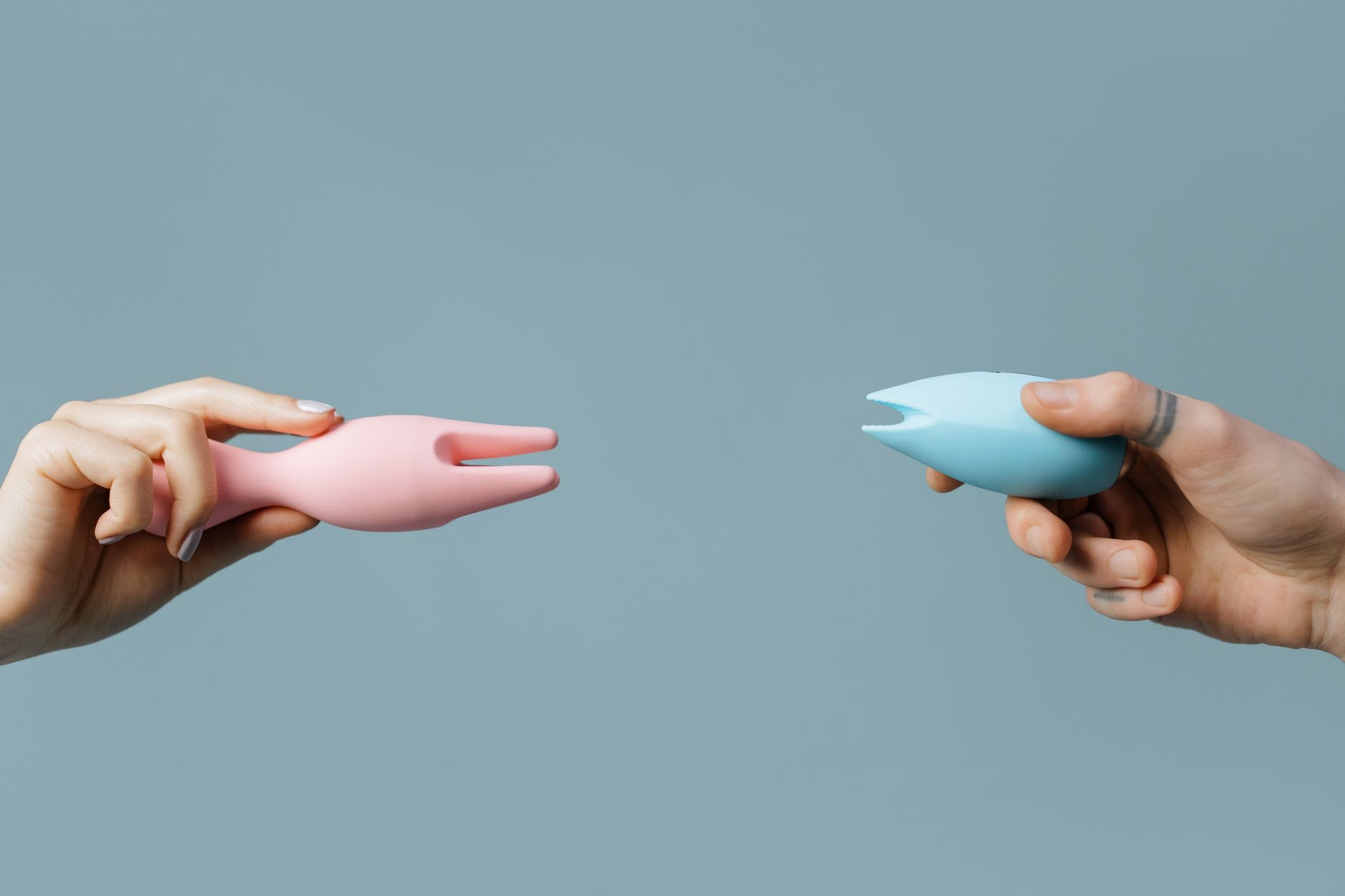 Photo by cottonbro studio on Pexels
The medical consensus is to wait 6 to 8 weeks postpartum before resuming penetrative sex, but that's about structural healing, not pleasure. Solo exploration with a toy can happen much sooner if you're not experiencing pain, and it's often where pleasure actually begins again.
The postpartum pleasure restart checklist
Before you reach for any vibrator, lemon or otherwise, check these boxes:
Pain is gone or minimal. Sharp pain during or after touching the area means keep waiting. Mild discomfort or sensitivity is different. You know the difference.
Bleeding has significantly decreased. Some spotting for weeks is normal. Active bleeding means the tissues are still actively healing.
You have more than fifteen minutes alone. Postpartum sex (with yourself included) while mentally managing whether the baby will wake up is not restful. It's not even fun. Block protected time, even if it's 7 a.m. on a Thursday.
Your partner, if you have one, knows and supports this. Nothing kills sensation faster than partner resentment or performance pressure. This isn't about them yet. It's about reconnecting with your own body.
Why lemon vibrators work for postpartum bodies
Most lemon clitoral vibrators use air-suction technology, which stimulates through gentle, rhythmic pressure rather than vibration. This matters enormously postpartum because your tissue is sensitive and your nerve endings need time to reawaken. Direct vibration can feel like too much. Suction feels more like a gentle pulse.
Start with the lowest pattern. The Heilonancy lemon vibrator, for instance, has multiple intensity levels. Resistance breeds resentment, and resentment kills arousal faster than anything else. You'll know when your body is ready to turn the dial up. Trust that.
Use water-based lubricant even if lubrication eventually returns. During recovery, internal tissues are thinner and drier than they were prepregnancy, especially if you're nursing. Lube isn't a failure. It's a tool that lets you focus on sensation instead of discomfort.
The three-phase roadmap
Phase One: Exploration (weeks 2-6 postpartum, assuming no tearing). This is clitoral-only, minimal stimulation, 5 to 10 minutes max. You're waking up nerve endings and testing your response. Most people find the first orgasm takes longer to build than expected. That's normal. Patience is the actual tool here.
Phase Two: Returning Sensation (weeks 6-12 postpartum). Intensity and duration can increase. You might try different patterns or speeds. Your body is telling you what feels good. Some people discover they prefer sensations they didn't like before pregnancy. Your body has changed. Your preferences can too.
Phase Three: Reintegration (12+ weeks postpartum). If you have a partner and you're ready to include them, lemon vibrators work beautifully during partnered sex. Many couples find that introducing a toy actually rebuilds communication and intimacy faster than going back to what used to work.
The emotional part that matters as much as the physical
Postpartum bodies carry grief. You might grieve your prepregnancy sensation. You might grieve the time and mental space to want sex at all. You might grieve the partner intimacy you had before a baby arrived. None of that grief prevents pleasure, but it does need acknowledgment.
I've worked with dozens of people rebuilding pleasure after birth. The ones who moved through this fastest weren't those who jumped back into sex immediately. They were the ones who gave themselves permission to go slowly, who didn't shame themselves for temporary numbness, and who treated solo pleasure exploration as valuable in itself, not as a stepping stone back to partnered sex.
When to check in with your provider
If pain is sharp or increasing, see your OB/GYN. If numbness is still complete 12 weeks postpartum, mention it at your checkup. If you had significant tearing or complications, you might benefit from pelvic floor physical therapy. A specialist can help you understand exactly what's healing and what needs attention.
Most importantly, if the emotional weight of this transition is heavy, that's clinical territory. Postpartum depression and anxiety absolutely affect arousal and pleasure. You deserve support.
People also ask
Can I use lemon clitoral vibrators immediately after giving birth?
Not immediately. Wait until bleeding has slowed significantly and you're pain-free with basic movement. If you had a tear or episiotomy, this usually means 3 to 4 weeks postpartum. If you had a straightforward vaginal delivery with no tearing, some people feel ready around 2 weeks. A cesarean requires longer healing for the abdominal incision, though clitoral stimulation can happen earlier since you're not touching the incision site. Check with your provider if you're unsure.
Will lemon vibrators help if I'm completely numb down there?
Often, yes. Complete numbness postpartum is usually temporary nerve desensitization from the trauma of birth, not permanent damage. Gentle, consistent stimulation (including with a toy) actually helps rewake those nerves faster than waiting passively. The lowest setting on a lemon vibrator is specifically designed for this. Start there. Many people find sensation returns within weeks of gentle exploration.
What if I'm breastfeeding and my desire is zero?
Prolactin is suppressing your estrogen, which is suppressing desire. This is biology, not a character flaw. Some people find that using a lemon vibrator on a schedule (say, twice a week) helps maintain connection to their body even when desire is absent. You're not trying to force arousal. You're maintaining a thread of pleasure for later, when hormones rebalance. Usually happens after weaning or as breastfeeding becomes less frequent.
Can my partner use a lemon vibrator on me postpartum?
Absolutely, if you want them to. But it works best if you've already explored solo first. You'll know what pressure feels good, what patterns feel easiest, and what doesn't. Then your partner knows what they're doing instead of experimenting on healing tissue. Also, having control yourself (solo use) usually returns confidence faster than being stimulated by someone else while your body feels unfamiliar.
How long until sex feels normal again?
Normal changes. For some people, it's 3 months. For others, it's 9 months or a year. If you're experiencing pain, that timeline extends. If you're healing well and exploring gently, sensation often returns faster than expected. The point is: there's no deadline. Your body isn't on a schedule. You are.
Should I tell my partner I'm using a lemon vibrator during recovery?
If you're in a committed relationship, yes. This isn't a secret. It's part of rebuilding your own pleasure, which eventually benefits both of you. Partners who understand the postpartum journey usually find this information reassuring. It means you're taking your recovery seriously. You're also modeling that pleasure is worth protecting and prioritizing.
The thing nobody says out loud
Postpartum recovery is long. Pleasure doesn't have a deadline. Tools like lemon clitoral vibrators exist because bodies are complicated and recovery isn't linear. Using one doesn't mean something's wrong with you. It means you're honoring your body's actual needs instead of what you think you should be able to do.
Your pleasure matters. Even when you're exhausted. Even when your body feels foreign. Even when you're deep in the fog of early motherhood. Especially then.
If you're navigating this transition and feeling stuck, reach out. There's no shame in asking for support.
References
American College of Obstetricians and Gynecologists. (2023). Postpartum Care: When to Resume Sexual Activity. ACOG Patient Education.
Barrett, G., et al. (2000). Sexual function in women after childbirth. BJOG: An International Journal of Obstetrics & Gynaecology, 107(2), 186-195.
Changes in sexual function after childbirth. Journal of Maternal-Fetal & Neonatal Medicine, 28(8), 905-910.