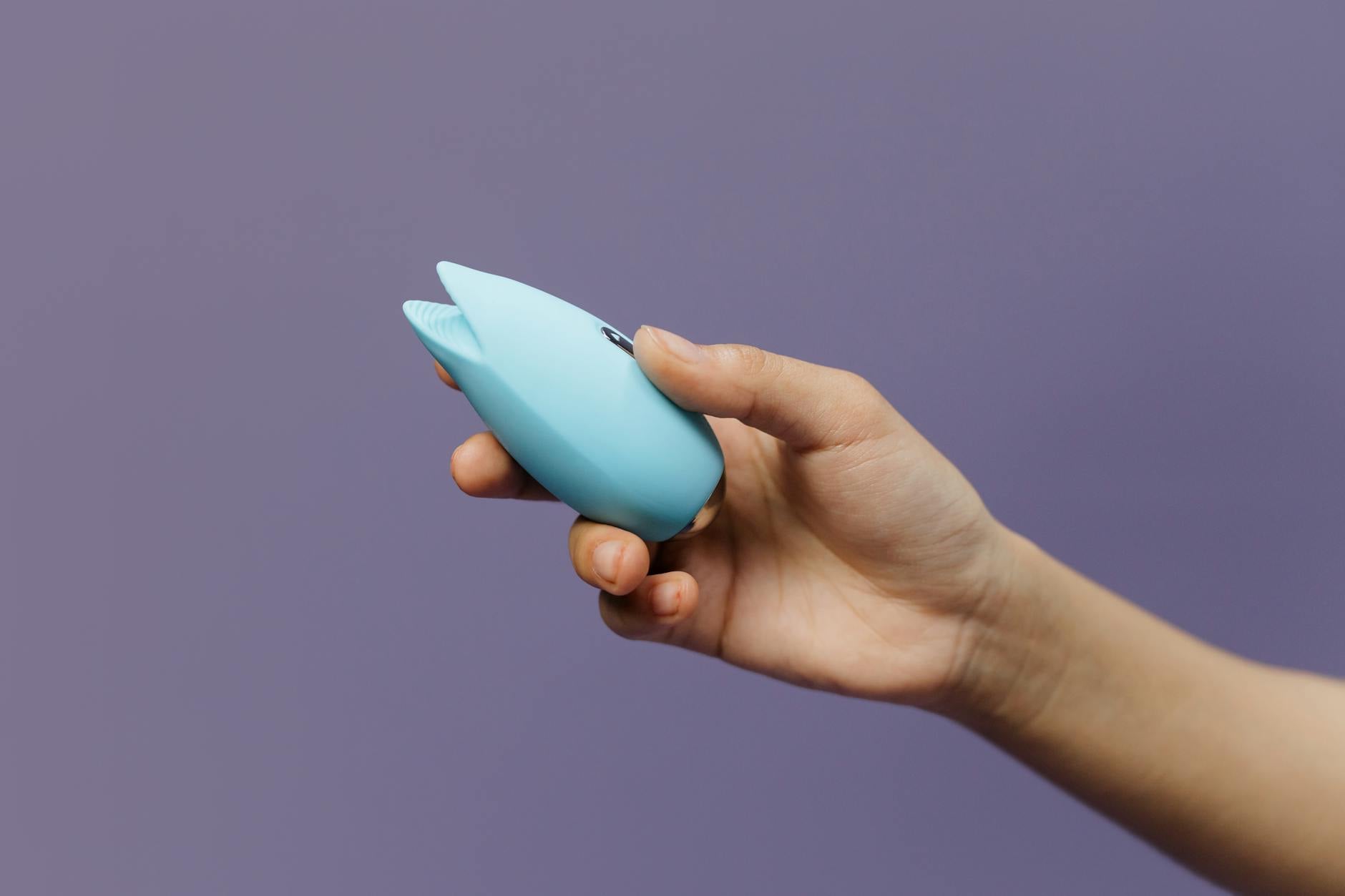
Here's what nobody tells you about familiar pleasure
You've been using your lemon vibrator for months, maybe years. It used to light you up. Now it feels like you're chasing the same spark but landing somewhere different. You wonder if you're broken, if your toy stopped working, or if you're just not into this anymore.
None of those things are true.
What's actually happening is that your body and your toy have had a conversation without you. Your nervous system has adapted. Your tissues respond differently. The way your lem vibrator felt when you first touched it is genuinely not the way it feels now. That's not failure. That's just how embodied pleasure works.
Why sensation changes even when nothing changes
Your clitoris is wired with thousands of nerve endings, but those nerves get smarter the more stimulus they receive. This is called habituation. It's the same reason your favorite song sounds less exciting after the hundredth listen. Your brain literally stops paying full attention. The physical sensation is the same. Your attention to it isn't.
On top of that, your body is always shifting. Hormones change week to week. Stress levels fluctuate. Blood flow patterns shift with your cycle, your sleep, your exercise, and sometimes just because your body felt like rearranging things. All of that affects how sensation registers.
Then there's the toy itself. Silicone softens slightly over time with use and exposure to body heat. The motor may wear in slightly. The vibration pattern you felt as sharp and focused when the toy was new might feel more diffused now. These are tiny changes. But tiny is enough to feel different.
The mental layer you can't ignore
Here's the part that matters more than the physics. You carry memory in your body. The first time you used your lemon vibrator, there was novelty. There was discovery. There was probably anticipation. Your brain was flooded with new sensations and new possibilities.
Now, your brain knows exactly what's coming. There's no mystery. Anticipation drops. And when anticipation drops, sensation feels smaller even when the stimulation is identical.
This isn't a problem to solve. It's information you can use. If your lem vibrator feels routine, that's because it's become routine. That's not about the toy. That's about how you're showing up.
Rebuilding connection with your clitoral vibrator
When sensation feels flat, these moves help.
Start with novelty, not intensity. Don't immediately jump to pattern 5 or 6 looking for that old spark. Instead, use your lemon vibrator in a completely different way. Try it with a specific fantasy you haven't visited in years. Use it in a different room. Use it at a different time of day. The change of context rewires your brain's attention.
Separate solo time from partner time. If you've been using your clitoral vibrator mostly with a partner, try a solo session without the pressure of matching anyone else's timeline. If you've been mostly solo, introduce it into partnered touch once a week. The context shift resets novelty.
Create intentional pauses. Take a week off every month. Not because pleasure diminishes, but because the break creates hunger. When you come back to your lemon vibrator, your nervous system will register sensation differently.
Slow down the approach. Most people jump straight to their lem vibrator at intensity level 3 or 4. Start at pattern 1. Spend five minutes there. Notice what your body feels. Then move to pattern 2. The slowness gives your brain space to catch up.
When the toy might genuinely need a change
Sometimes the issue isn't adaptation. It's that your needs have actually evolved.
If you found a pattern that worked five years ago but your orgasms have shifted, that's normal. Aging changes sensation. Different stressors change sensation. If you're on a medication that affects sensitivity, that changes sensation. [Sensation changes after starting antidepressants] deserve a real conversation with yourself and maybe a partner about whether you want to try a different toy or a different approach entirely.
The good news: lemon vibrators work brilliantly across a wide range of sensation needs. The Lem's suction design gives you precision without the intensity that direct vibration sometimes brings. If your body has become more sensitive, lower patterns on your suction vibrator might feel fresher than they did before.
The permission piece
Here's what I tell couples when they come to me saying, "The spark is gone." The spark isn't gone. Your brain just stopped running toward novelty because it already knows where the exit is.
This is actually opportunity, not loss. The beginning of pleasure is exciting. The middle of pleasure is where you learn your own architecture. You get to know what actually makes you feel good, not just what feels new. That knowledge is worth more than novelty.
You don't need to chase what your lemon vibrator felt like the first time. You get to decide what you want it to feel like now. Maybe that means exploring partner play in a new way. Maybe that means solo sessions become your sacred time instead of a fallback. Maybe that means rotating in a different toy occasionally and returning to your lem vibrator with fresh eyes.
Your pleasure deserves the same attention you'd give to any relationship you care about. It needs intention, novelty, and permission to change. Your clitoral vibrator is just the tool. You're the one doing the actual work.
FAQ: Reconnecting With Your Vibrator
Why does my lemon vibrator feel less intense than it used to?
Habituation makes your nervous system less reactive to familiar stimulus, and silicone toys do soften slightly with use and heat exposure. This is totally normal. The intensity hasn't changed. Your attention to it has. Pausing use for a week or two and returning with a fresh approach often resets sensation.
Can I use my lem vibrator more effectively if I take breaks?
Yes. Taking one week off per month trains your nervous system to stay alert. When you return, sensation feels fresh again. You don't need to abandon your toy. You just need strategic pauses.
Does the pattern matter if my clitoral vibrator doesn't feel exciting anymore?
Enormously. Most people stick with one pattern that worked at the start. Explore patterns you've never used. Start at pattern 1 and stay there for five minutes before progressing. This slow approach gives your brain time to really register sensation instead of skimming past it.
Should I switch to a different adult toy if my lemon vibrator doesn't feel the same?
Not necessarily. Switching toys is sometimes the answer, but usually what's needed is switching context, pace, or intention. Try solo sessions instead of partnered, or vice versa. Try a different location. Try a different time of day. If you've been using your clitoral vibrator the same way for years, the toy isn't the problem.
What if my body's sensitivity has genuinely changed due to hormones or medication?
That's real and worth acknowledging. If you're dealing with [hormonal changes that affect sensitivity], a lemon suction vibrator might actually feel better than direct vibration because it stimulates through gentler pressure. If you've started antidepressants and sensation has shifted, that conversation is worth having with your doctor and your partner.
Can pleasure come back to how it felt at the beginning?
No, and that's actually good news. The beginning was exciting because it was new. The middle of a relationship with your pleasure is deeper. You know yourself better. Your body speaks clearer. What you build now might not feel like the spark, but it feels like something more solid.
What actually matters
Your lemon vibrator didn't stop working. You didn't stop wanting pleasure. What happened is you both just got comfortable with each other. That comfort is where the real exploration begins. Your body knows how to feel good. Your toy is just reminding you.
Start with intention. Add novelty. Create pauses. Pay attention to what your body's actually asking for, not what it asked for six months ago. That's how you rebuild connection with any tool that matters to your pleasure.
If you're ready to explore what's next for your intimacy, whether solo or partnered, we're here. Reach out anytime.
References & Sources
Habituation in sensory adaptation: University of Rochester Medical Center, "How the Brain Adapts to Repetitive Stimulation"
Clitoral nerve density and sensitivity: Review of research on vulvular sensory physiology in Journal of Sexual Medicine
Hormonal influences on sexual response: Basson, R., et al. "Definitions of women's sexual dysfunction reconsidered." The Journal of Sexual Medicine, 2018
Medication-related sexual side effects: American Psychiatric Association, "Sexual dysfunction and antidepressant medication"
Partner dynamics and desire: Gottman Method research on emotional intimacy and sexual satisfaction